
Table of Contents
Table of Contents
1. Introduction
There’s a certain magic that happens when East meets West in the kitchen, a harmonious blend of familiar comfort and exotic intrigue. Among the myriad of culinary fusions, the “bowl” concept has emerged as a beacon of modern eating, offering a complete, balanced, and aesthetically pleasing meal in a single vessel. And within this vibrant landscape, the Thai Peanut Chicken Noodle Bowl stands out as an undisputed champion. It’s more than just a meal; it’s an experience – a journey for your taste buds that starts with the creamy, savory embrace of peanut sauce, continues with the satisfying chew of noodles and succulent chicken, and finishes with the fresh crunch of vibrant vegetables.
This dish isn’t born from ancient Thai scrolls or royal palace kitchens, but rather from a profound appreciation for the core elements of Thai cuisine, ingeniously adapted for the bustling pace of contemporary life. The original inspiration, of course, comes from the rich tapestry of Thai street food and family meals, where the interplay of sweet, sour, salty, and spicy is paramount. Think of the aromatic embrace of Pad Thai or the comforting warmth of a satay skewer, and you’ll find their echoes in this bowl. However, the “bowl” format itself is a distinctly modern invention, designed for convenience, customization, and wholesome eating. It allows for a delightful deconstruction and reassembly of flavors, making each bite an adventure.
What makes these Thai Peanut Chicken Noodle Bowls truly unique is their masterful balance. The deep, nutty richness of the peanut butter is brightened by lime, mellowed by a hint of sweetness, and given a fiery kick by chili paste. This complex sauce coats every strand of noodle and every tender piece of chicken, creating an irresistible foundation. But it’s not just about the sauce; it’s about the interplay of textures – the softness of the noodles, the chewiness of the chicken, and the crisp freshness of the raw vegetables that cut through the richness. It’s a dish that feels both indulgent and remarkably fresh.
The significance of this recipe lies in its accessibility and versatility. It democratizes the exotic, bringing the complex, layered flavors of Thai-inspired cooking into any home kitchen with minimal fuss. It’s a testament to how culinary traditions can evolve, adapt, and resonate with new audiences, creating dishes that are globally loved yet deeply rooted in inspiration. Whether you’re a seasoned chef looking for a quick weeknight meal or a beginner eager to explore new flavors, these Thai Peanut Chicken Noodle Bowls offer a delicious and rewarding culinary adventure that promises to become a staple in your repertoire. It’s a dish that signifies comfort, convenience, and a vibrant burst of flavor, all rolled into one delightful bowl.
2. Recipe Summary
The Thai Peanut Chicken Noodle Bowl is a fantastic example of how diverse culinary influences can converge to create something truly spectacular. This dish brings together the best of Thai-inspired flavors in a format that’s perfect for a quick, healthy, and satisfying meal.
- Cuisine: Thai-Inspired, Asian Fusion. While drawing heavily from the vibrant flavor profiles of authentic Thai cooking, this recipe adapts elements for ease of preparation and common pantry ingredients, making it a delicious homage rather than a strictly traditional dish. It captures the essence of sweet, savory, tangy, and spicy that Thai cuisine is renowned for.
- Difficulty Level: Easy to Medium. This recipe is designed to be approachable for home cooks of all skill levels. The steps are straightforward, and while making the peanut sauce from scratch requires a bit of whisking and ingredient balancing, it’s far from complicated. Those who are new to Asian cooking might find the array of ingredients slightly daunting at first, but each component plays a crucial role in building the dish’s incredible depth of flavor. Mastering simple techniques like properly cooking noodles and searing chicken will make this recipe a breeze.
- Total Preparation and Cooking Time: Approximately 30-45 minutes. This makes it an ideal choice for a busy weeknight dinner or a quick weekend lunch. The majority of the time is dedicated to preparing the chicken and whisking together the flavorful peanut sauce. Cooking the noodles is fast, and the vegetable prep can be done concurrently or even in advance to further reduce the total time. With efficient multitasking, you can have this vibrant meal on the table in under an hour, proving that healthy and delicious food doesn’t have to be time-consuming.
- Dietary Classification: This recipe, as presented, is primarily Poultry-based and Dairy-Free.
- Gluten-Free Option: Easily adaptable by using tamari instead of regular soy sauce and ensuring your noodles are 100% rice-based (like rice vermicelli or gluten-free spaghetti). Always check labels for hidden gluten in sauces and pastes.
- Vegetarian/Vegan Option: This recipe is incredibly versatile. For a vegetarian version, simply swap the chicken for pan-fried tofu, tempeh, or a medley of roasted vegetables like broccoli, bell peppers, and mushrooms. For a vegan option, ensure you use a plant-based sweetener (e.g., maple syrup instead of honey) and follow the tofu/tempeh substitution.
- Nut-Free Option: If allergies are a concern, sunbutter (sunflower seed butter) can be a fantastic alternative to peanut butter, offering a similar creamy texture and nutty flavor profile. Ensure all other ingredients are also nut-free.
- High Protein & Fiber: With chicken, peanuts, and plenty of fresh vegetables, this dish is a good source of lean protein and dietary fiber, contributing to satiety and overall well-being.
This recipe is a testament to mindful eating, allowing for delicious and healthy meals without sacrificing flavor or demanding extensive culinary expertise.
3. Equipment and Utensils
Having the right tools at hand makes the cooking process smoother, more enjoyable, and ultimately, leads to a better end result. For your Thai Peanut Chicken Noodle Bowls, here’s a comprehensive list of equipment and utensils you’ll need:
- Large Pot with Lid (4-6 quart / 3.8-5.7 liters): This is essential for cooking your noodles. The generous size ensures that the noodles have enough space to move freely and cook evenly without clumping. A lid is handy for bringing water to a boil quickly and can also be used to keep noodles warm if needed.
- Tip: Ensure the pot is large enough to prevent the water from boiling over once the noodles are added.
- Large Skillet or Wok (10-12 inch / 25-30 cm diameter): A heavy-bottomed skillet or a traditional wok is crucial for cooking the chicken. A wok is ideal for stir-frying as its sloped sides allow for quick and even cooking at high heat, while a large skillet provides a wide surface area for searing chicken perfectly.
- Tip: A non-stick skillet can make clean-up easier, but a well-seasoned cast iron or stainless steel skillet will also work wonderfully for developing a nice crust on the chicken.
- Medium Mixing Bowl (2-3 quart / 1.9-2.8 liters): Primarily for whisking together the peanut sauce ingredients. Its size ensures there’s ample room to mix vigorously without spills.
- Whisk: Indispensable for creating a smooth, emulsified peanut sauce. A sturdy wire whisk will help break down the peanut butter and combine all the liquids seamlessly.
- Sharp Chef’s Knife: For precise and efficient chopping of vegetables (carrots, cucumber, cilantro, green onions) and slicing the cooked chicken. A sharp knife is safer and makes prep work much faster.
- Cutting Board (Large): A stable, large cutting board is vital for safe food preparation, providing ample space for chopping vegetables and raw chicken separately to prevent cross-contamination.
- Measuring Cups (Dry and Liquid): Accurate measurements are key, especially for the sauce ingredients. Dry measuring cups for peanut butter and wet measuring cups for liquids like broth, soy sauce, and lime juice.
- Measuring Spoons: For smaller quantities of ingredients such as chili garlic sauce, ginger, garlic, and sweeteners. Precision here ensures the sauce’s flavor balance is perfect.
- Garlic Press or Microplane/Fine Grater: While a knife can mince garlic and ginger, a garlic press or microplane grater can save time and create a very fine consistency, ensuring the aromatics meld smoothly into the sauce.
- Lime Juicer (Optional but Recommended): Fresh lime juice is paramount to the sauce’s bright flavor. A juicer makes extracting every last drop much easier and more efficient than squeezing by hand.
- Colander: For draining the cooked noodles thoroughly. Choose one with a stable base.
- Tongs or Spider Strainer: Useful for handling and flipping chicken in the skillet, and for transferring cooked noodles from the pot to the colander or directly into serving bowls.
- Serving Bowls (Individual Noodle Bowls): Deep, wide bowls are perfect for serving, allowing for a beautiful presentation of all the components and making it easy to toss everything together before eating.
- Grater (Box Grater or Julienne Peeler): For shredding carrots into fine strips, adding texture and vibrant color. A julienne peeler can also create beautiful matchsticks of cucumber.
- Small Saucepan (1 quart / 0.9 liters): If you prefer to gently warm the peanut sauce before tossing, a small saucepan on low heat can be helpful to ensure a smooth, pourable consistency.
Investing in good quality equipment not only enhances your cooking experience but also contributes to the deliciousness and consistency of your Thai Peanut Chicken Noodle Bowls every time you make them.
4. Serving Suggestions
The beauty of Thai Peanut Chicken Noodle Bowls lies not just in their incredible flavor but also in their vibrant presentation and versatility as a complete meal. Here’s how to elevate your serving experience:
Plating Recommendations
Serving these bowls beautifully enhances the eating experience, appealing to the eyes before the palate.
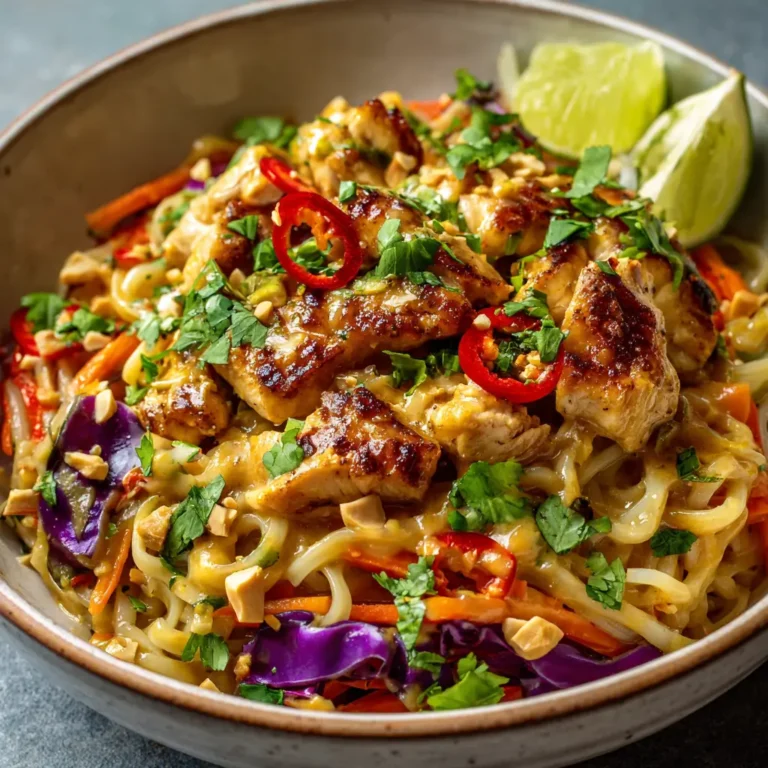
- Layer with Care: Start with a generous bed of cooked noodles at the bottom of a large, shallow bowl. Arrange the cooked chicken slices artfully over the noodles.
- Color Contrast is Key: Artfully arrange the fresh, colorful vegetables (shredded carrots, cucumber strips, red bell pepper, edamame) around the chicken and noodles. Aim for a balanced distribution of colors and textures.
- Sauce Drizzle: Generously drizzle the creamy peanut sauce over all the components. You can spoon some over the chicken and vegetables, allowing it to naturally cascade down.
- Garnish for Impact: This is where you add the final flourish.
- Chopped Roasted Peanuts: Sprinkle generously for added crunch and an intensified nutty flavor.
- Fresh Cilantro: A handful of roughly chopped fresh cilantro adds a burst of herbaceous freshness and a beautiful green pop.
- Green Onions: Thinly sliced green onions (scallions) provide a mild oniony bite and a clean, vibrant aesthetic.
- Lime Wedges: Always serve with fresh lime wedges on the side. A squeeze of fresh lime juice just before eating brightens all the flavors and adds a crucial tangy counterpoint.
- Red Pepper Flakes or Sriracha: For those who enjoy an extra kick, offer a sprinkle of red pepper flakes or a drizzle of sriracha chili sauce.
- Sesame Seeds: A light sprinkle of toasted sesame seeds (white or black) adds a subtle nutty aroma and an elegant finish.
Side Dish Ideas
While a Thai Peanut Chicken Noodle Bowl is often considered a complete meal, a few complementary side dishes can elevate the experience, especially if you’re serving it for guests or a larger family meal.
- Fresh Spring Rolls (Goi Cuon): Light, refreshing, and filled with crisp vegetables, herbs, and sometimes shrimp or tofu, fresh spring rolls offer a cool contrast to the warm noodles and rich sauce. They also come with their own peanut dipping sauce, creating a delightful thematic echo.
- Steamed Edamame: A simple bowl of steamed edamame, lightly seasoned with sea salt, makes for a healthy, protein-rich, and easy-to-snack-on appetizer that complements the Asian flavors of the main dish.
- Simple Green Salad with Ginger-Sesame Dressing: A light, crisp salad with mixed greens, thinly sliced radish, and perhaps some mandarin oranges, dressed with a homemade ginger-sesame vinaigrette, can add another layer of freshness and cut through the richness of the peanut sauce.
- Crispy Zucchini Fritters: If you’re looking for a warm, savory side with a bit of a crunch, these fritters would make a delightful addition, offering a different texture profile.
- Cucumber Salad: A quick cucumber salad dressed with rice vinegar, a touch of sugar, and sesame oil provides a refreshing, tangy, and cooling element, especially if your noodle bowl is on the spicier side.
Beverage Pairings
Choosing the right beverage can enhance the complex flavors of your Thai Peanut Chicken Noodle Bowls.
- Iced Green Tea or Thai Iced Tea: A classic choice. Iced green tea offers a clean, earthy palate cleanser, while a creamy, sweet Thai iced tea provides a rich, indulgent counterpoint that can temper the spice.
- Light Lager or Pale Ale: The crispness and slight bitterness of a light beer, especially an Asian lager, can cut through the richness of the peanut sauce and refresh the palate without overpowering the delicate flavors.
- Sparkling Water with Lime: For a non-alcoholic option, sparkling water with a generous squeeze of fresh lime provides effervescence and acidity that brightens the dish and cleanses the palate.
- Sauvignon Blanc or Riesling: If you prefer wine, a crisp, dry Sauvignon Blanc with its citrus and herbaceous notes can beautifully complement the lime and cilantro in the dish. A slightly off-dry Riesling (like a German Kabinett) can also work well, with its inherent sweetness balancing any spice and its acidity cutting through the richness.
- Ginger Ale or Ginger Beer: The spicy kick of ginger ale or ginger beer can harmonize with the ginger in the sauce and provide a refreshing sparkle.
By thoughtfully considering these serving suggestions, you can transform a simple weeknight meal into a memorable dining experience.
5. Nutritional Information
Understanding the nutritional breakdown of your Thai Peanut Chicken Noodle Bowls can help you appreciate its contribution to a balanced diet. Please note that the following nutritional information is an estimated value per serving and can vary significantly based on specific ingredients used, portion sizes, and preparation methods. For precise figures, especially for dietary restrictions, calculating based on your exact ingredients is recommended.
Estimated Nutritional Values Per Serving (assuming 4 servings):
- Calories: Approximately 650-800 calories. This can fluctuate based on the amount of oil used, type of noodles, and exact quantity of peanut butter and chicken.
- Macronutrient Distribution:
- Protein: Approximately 35-45g. The chicken breast is a lean, excellent source of protein, crucial for muscle repair, growth, and satiety. The peanut butter also contributes a significant amount of plant-based protein.
- Carbohydrates: Approximately 60-80g. Primarily from the noodles and the natural sugars in the peanut sauce. Noodles provide essential energy, while the vegetables contribute complex carbohydrates and fiber.
- Fats: Approximately 30-45g. A good portion of this comes from healthy monounsaturated and polyunsaturated fats found in peanut butter. These fats are beneficial for heart health and aid in the absorption of fat-soluble vitamins. The cooking oil also contributes to the fat content.
- Dietary Information & Health Benefits:
- Rich in Protein: The chicken provides high-quality protein, essential for building and repairing tissues, enzyme production, and hormone regulation. This makes the meal very filling and helps prevent post-meal cravings.
- Healthy Fats: Peanut butter is a great source of monounsaturated and polyunsaturated fats, including omega-6 fatty acids. These fats are known to support heart health, help lower bad cholesterol levels, and provide sustained energy.
- Fiber-Packed Vegetables: The addition of fresh vegetables like carrots, cucumbers, and bell peppers significantly boosts the fiber content. Dietary fiber aids in digestion, promotes gut health, helps regulate blood sugar levels, and contributes to a feeling of fullness.
- Vitamins and Minerals: This bowl is a treasure trove of essential vitamins and minerals.
- Vitamin A: Abundant in carrots, supporting vision and immune function.
- Vitamin C: From lime juice and bell peppers, a powerful antioxidant vital for immune health and skin integrity.
- B Vitamins: Present in chicken and peanuts, crucial for energy metabolism and nerve function.
- Iron: Found in chicken and peanuts, essential for oxygen transport in the blood.
- Potassium: From vegetables and peanuts, important for blood pressure regulation and fluid balance.
- Magnesium: Contributed by peanuts, vital for muscle and nerve function, blood glucose control, and bone health.
- Energy-Boosting: The combination of complex carbohydrates from noodles, lean protein from chicken, and healthy fats from peanuts provides a sustained release of energy, making this an excellent meal to fuel your body.
- Antioxidant Properties: Ingredients like garlic, ginger, and fresh herbs (cilantro) are known for their antioxidant and anti-inflammatory properties, contributing to overall health and well-being.
- Customizable for Dietary Needs: As mentioned in the summary, this recipe is highly adaptable. You can reduce calories by opting for leaner chicken cuts (or less oil), increase fiber by adding more vegetables, or adjust fats by controlling peanut butter quantity. For a sodium-conscious diet, use low-sodium soy sauce and monitor added salt.
In essence, Thai Peanut Chicken Noodle Bowls offer a delicious and relatively wholesome meal, packed with nutrients that support various bodily functions. Enjoying this dish means fueling your body with a balanced array of macronutrients and micronutrients, all while savoring a delightful flavor experience.
6. Storage and Reheating
Proper storage and reheating are key to enjoying your Thai Peanut Chicken Noodle Bowls as delicious leftovers. While best enjoyed fresh, this dish holds up remarkably well for meal prep, especially if you follow a few simple guidelines.
Storage Instructions
- Cool Down Quickly: Before storing, allow the cooked chicken, noodles, and any cooked vegetables to cool down to room temperature completely. This prevents condensation from building up inside the container, which can lead to sogginess and bacterial growth. Do not leave food out for more than two hours.
- Separate Components for Best Results: For the absolute best quality, especially if you’re planning to store for more than a day, it’s ideal to store the main components separately:
- Noodles: Store cooked and drained noodles in an airtight container. If they are prone to sticking, you can toss them with a tiny bit of olive oil or sesame oil before storing.
- Chicken: Keep sliced cooked chicken in its own airtight container.
- Peanut Sauce: Store the sauce in a separate airtight container. Its consistency can thicken in the fridge, but it will loosen when reheated.
- Fresh Vegetables (Garnishes): Store fresh, uncooked vegetables (shredded carrots, cucumber, cilantro, green onions, lime wedges) in separate airtight containers or zip-top bags. This maintains their crispness and prevents them from wilting or softening in the sauce.
- Combined Bowls for Convenience: If you’re packing individual meal prep portions for the next day or two, you can combine the noodles, chicken, and a generous drizzle of sauce in an airtight container. However, add fresh vegetables (like cucumber and cilantro) just before eating to preserve their crunch.
- Airtight Containers: Always use clean, airtight containers to prevent air exposure, which can dry out the food and lead to spoilage. Glass containers are excellent as they don’t stain or retain odors.
Refrigeration/Freezing
- Refrigeration:
- Duration: Stored properly in airtight containers, the Thai Peanut Chicken Noodle Bowls (or their individual components) will last for 3-4 days in the refrigerator.
- Quality: The texture of the noodles can change slightly, becoming a bit softer. The sauce may thicken. Fresh vegetables are best added just before serving.
- Freezing:
- Sauce: The peanut sauce freezes exceptionally well. Pour it into freezer-safe containers or heavy-duty freezer bags. It can be frozen for up to 3 months. Thaw overnight in the refrigerator before using. Stir well to re-emulsify if separation occurs.
- Cooked Chicken: Cooked chicken can also be frozen in an airtight container for up to 2-3 months. Thaw in the refrigerator before reheating.
- Cooked Noodles & Combined Bowls: Freezing cooked noodles is generally not recommended as they can become mushy and lose their desirable texture upon thawing. Similarly, freezing a fully assembled noodle bowl with chicken and sauce might result in a less-than-ideal texture for the noodles and some vegetables. If you absolutely must freeze an assembled bowl, expect a compromise in texture.
Reheating Methods
The goal of reheating is to warm the food through without drying out the chicken or making the noodles excessively mushy.
- Microwave (Recommended for Convenience):
- Transfer your desired portion of noodles, chicken, and sauce to a microwave-safe bowl.
- Add a splash of water, chicken broth, or coconut milk (about 1-2 tablespoons) to help rehydrate the noodles and loosen the sauce.
- Cover the bowl (with a microwave-safe lid or damp paper towel) to trap steam and heat evenly.
- Heat on high for 1-2 minutes, stir, and continue heating in 30-second intervals until warmed through.
- Once reheated, add your fresh garnishes (cucumber, cilantro, peanuts, lime) and enjoy.
- Stovetop (Best for Multiple Servings or Better Texture):
- If components are separate, gently warm the chicken in a skillet over medium-low heat with a tiny bit of oil or broth.
- For the noodles, you can either briefly dunk them in boiling water for 30 seconds (if separate) or add them to the skillet with the chicken.
- Warm the peanut sauce in a small saucepan over low heat, stirring frequently, adding a splash of water or broth if it’s too thick.
- Combine the warmed chicken and noodles, then toss with the reheated sauce.
- Plate and add fresh garnishes.
- Adding Freshness Back: Regardless of the reheating method, always add fresh elements like cucumber, carrots, cilantro, green onions, and a fresh squeeze of lime after reheating. This revitalizes the dish and adds back the crucial crisp texture and bright flavor that can diminish during storage.
By following these storage and reheating tips, you can enjoy your delicious Thai Peanut Chicken Noodle Bowls multiple times without compromising too much on flavor or texture.
7. Expert Tips and Variations
Unlocking the full potential of your Thai Peanut Chicken Noodle Bowls involves a few pro-level insights and a willingness to explore creative variations. Here’s how to elevate your dish from good to absolutely unforgettable.
Professional Chef Tips
- Mise en Place is Your Best Friend: Before you even turn on the stove, get all your ingredients prepped and laid out. This means chopping vegetables, mincing garlic and ginger, measuring out liquids for the sauce, and slicing chicken. This practice, known as mise en place, ensures a smooth, stress-free cooking process, especially for a quick-cooking dish like this.
- Perfectly Seared Chicken: Don’t overcrowd the pan when cooking the chicken. Cook in batches if necessary. Ensure the pan is hot and has enough oil (like a neutral oil or coconut oil). This allows the chicken to sear properly, developing a beautiful golden-brown crust and locking in juices, resulting in tender, flavorful chicken, rather than steamed, bland pieces. Cook until just done to avoid dry chicken.
- Emulsify Your Sauce: When making the peanut sauce, add the liquids (broth, soy sauce, lime juice, etc.) gradually to the peanut butter, whisking constantly. This helps create a smooth, creamy, and well-emulsified sauce without lumps. Taste and adjust seasonings – it should hit all the sweet, salty, sour, and spicy notes. Remember, a little goes a long way with strong flavors like chili garlic paste.
- Al Dente Noodles: Overcooked noodles are a common pitfall. Cook your noodles to al dente, which means they should be firm to the bite. They will continue to cook slightly when tossed with the warm chicken and sauce. Rinse rice noodles with cold water immediately after draining to stop the cooking process and prevent sticking.
- Balance of Textures: The best bowls have a variety of textures. Don’t underestimate the importance of fresh, crunchy vegetables. These provide a crucial counterpoint to the soft noodles and tender chicken. Consider quick-pickling some of your harder vegetables (like carrots or cucumbers) for an extra tangy crunch.
- Fresh Aromatics: Always use fresh garlic, ginger, and lime juice. Their vibrant flavors are non-negotiable for an authentic-tasting Thai-inspired dish. Pre-minced or bottled versions simply don’t compare.
Common Mistakes to Avoid
- Overcooking Chicken: Dry, rubbery chicken is a cardinal sin. Cook chicken breast until it’s just opaque throughout, typically 5-7 minutes per side depending on thickness. Thighs are more forgiving.
- Clumpy Noodles: Make sure to use a large pot with plenty of boiling, salted water for your noodles. Stir them occasionally to prevent sticking. Rinsing rice noodles after cooking is essential.
- Unbalanced Sauce: The peanut sauce is the heart of this dish. Not tasting and adjusting can lead to a sauce that’s too salty, too sweet, or lacking in tang. Taste as you go, and adjust with more lime, a pinch of sugar, or a dash more soy sauce until it sings.
- Soggy Vegetables: Add fresh garnishes just before serving. Cooking or adding delicate vegetables too early will make them lose their crispness and vibrant color.
- Overpowering Spice: Add chili garlic sauce gradually. It’s easier to add more spice than to take it away. Start with a small amount and increase to your preference.
Recipe Variations
- Protein Swaps:
- Tofu/Tempeh: For a vegetarian or vegan option, press extra-firm tofu, cut into cubes, and pan-fry or bake until crispy. Tempeh can be crumbled or sliced and cooked similarly. Marinade them in a little soy sauce and sesame oil first for extra flavor.
- Shrimp: Quickly sautéed shrimp adds a lovely seafood twist. Cook until pink and opaque, about 2-3 minutes per side.
- Beef: Thinly sliced sirloin or flank steak can be quickly stir-fried for a heartier bowl.
- Pesto Chicken Tortellini and Veggies Skillet: While not Thai, this shows the versatility of chicken in bowl-style dishes, and can inspire you to experiment with different proteins and flavor profiles.
- Noodle Alternatives:
- Zucchini Noodles (Zoodles): For a low-carb option, spiralized zucchini offers a fresh, crisp base.
- Soba Noodles: Buckwheat noodles add an earthy, nutty flavor.
- Whole Wheat Pasta: A healthier, more substantial alternative to white flour noodles.
- Spicy Korean Beef Ramen with Creamy Sauce: Another noodle-based dish that can inspire different flavor combinations and noodle choices.
- Vegetable Additions:
- Broccoli or Snap Peas: Lightly steamed or quickly stir-fried for extra green goodness.
- Bell Peppers: Red, yellow, or orange bell peppers add sweetness and crunch.
- Mushrooms: Sautéed shiitake or cremini mushrooms add an umami depth.
- Spinach or Bok Choy: Wilted spinach or quickly blanched bok choy can be folded in at the end.
- Spice Level Adjustments:
- Milder: Reduce or omit the chili garlic sauce.
- Spicier: Add more chili garlic sauce, a pinch of cayenne pepper, or a drizzle of sriracha directly into your bowl.
- Nut Butter Alternatives:
- Almond Butter: For a slightly different nutty flavor profile.
- Cashew Butter: Offers a creamier, milder taste.
- Sunbutter: A great peanut-free option for those with allergies.
- Cilantro Lime Chicken Bowls with Peach Salsa: This recipe, though different in flavor profile, demonstrates the ‘bowl’ concept and how various fresh components can come together, giving you ideas for texture and flavor additions to your peanut bowls.
Seasonal Adaptations
- Spring: Incorporate fresh asparagus, sugar snap peas, and radishes for extra crispness and spring flavors.
- Summer: Add grilled corn kernels (cut off the cob), cherry tomatoes, or thin slices of mango for a touch of tropical sweetness.
- Fall: Roasted butternut squash cubes, sautéed kale, or thinly sliced apples can bring autumnal warmth and unique flavors.
- Winter: Add blanched Brussels sprouts, steamed cauliflower florets, or a sprinkle of pomegranate seeds for color and tartness.
By experimenting with these tips and variations, you can make your Thai Peanut Chicken Noodle Bowls a dynamic and exciting meal that never gets boring, perfectly suited to your taste and the season.
8. Ingredients Section
Crafting the perfect Thai Peanut Chicken Noodle Bowl begins with a careful selection and precise measurement of ingredients. This section breaks down everything you’ll need, offering both imperial and metric measurements, along with sourcing tips and substitution ideas.
Yields: 4 servings
Prep time: 20 minutes
Cook time: 15-20 minutes
For the Chicken:
- 1.5 lbs (680g) Boneless, Skinless Chicken Breast or Thighs:
- Sourcing: Look for organic, free-range chicken for best flavor and ethical considerations. Chicken thighs tend to be more forgiving and retain moisture better, while breasts offer a leaner option.
- Substitutions: Extra-firm tofu (pressed and cubed), tempeh, shrimp, or thinly sliced beef (sirloin, flank steak).
- 1 tbsp (15ml) Neutral Cooking Oil (e.g., canola, vegetable, avocado):
- Sourcing: Choose oils with a high smoke point for searing.
- Substitutions: Coconut oil for a subtle tropical hint.
- Salt and Freshly Ground Black Pepper, to taste:
- Sourcing: Fine sea salt or kosher salt is recommended.
For the Noodles:
- 8 oz (225g) Rice Noodles (e.g., vermicelli, fettuccine-style, or linguine-style):
- Sourcing: Found in the Asian aisle of most supermarkets. Choose thicker flat noodles for a more substantial chew, or thin vermicelli for a lighter feel. For gluten-free, ensure 100% rice noodles.
- Substitutions: Soba noodles (buckwheat), whole wheat spaghetti, or spiralized zucchini (zoodles) for a low-carb alternative.
For the Creamy Peanut Sauce:
- ½ cup (120g) Creamy Peanut Butter:
- Sourcing: Use natural, unsweetened peanut butter for the best flavor balance. Avoid brands with added sugars or hydrogenated oils. Crunchy peanut butter can be used for extra texture.
- Substitutions: Almond butter, cashew butter, or sunbutter (for nut allergies).
- ¼ cup (60ml) Low-Sodium Soy Sauce:
- Sourcing: Tamari is an excellent gluten-free alternative.
- Substitutions: Tamari (gluten-free), coconut aminos (for soy-free/gluten-free, note it’s slightly sweeter), or fish sauce (for deeper umami, adjust quantity).
- 2 tbsp (30ml) Rice Vinegar:
- Sourcing: Look for unseasoned rice vinegar for better control over sweetness.
- Substitutions: Apple cider vinegar (use slightly less as it’s stronger) or fresh lime juice.
- 2 tbsp (30ml) Honey or Maple Syrup:
- Sourcing: Local honey for best flavor, or pure maple syrup for a vegan option.
- Substitutions: Agave nectar, brown sugar, or date syrup. Adjust to your desired sweetness.
- 1 tbsp (15ml) Freshly Grated Ginger:
- Sourcing: Fresh ginger root is crucial for its pungent, aromatic flavor. Peel with a spoon for minimal waste.
- Substitutions: ½ tsp ground ginger powder (less potent, use sparingly).
- 2 cloves Fresh Garlic, minced (approx. 1 tsp / 5g):
- Sourcing: Fresh garlic cloves provide the best flavor.
- Substitutions: ½ tsp garlic powder (less potent).
- 1-2 tsp (5-10ml) Chili Garlic Sauce (e.g., Huy Fong Sambal Oelek):
- Sourcing: Found in the Asian section. Adjust quantity to your preferred spice level.
- Substitutions: Sriracha, red pepper flakes (start with ¼ tsp and build), or a pinch of cayenne pepper.
- ½ cup (120ml) Warm Water or Chicken/Vegetable Broth:
- Sourcing: Use low-sodium broth to control saltiness.
- Substitutions: Coconut milk for a richer, creamier sauce, or water.
- 1 tbsp (15ml) Toasted Sesame Oil (optional, for aroma):
- Sourcing: A finishing oil, used for its potent nutty aroma rather than cooking.
- Substitutions: None truly replicate its unique aroma, but can be omitted.
For the Fresh Toppings/Garnishes:
- 1 Large Carrot (approx. 1 cup / 120g), shredded or julienned:
- Sourcing: Fresh, firm carrots.
- ½ English Cucumber (approx. 1 cup / 120g), julienned or thinly sliced:
- Sourcing: English cucumbers are less seedy and have a thinner skin, making them ideal.
- ¼ cup (15g) Fresh Cilantro, chopped:
- Sourcing: Fresh, vibrant green bunches.
- Substitutions: Thai basil or mint for a different herbacious note.
- 2 Green Onions (Scallions), thinly sliced:
- Sourcing: Fresh, crisp green onions.
- Substitutions: Thinly sliced red onion (soak in cold water for 10 min to reduce pungency).
- ¼ cup (30g) Roasted Peanuts, chopped (optional):
- Sourcing: Unsalted, dry-roasted peanuts are best.
- Substitutions: Cashews, almonds, or toasted sesame seeds.
- Lime Wedges, for serving:
- Sourcing: Fresh, firm limes. Essential for brightness.
By paying attention to these ingredient details, you ensure a Thai Peanut Chicken Noodle Bowl that is bursting with authentic-inspired flavor and perfectly balanced for your palate.
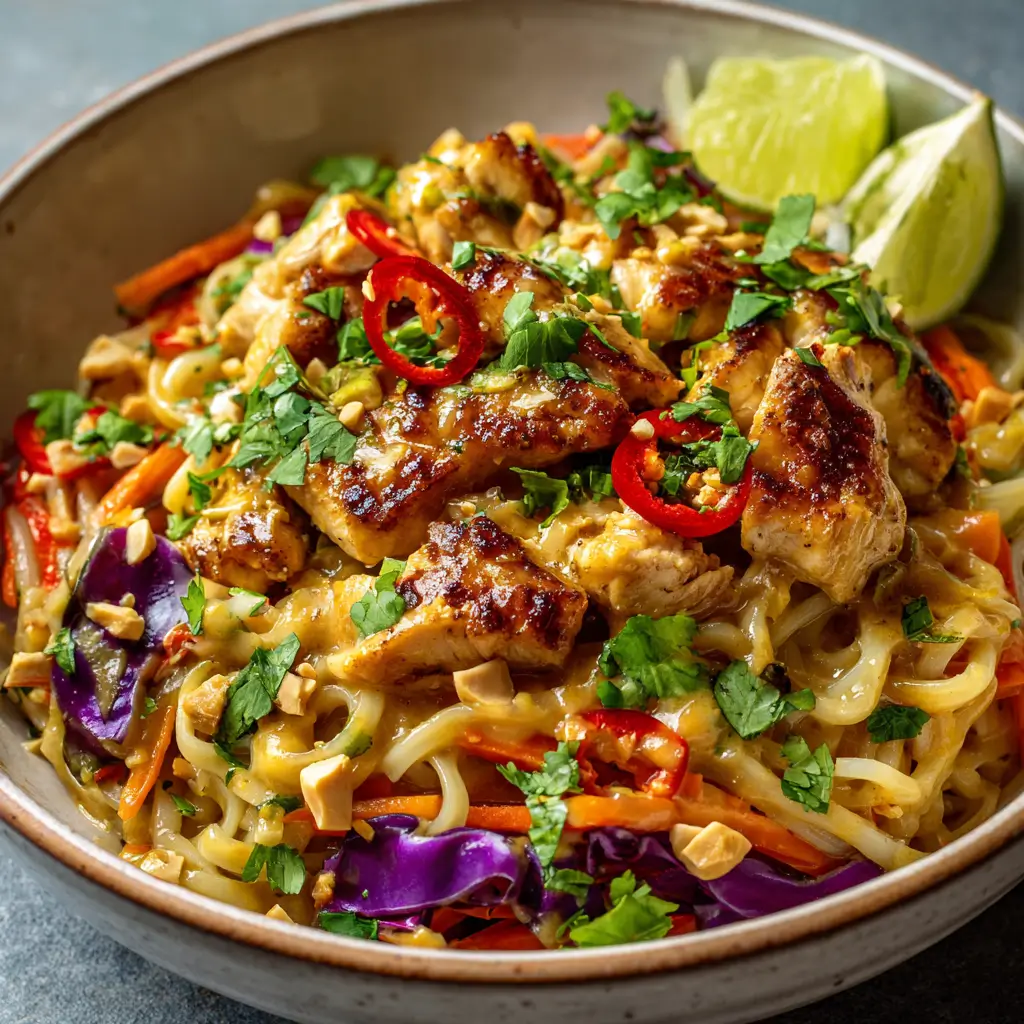
Share this Delicious RThai Peanut Chicken Noodle Bowls Recipe with your friends on Facebook or save it to your Pinterest boards for a sunny treat!
9. Step-by-Step Instructions
Creating your Thai Peanut Chicken Noodle Bowls is a rewarding culinary journey that comes together surprisingly quickly. Follow these detailed steps to ensure a perfectly balanced and flavorful meal.
Step 1: Prepare the Chicken
- Pat Dry: Pat the chicken breasts or thighs thoroughly dry with paper towels. This is a crucial step to ensure a good sear and prevents the chicken from steaming.
- Season: Season both sides of the chicken generously with salt and freshly ground black pepper.
- Heat Oil: Heat 1 tablespoon of neutral cooking oil in a large skillet or wok over medium-high heat until shimmering.
- Sear Chicken: Carefully place the chicken into the hot skillet. Do not overcrowd the pan; cook in batches if necessary.
- Cook Through: Sear for 5-7 minutes per side, or until golden brown and cooked through. Chicken is done when an internal temperature of 165°F (74°C) is reached.
- Culinary Technique: Searing – Achieving a golden-brown crust adds immense flavor and texture. Avoid moving the chicken too much once it’s in the pan to allow the crust to form.
- Rest and Slice: Once cooked, remove the chicken from the skillet and let it rest on a cutting board for 5 minutes. This allows the juices to redistribute, keeping the chicken tender and moist. After resting, slice the chicken against the grain into ½-inch (1.25 cm) thick strips or bite-sized pieces. Set aside.
Step 2: Cook the Noodles
- Boil Water: Bring a large pot of generously salted water to a rolling boil.
- Cook Noodles: Add the rice noodles to the boiling water and cook according to package directions. Rice noodles typically cook very quickly, often just 3-5 minutes, until al dente (tender but still firm to the bite).
- Cooking Cue: Taste a noodle to check for desired doneness. They should not be mushy.
- Drain and Rinse: Immediately drain the noodles in a colander. For rice noodles, rinse thoroughly with cold water to stop the cooking process and prevent them from sticking together. Shake well to remove excess water. Set aside.
Step 3: Prepare the Creamy Peanut Sauce
- Combine Ingredients: In a medium mixing bowl, combine the creamy peanut butter, low-sodium soy sauce, rice vinegar, honey (or maple syrup), grated fresh ginger, minced fresh garlic, and chili garlic sauce.
- Whisk: Begin whisking the ingredients together vigorously. It may seem thick or clumpy at first.
- Add Liquid Gradually: Slowly pour in the warm water or broth, about ¼ cup (60ml) at a time, continuously whisking until the sauce becomes smooth, creamy, and pourable. The warm liquid helps the peanut butter emulsify more easily.
- Culinary Technique: Emulsification – Gradually adding liquid while whisking helps bind the fat from the peanut butter with the other liquids, creating a stable, smooth sauce.
- Add Sesame Oil (Optional): Stir in the toasted sesame oil, if using, for an added layer of nutty aroma.
- Taste and Adjust: Taste the sauce and adjust seasonings as needed.
- Troubleshooting Tip: Sauce too thick? Add another tablespoon or two of warm water or broth until it reaches your desired consistency.
- Troubleshooting Tip: Sauce too thin? Whisk in a little more peanut butter.
- Troubleshooting Tip: Needs more zest? Add more lime juice (a squeeze from a fresh lime wedge).
- Troubleshooting Tip: Needs more sweetness? Add a pinch more honey or maple syrup.
- Troubleshooting Tip: Needs more umami/salt? Add a dash more soy sauce.
Step 4: Prepare Fresh Toppings
- Shred/Julienne: Shred the carrot and julienne or thinly slice the cucumber.
- Chop Herbs: Chop the fresh cilantro and thinly slice the green onions.
- Chop Peanuts: Roughly chop the roasted peanuts, if using.
- Prepare Lime Wedges: Cut lime into wedges for serving.
Step 5: Assemble the Noodle Bowls
- Toss Noodles and Chicken (Optional but Recommended): For best flavor distribution, you can add the cooked and drained noodles back into the skillet (or a large mixing bowl) along with the sliced chicken.
- Add Sauce: Pour about ¾ of the prepared peanut sauce over the noodles and chicken. Use tongs to gently toss everything together until evenly coated.
- Cooking Cue: Ensure all noodles and chicken are beautifully enveloped in the creamy sauce.
- Plate: Divide the sauced noodles and chicken among 4 individual serving bowls.
- Arrange Toppings: Artfully arrange the fresh shredded carrot, julienned cucumber, chopped cilantro, and sliced green onions over each bowl.
- Garnish: Sprinkle with chopped roasted peanuts (if using) and serve immediately with extra lime wedges on the side for squeezing and the remaining peanut sauce for those who want more.
- Troubleshooting Tip: Noodles clumping after sitting? A quick splash of warm water or broth and a toss will often loosen them up.
Enjoy your vibrant, flavorful Thai Peanut Chicken Noodle Bowls!
10. Frequently Asked Questions (FAQ)
Here are some common questions readers might have about making and enjoying Thai Peanut Chicken Noodle Bowls:
Q1: Can I make Thai Peanut Chicken Noodle Bowls vegetarian or vegan?
Absolutely! This recipe is incredibly versatile. To make it vegetarian, simply swap the chicken for an equal amount of pan-fried extra-firm tofu or tempeh, cooked until crispy. For a vegan version, in addition to the protein swap, ensure you use maple syrup or agave nectar instead of honey in the sauce. The flavors are just as delicious and satisfying with plant-based proteins.
Q2: What kind of noodles are best for this recipe?
Rice noodles are traditional for many Thai-inspired dishes and work wonderfully here. You can use thin rice vermicelli for a lighter bowl, or wider flat rice noodles (like those used in Pad Thai) for a more substantial chew. If you can’t find rice noodles, thin spaghetti or linguine can be a good substitute, though the texture will be different. For a low-carb option, spiralized zucchini noodles (zoodles) or cucumber noodles are excellent choices.
Q3: How can I adjust the spice level of the peanut sauce?
The spice comes primarily from the chili garlic sauce. For a milder sauce, start with just ½ teaspoon or omit it entirely. If you prefer more heat, you can gradually add more chili garlic sauce, a pinch of red pepper flakes, or a dash of sriracha to taste. Remember, it’s easier to add more spice than to take it away, so start slow and adjust as you go.
Q4: Can I make the peanut sauce ahead of time?
Yes, the peanut sauce is fantastic for meal prep! You can prepare it up to 3-4 days in advance and store it in an airtight container in the refrigerator. The sauce will likely thicken when chilled, so you may need to whisk in a tablespoon or two of warm water or broth when you’re ready to use it to bring it back to a pourable consistency. This makes assembly on a busy weeknight even faster. For a similar dish that benefits from make-ahead sauces, check out our Easy Thai Coconut Soup Recipe (Tom Kha Gai Style) which also features a rich, flavorful broth that can be prepared in advance.
Q5: What can I add for more vegetables or a different crunch?
The beauty of a bowl meal is its customizability. Feel free to add any vegetables you enjoy! Great additions include thinly sliced red bell peppers, snap peas, edamame (shelled), shredded purple cabbage, bean sprouts, or even some quickly sautéed broccoli florets. For an extra crunch, consider adding some chopped roasted cashews, toasted sesame seeds, or crispy fried shallots.
Q6: How do I prevent my noodles from clumping together?
There are a few tricks for perfect noodles. First, use a large pot with plenty of water. Adding a teaspoon of salt to the boiling water can also help. Once cooked, immediately drain the noodles and rinse thoroughly with cold water. This stops the cooking process and washes away excess starch, which is often the cause of clumping. If storing, toss them with a tiny bit of sesame oil or neutral cooking oil before refrigeration.
Q7: My peanut sauce is too thick/thin. How can I fix it?
If your sauce is too thick, gradually whisk in more warm water or broth, one tablespoon at a time, until you reach your desired pourable consistency. If your sauce is too thin, you can try whisking in a little more peanut butter, or gently simmering it in a small saucepan over low heat for a few minutes (stirring constantly) to allow it to reduce and thicken slightly. Be careful not to let it burn.
