
Table of Contents
Table of Contents
1. Introduction
Step into a world where vibrant flavors and tantalizing aromas dance together, creating a culinary experience that is both refreshing and deeply satisfying. Our journey today takes us to the heart of Southeast Asia, specifically Thailand, where the magic of fresh ingredients transforms simple dishes into unforgettable feasts. We’re not talking about your average stir-fry or curry; instead, we’re diving into the delightful art of crafting Thai Basil Beef Rolls.
Imagine thin, tender slices of marinated beef, quickly seared to perfection, then nestled amongst crisp, colorful vegetables and aromatic fresh Thai basil. All of this goodness is then expertly wrapped in delicate, translucent rice paper, creating a perfect handheld package of flavor. These rolls are more than just a dish; they are an invitation to explore the balance of sweet, sour, salty, and spicy that defines Thai cuisine.
The concept of fresh spring rolls, or Goi Cuon in Vietnamese, is widely celebrated across Southeast Asia, often adapted with local ingredients and culinary traditions. Our Thai Basil Beef Rolls draw inspiration from this tradition, infusing it with distinctly Thai flavors. While classic fresh spring rolls often feature shrimp or pork, this beef rendition elevates the experience with its rich, savory core, beautifully complemented by the peppery, anise-like notes of Thai basil. This herb is not just an ingredient; it’s a cornerstone of Thai cooking, lending its unique perfume to everything from curries to stir-fries. Here, it takes center stage, uncut and vibrant, providing an explosion of flavor with every bite.
Historically, the idea of wrapping fresh ingredients in rice paper gained popularity as a way to enjoy meals that are light, healthy, and incredibly versatile. They are often served as appetizers, a refreshing prelude to a larger meal, or as a light lunch, especially during warmer months. The beauty of these rolls lies in their simplicity and the stark contrast they offer to the rich, heavy dishes often associated with indulgent dining. They are a testament to the power of fresh produce and quality protein, minimally cooked to preserve their natural textures and tastes.
The significance of these rolls, beyond their exquisite taste, lies in their interactive nature. Preparing them is an engaging process, and eating them is an experience in itself – dipping, biting, and savoring the symphony of flavors. They embody the Thai philosophy of “sanuk,” meaning fun and enjoyment, extending from the cooking process to the communal table. This recipe is an exploration of that joy, bringing a piece of Thailand’s culinary heritage right into your kitchen. Whether you’re a seasoned chef or a curious home cook, these Thai Basil Beef Rolls promise an adventure in taste and texture, a dish that is as beautiful to look at as it is delicious to eat.
2. Recipe Summary
- Cuisine: Thai / Southeast Asian Fusion
- Difficulty Level: Medium. While the individual components are straightforward, the rolling technique requires a bit of practice to achieve neat, taut rolls. Don’t be discouraged if your first few aren’t perfect – they’ll still taste amazing!
- Total Preparation and Cooking Time: Approximately 45-60 minutes.
- Prep Time: 30-40 minutes (for marinating beef, chopping vegetables, preparing sauce).
- Cook Time: 15-20 minutes (for searing beef, softening rice paper).
- Dietary Classification:
- Not Vegetarian/Vegan: Contains beef and fish sauce.
- Gluten-Free Option: Can be made gluten-free by substituting regular soy sauce with tamari or a certified gluten-free soy sauce, and ensuring the hoisin sauce is gluten-free (check labels).
- Dairy-Free: Naturally dairy-free.
- Nut-Free: Can be made nut-free by omitting peanuts from the dipping sauce or using a sunflower seed butter alternative.
3. Equipment and Utensils
To embark on your Thai Basil Beef Roll adventure, gather the following tools. Having everything ready beforehand, known as mise en place, will make the process much smoother and more enjoyable.
- Sharp Chef’s Knife: Essential for thinly slicing the beef and finely julienning vegetables. A sharp knife ensures clean cuts and enhances safety.
- Cutting Board: A large, stable cutting board is crucial for prepping all your ingredients.
- Medium Mixing Bowl (2-3): One for marinating the beef, one for whisking the dipping sauce, and an optional one for holding prepped vegetables.
- Large, Wide Dish or Shallow Pan: For soaking the rice paper wrappers. It needs to be wide enough to accommodate the wrappers flat. A pie dish or a large dinner plate works well.
- Large Skillet or Wok: For quickly searing the beef. A non-stick skillet or a well-seasoned cast-iron pan will prevent sticking.
- Tongs: Ideal for turning beef slices in the skillet and arranging ingredients.
- Measuring Cups and Spoons: For accurate measurements of ingredients for both the marinade and the dipping sauce.
- Whisk: For thoroughly combining the dipping sauce ingredients.
- Small Saucepan (optional): If you choose to warm your dipping sauce slightly.
- Serving Platter: A beautiful platter to display your finished rolls.
- Vegetable Peeler (optional): For peeling carrots or cucumbers if desired.
- Mandoline Slicer (optional): For achieving perfectly thin, uniform julienned vegetables like cucumber and carrot, saving time and ensuring consistency.
- Small Bowls (for individual dipping sauce): To serve the dipping sauce alongside the rolls.
4. Serving Suggestions
Thai Basil Beef Rolls are a feast for the senses, and how you present them can elevate the dining experience even further.
Plating Recommendations
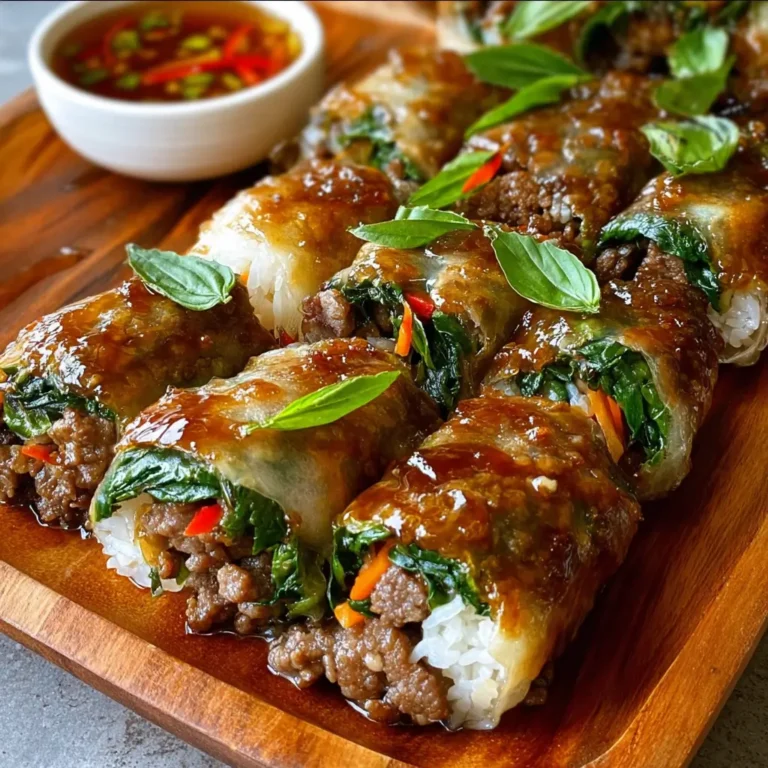
- Artful Arrangement: Arrange the freshly cut rolls on a long, rectangular platter. You can stand them upright or lay them on their sides, showcasing the colorful fillings. Overlapping them slightly can create a visually appealing cascade.
- Garnish with Flair: Sprinkle a few extra fresh Thai basil leaves, chopped peanuts, or a drizzle of chili oil over the platter for added color and aroma. A wedge of lime on the side adds a bright touch.
- Dipping Sauce Bowls: Serve the dipping sauce in small, individual ramekins or a central bowl with a serving spoon. This allows guests to dip their rolls easily.
- Color Contrast: Choose a white or light-colored platter to make the vibrant greens, reds, and browns of the rolls truly pop.
Side Dish Ideas
These rolls are often enjoyed as an appetizer, but they can also make a fantastic light meal when paired with complementary dishes:
- Jasmine Rice: A simple bowl of fluffy Jasmine Rice can provide a comforting base.
- Light Salad: A refreshing green salad with a citrus vinaigrette or a Summer Strawberry Salad with Balsamic would complement the fresh flavors of the rolls.
- Thai Coconut Soup (Tom Kha Gai-style): For a fuller Thai meal, a creamy, aromatic soup like Easy Thai Coconut Soup provides a wonderful contrast in texture and temperature.
- Crispy Spring Rolls: Offer a textural contrast with some crispy fried spring rolls, or even some Mini Quiche Bites if you’re looking for a different style of appetizer.
- Sautéed Green Beans: A simple side of Easy Sautéed Green Beans can add another layer of fresh vegetables.
Beverage Pairings
The freshness and slight spice of these rolls call for beverages that can cleanse the palate and complement, rather than overpower, the delicate flavors.
- Thai Iced Tea or Coffee: For an authentic experience, a sweet and creamy Thai iced tea or coffee is a delightful contrast to the savory rolls.
- Light Lager or Pale Ale: A crisp, light beer can cut through the richness of the beef and refresh the palate.
- Sauvignon Blanc or Pinot Grigio: A dry, crisp white wine with notes of citrus and herbs would pair beautifully.
- Sparkling Water with Lime: For a non-alcoholic option, chilled sparkling water with a generous squeeze of fresh lime juice is wonderfully invigorating.
- Lemongrass Iced Tea: A homemade iced tea infused with lemongrass or ginger would echo the aromatic notes in the rolls.
5. Nutritional Information
Please note: This nutritional information is an estimate and can vary significantly based on specific ingredients used, exact portion sizes, and preparation methods.
Calories per Serving (Estimate)
For one serving (approximately 2-3 rolls, depending on size and filling):
- Calories: 300-400 kcal
Macronutrient Distribution (Estimate)
- Protein: 20-30g (primarily from lean beef, and some from peanuts in the sauce)
- Carbohydrates: 25-35g (from rice paper, vegetables, and sugars in sauces)
- Fats: 15-25g (from beef, sesame oil, and peanuts/peanut butter in the sauce)
Dietary Info
- High Protein: Excellent source of lean protein from beef.
- Rich in Vegetables: Packed with fresh, raw vegetables providing essential vitamins and fiber.
- Customizable: Easily adjusted to be lower in sodium by reducing soy sauce or fish sauce, or lower in fat by choosing leaner cuts of beef and using less oil.
Health Benefits
- Lean Protein Source: Beef, especially a lean cut, provides essential amino acids for muscle repair and growth, and is a good source of iron and zinc.
- Vitamin and Mineral Rich: The abundance of fresh vegetables like cucumber, carrots, and lettuce provides vitamins A, C, K, and various minerals, supporting immune function and overall health.
- Antioxidant Powerhouse: Thai basil and other fresh herbs are rich in antioxidants, which help combat oxidative stress in the body.
- Digestive Health: The fiber from the fresh vegetables promotes healthy digestion.
- Hydrating: Fresh vegetables and light preparation methods contribute to a hydrating meal, especially when paired with plenty of water.
- Balanced Meal: When combined, these rolls offer a balanced profile of protein, complex carbohydrates, and healthy fats, making them a satisfying and nourishing option. This recipe aligns well with an approach to food that prioritizes fresh ingredients, similar to a Healthy Ground Beef Cabbage Stir Fry.
6. Storage and Reheating
Proper storage is key to maintaining the freshness and integrity of your Thai Basil Beef Rolls.
Storage Instructions
- Refrigeration is Best: Thai Basil Beef Rolls are best enjoyed fresh, ideally within a few hours of assembly. However, they can be stored in the refrigerator for up to 1-2 days.
- Airtight Container: Store the rolls in an airtight container. This prevents them from drying out or absorbing refrigerator odors.
- Separate Layers: If stacking, place a piece of parchment paper or plastic wrap between layers of rolls to prevent them from sticking together.
- Keep Sauce Separate: Always store the dipping sauce in a separate airtight container in the refrigerator. The sauce will last longer (up to a week) than the rolls.
- Moisture is Key: Rice paper can become tough and brittle when exposed to air. To keep them pliable, you can lightly dampen a paper towel, wring out excess water, and place it gently over the rolls before sealing the container. Avoid making them too wet, as this can make the rolls soggy.
Freezing
- Not Recommended: Freezing Thai Basil Beef Rolls is generally not recommended. The fresh vegetables will become mushy upon thawing, and the rice paper wrappers will change texture, becoming brittle and unpleasant. The delicate nature of the fresh ingredients is lost when frozen.
Reheating Methods
- Best Served Cold/Room Temperature: These rolls are typically served chilled or at room temperature, making reheating unnecessary and often detrimental to their texture. The beef is thinly sliced and quickly seared, so it’s meant to be enjoyed without further cooking.
- Bringing to Room Temperature: If the rolls are very cold from the refrigerator, you can take them out 15-20 minutes before serving to allow them to come to a more enjoyable temperature.
- Do Not Microwave: Microwaving will turn the rice paper chewy and the vegetables soggy. Avoid at all costs.
Pro Tip: If you anticipate having leftovers, consider prepping all the components (seared beef, julienned vegetables, sauce) and storing them separately. You can then assemble the rolls fresh just before serving, which will yield the best possible texture and flavor.
7. Expert Tips and Variations
Even seasoned cooks can benefit from a few tricks of the trade, and the versatile nature of Thai Basil Beef Rolls makes them ripe for creative experimentation.
Professional Chef Tips
- Thin Slicing is Paramount: For the beef, aim for paper-thin slices. Partially freezing the beef for about 20-30 minutes before slicing makes it much easier to achieve this. Thin slices cook quickly and are tender in the roll.
- Don’t Overcook the Beef: Sear the beef quickly, just until it’s browned on the outside and still slightly pink inside. Overcooked beef will be tough and dry. The goal is to retain its juiciness.
- Perfecting the Rice Paper: Don’t oversoak the rice paper! A quick dip (5-10 seconds) in warm water is usually enough. It will continue to soften as you fill and roll it. Over-soaked paper becomes too sticky and tears easily.
- Layer Smartly: When arranging ingredients on the rice paper, place your most colorful or attractive ingredients (like basil leaves or beef slices) near the edge that will show through the wrapper.
- Tight but Gentle Rolling: Roll the wrapper tightly enough to hold the ingredients together but gently enough not to tear the delicate paper. Practice makes perfect here. If you’re looking for general tips on handling meat, understanding How Long to Grill Chicken Thighs can give insights into achieving perfect tenderness.
Common Mistakes to Avoid
- Overfilling: This is the most common mistake. Too many ingredients will make the roll impossible to close neatly and prone to tearing. Start with a modest amount and add more as you get comfortable.
- Soggy Rolls: This happens if the rice paper is over-soaked or if the filling vegetables are too wet. Ensure your vegetables are dry before adding them.
- Tough Beef: As mentioned, overcooking the beef will make it tough. Cook it hot and fast.
- Lack of Flavor Balance: Thai cuisine is all about balance. Taste your marinade and dipping sauce and adjust as needed – a little more lime for tang, sugar for sweetness, chili for heat, or fish sauce for umami.
- Making Ahead Too Far: While components can be prepped, assembling the rolls more than a few hours in advance can lead to dry, stiff, or overly soft wrappers.
Recipe Variations
- Protein Alternatives:
- Chicken: Use thinly sliced chicken breast or thigh, quickly stir-fried.
- Shrimp: Poached or grilled shrimp offer a classic spring roll flavor.
- Tofu/Tempeh: For a vegetarian option, press and pan-fry marinated tofu or tempeh until golden.
- Pork: Thinly sliced pork tenderloin or grilled pork belly can also be delicious.
- Vegetable Medley:
- Add bell peppers (red, yellow), thinly sliced mango for sweetness, avocado for creaminess, or bean sprouts for extra crunch.
- For a different flavor profile, consider adding some Carrot Zucchini Fritters as a side, or even crumbling them into the rolls for a textural twist.
- Herbal Infusion: Experiment with other fresh herbs like mint, cilantro, or perilla leaves for different aromatic dimensions.
- Spicy Kick: Increase the amount of chili flakes in the beef marinade or add fresh sliced bird’s eye chilies to the rolls or dipping sauce for extra heat.
- Dipping Sauce Alternatives:
- Peanut-Free: For those with allergies, a soy-ginger-lime sauce or a sweet chili dipping sauce works wonderfully.
- Creamy Sriracha: Mix Sriracha with mayonnaise and a touch of lime for a creamy, spicy dip.
Seasonal Adaptations
- Summer: Embrace the abundance of fresh, crisp produce. Add thinly sliced bell peppers, crisp lettuce varieties, and ripe mango for a sweet counterpoint. Serve with a lighter dipping sauce.
- Fall/Winter: While these rolls are typically a warm-weather dish, you can adapt them. Consider adding thinly sliced daikon radish or even roasted pumpkin strips for a subtle sweetness. You might also pair them with heartier soups or a Root Vegetable and Blue Cheese Autumn Pate as an appetizer for a more substantial meal.
8. Ingredients Section
This recipe is divided into three main components: the beef and its marinade, the fresh roll ingredients, and the delectable dipping sauce. Sourcing fresh, quality ingredients is paramount for the best flavor.
Beef and Marinade
- Beef:
- 450g / 1 lb flank steak, sirloin, or top round
- Sourcing: Choose a lean cut of beef. Look for good marbling if possible, though flank steak is typically lean and tender when sliced against the grain.
- Marinade:
- 2 tbsp / 30ml soy sauce (use tamari for gluten-free)
- 1 tbsp / 15ml fish sauce (essential for authentic Thai flavor)
- 1 tbsp / 15ml oyster sauce (optional, adds umami and thickness)
- 1 tbsp / 15ml brown sugar (packed)
- 1 tbsp / 15ml finely minced garlic (about 2-3 cloves)
- 1 tsp / 5ml freshly grated ginger
- 1 tsp / 5ml sesame oil
- 1/2 tsp / 2.5ml black pepper
- 1/4 tsp / 1.25ml red pepper flakes (adjust to taste for heat)
- Sourcing: Fish sauce and oyster sauce are typically found in the Asian aisle of most supermarkets or at Asian grocery stores.
Fresh Roll Ingredients
- Rice Paper Wrappers:
- 12-16 sheets (22cm / 8.5-inch diameter)
- Sourcing: Look for “Banh Trang” or “rice paper wrappers” in Asian markets. Thinner ones are easier to roll but more delicate.
- Fresh Thai Basil:
- 1 large bunch, leaves picked (at least 20-30 large leaves)
- Sourcing: Often found in Asian markets, sometimes in larger supermarkets. Look for vibrant green leaves, not wilted.
- Lettuce:
- 1 head of butter lettuce, red leaf lettuce, or green leaf lettuce, washed and torn into smaller pieces
- Sourcing: Readily available at any grocery store.
- Cucumber:
- 1 large English cucumber, julienned into thin matchsticks
- Sourcing: English cucumbers are best as they have fewer seeds and thinner skin.
- Carrots:
- 2 medium carrots, peeled and julienned into thin matchsticks
- Sourcing: Standard carrots are fine.
- Vermicelli Rice Noodles (Bun):
- 50g / 1.75 oz dried vermicelli rice noodles, prepared according to package directions, then rinsed with cold water and drained well.
- Sourcing: Found in Asian markets or the international aisle of supermarkets.
Peanut Dipping Sauce
- Creamy Peanut Butter:
- 1/2 cup / 120g creamy peanut butter (unsweetened, natural preferred)
- Substitutions: Almond butter or sunflower seed butter for nut allergies.
- Hoisin Sauce:
- 2 tbsp / 30ml hoisin sauce (check for gluten-free if needed)
- Sourcing: Asian aisle. Adds a beautiful savory sweetness.
- Lime Juice:
- 2 tbsp / 30ml fresh lime juice (from about 1 lime)
- Fish Sauce:
- 1 tbsp / 15ml fish sauce
- Brown Sugar:
- 1 tbsp / 15ml brown sugar (packed)
- Rice Vinegar:
- 1 tbsp / 15ml rice vinegar (unseasoned)
- Soy Sauce:
- 1 tbsp / 15ml soy sauce (use tamari for gluten-free)
- Garlic:
- 1 clove garlic, minced
- Water:
- 1/4 cup / 60ml warm water, or more to reach desired consistency
- Optional for Garnish/Heat:
- 1 tsp / 5ml chili garlic sauce or Sriracha (adjust to taste)
- Chopped roasted peanuts
- Fresh cilantro, chopped
9. Step-by-Step Instructions
Follow these detailed steps carefully to create your beautiful and delicious Thai Basil Beef Rolls. Remember that practice makes perfect, especially with the rolling technique!
Step 1: Prepare the Beef
- Slice the Beef: If your beef is not already paper-thin, place it in the freezer for 20-30 minutes. This will firm it up, making it much easier to slice against the grain into very thin pieces (about 1/8 inch or 3mm thick).
- Marinate the Beef: In a medium mixing bowl, combine all the marinade ingredients: soy sauce, fish sauce, oyster sauce (if using), brown sugar, minced garlic, grated ginger, sesame oil, black pepper, and red pepper flakes. Add the sliced beef, tossing to ensure every piece is thoroughly coated. Cover the bowl and refrigerate for at least 15-20 minutes, or up to 2 hours for deeper flavor. While you’re waiting for the beef to marinate, you could prepare a dish like Cajun Chicken Sloppy Joes as another quick meal option.
[Image: Thinly sliced beef marinating in a bowl] - Cook the Beef: Heat a large skillet or wok over medium-high heat. Add 1-2 teaspoons of cooking oil (such as canola or vegetable oil). Once the oil is shimmering, add the marinated beef in a single layer, working in batches if necessary to avoid overcrowding the pan. Cook for 1-2 minutes per side, just until browned and cooked through but still tender. Remove the beef from the skillet and set aside on a plate.
[Image: Searing beef in a hot skillet]
Step 2: Prepare the Dipping Sauce
- Combine Ingredients: In another medium mixing bowl, whisk together the creamy peanut butter, hoisin sauce, fresh lime juice, fish sauce, brown sugar, rice vinegar, soy sauce, and minced garlic.
- Adjust Consistency: Gradually add the warm water, whisking continuously, until the sauce reaches your desired consistency – typically smooth and pourable, but thick enough to cling to the rolls.
- Taste and Adjust: Taste the sauce and adjust the seasonings as needed. You might want more lime for tang, more sugar for sweetness, or chili garlic sauce for heat. Set aside.
[Image: Smooth peanut dipping sauce in a bowl]
Step 3: Prepare the Fresh Roll Fillings
- Cook Noodles: Bring a small pot of water to a boil. Add the vermicelli rice noodles and cook according to package directions (usually 2-3 minutes). Drain the noodles, rinse them thoroughly with cold water to stop cooking and prevent sticking, then drain very well. You can even pat them dry lightly with a paper towel.
- Prepare Vegetables: Wash and pat dry the lettuce leaves. Julienne the cucumber and carrots into thin matchsticks. Pick the leaves from the fresh Thai basil bunch.
[Image: Organized bowls of prepped vegetables, noodles, and basil]
Step 4: Assemble the Thai Basil Beef Rolls
This is the most delicate part, so take your time!
- Set up Your Station: Create a rolling station. You’ll need:
- A large, wide dish filled with warm (not hot) water for soaking rice paper.
- Your prepared beef, noodles, lettuce, cucumber, carrots, and Thai basil.
- A clean, damp cutting board or a flat, non-porous surface for rolling.
- Your dipping sauce ready.
[Image: Rolling station with all ingredients laid out]
- Soak Rice Paper: Take one rice paper wrapper and quickly dip it into the warm water for about 5-10 seconds. It should be pliable but still slightly firm. It will continue to soften as you work.
- Place on Surface: Carefully lay the softened wrapper flat on your damp rolling surface.
- Arrange Fillings:
- About 1 inch (2.5 cm) from the bottom edge of the wrapper, lay 2-3 pieces of lettuce.
- On top of the lettuce, add a small handful of vermicelli noodles, a few cucumber and carrot matchsticks, and 2-3 fresh Thai basil leaves.
- Finally, place 2-3 slices of the seared beef over the other ingredients. Make sure not to overfill!
[Image: Rice paper wrapper with initial layers of filling]
- Roll the Wrapper:
- Fold the Bottom: Fold the bottom edge of the rice paper wrapper up over the filling, tucking it in snugly.
[Image: First fold of rice paper over filling] - Fold the Sides: Fold in the left and right sides of the wrapper towards the center.
[Image: Side flaps folded inward] - Roll Up: Starting from the bottom, tightly roll the wrapper upwards, creating a neat, cylindrical roll. Ensure it’s firm but not so tight that it tears.
[Image: Final rolling motion, creating a tight cylinder]
- Repeat: Place the finished roll seam-side down on your serving platter. Continue with the remaining wrappers and fillings until all ingredients are used. If desired, cut each roll in half diagonally just before serving.
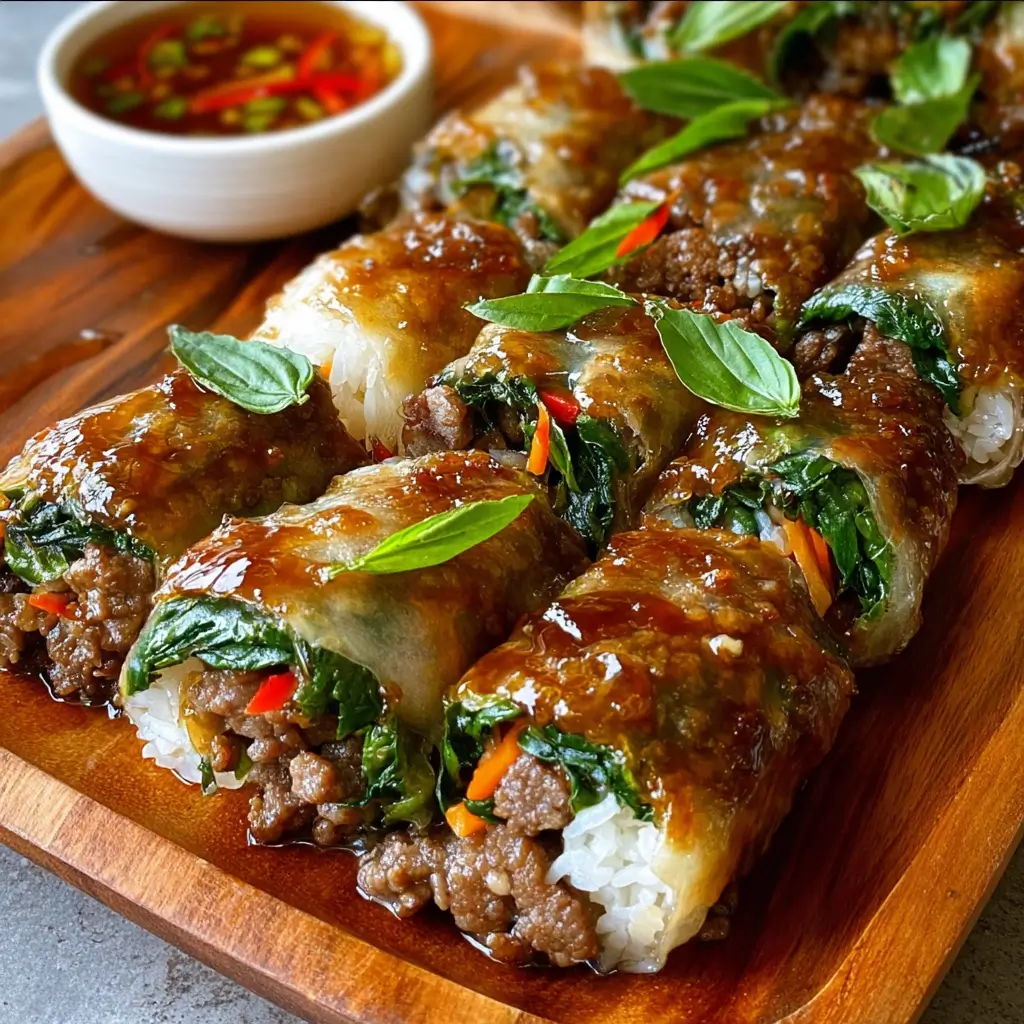
[Image: Finished Thai Basil Beef Rolls arranged on a platter] - Serve Immediately: Serve the Thai Basil Beef Rolls immediately with the prepared peanut dipping sauce.
Troubleshooting Tips
- Rice Paper Tearing: If your rice paper keeps tearing, you might be over-soaking it (reducing its strength) or overfilling the rolls. Try a quicker dip in water or use slightly less filling. A damp (not wet) towel underneath your rolling surface can also provide a bit of grip without sticking.
- Rolls are Loose: This happens if you don’t tuck the initial fold tightly enough or if you don’t keep the tension consistent as you roll. Practice will improve this.
- Beef is Tough: Ensure you’re slicing against the grain and searing quickly over high heat without overcrowding the pan.
- Dipping Sauce Too Thick/Thin: Adjust consistency with more warm water (to thin) or a little more peanut butter/hoisin (to thicken).
10. Frequently Asked Questions (FAQ)
Q1: Can I make these Thai Basil Beef Rolls ahead of time?
A1: While the components (cooked beef, prepped vegetables, and dipping sauce) can be prepared a day in advance and stored separately in the refrigerator, assembling the rolls should be done as close to serving time as possible. Freshly assembled rolls have the best texture and appearance. They can be assembled up to 2-3 hours beforehand, but store them in an airtight container with a damp paper towel to prevent the rice paper from drying out or sticking.
Q2: What if I can’t find fresh Thai basil?
A2: While fresh Thai basil provides a unique and authentic flavor, you can substitute it with regular sweet basil, although the taste will be slightly different (less anise-like). Alternatively, a mix of cilantro and mint can offer a refreshing herbal note that complements the other flavors.
Q3: How do I prevent the rice paper from sticking together?
A3: When storing, place a piece of parchment paper or plastic wrap between layers of rolls in your airtight container. Additionally, lightly dampening the surface you roll on can help prevent sticking during assembly. Don’t over-soak the wrappers, as extremely soft wrappers are more prone to sticking.
Q4: My beef isn’t tender. What did I do wrong?
A4: The most common reasons for tough beef are overcooking and improper slicing. Ensure you slice the beef very thinly (ideally 1/8 inch or 3mm) against the grain. Cook it quickly over high heat, just until it’s browned on the outside. Overcrowding the pan can also lower the temperature and cause the beef to stew rather than sear, leading to toughness. For general meat preparation, understanding techniques like those for Grilled Chicken and Potato Salad can be helpful.
Q5: Can I make the dipping sauce spicy?
A5: Absolutely! The peanut dipping sauce in this recipe has a mild flavor profile. To add heat, you can incorporate more red pepper flakes into the beef marinade, or add chili garlic sauce, Sriracha, or finely minced fresh bird’s eye chilies directly into the peanut dipping sauce. Start with a small amount and taste, adding more until you reach your desired level of spice.
Q6: What’s the best way to cut the rolls for serving?
A6: For an elegant presentation, use a very sharp, damp knife to cut each roll in half diagonally. Cutting them diagonally showcases the colorful layers of ingredients inside. Wipe your knife clean and re-dampen it between each cut for cleaner slices.
Q7: Are these rolls suitable for a party or appetizer spread?
A7: Yes, they are perfect for parties! Their vibrant colors and fresh flavors make them an attractive and crowd-pleasing appetizer. Since they are handheld, they are easy for guests to enjoy. You can even consider serving them alongside other light appetizers like Easy Antipasto Skewers for a diverse spread. If making a large batch, have a rolling party with friends to assemble them efficiently!
