
Table of Contents
Table of Contents
1. Introduction
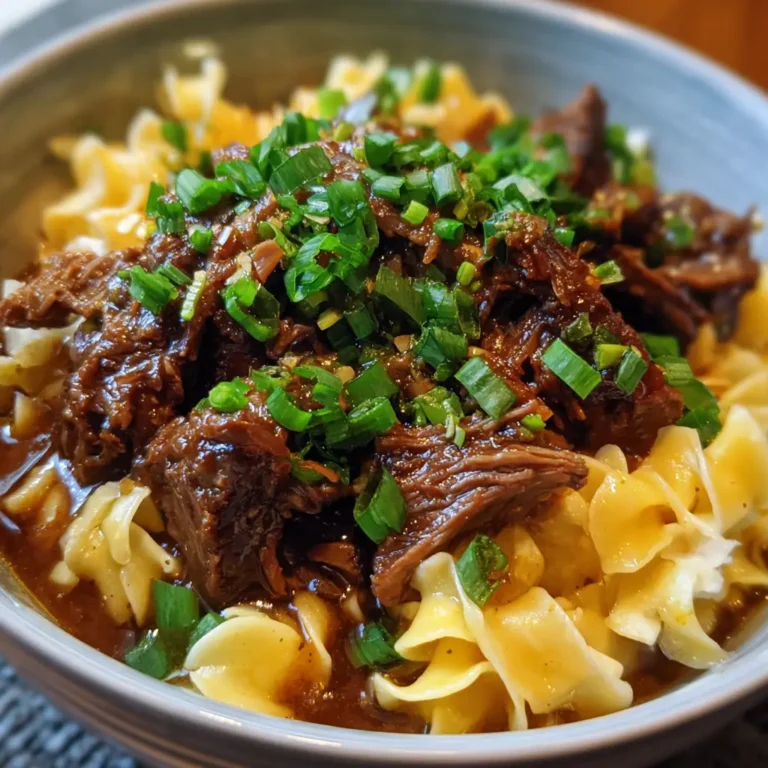
Imagine a chilly evening, the kind where a warm, hearty meal is not just a desire, but a necessity. Now, picture a bowl brimming with incredibly tender, slow-cooked beef, bathed in a rich, deeply savory broth, intertwined with chewy, satisfying noodles. This isn’t just a fantasy; it’s the promise of our Korean Beef Noodles, crafted with the effortless magic of your slow cooker. This dish transcends mere sustenance, offering a hug in a bowl, a culinary embrace that warms you from the inside out.
Korean cuisine, renowned for its vibrant flavors and soul-stirring dishes, has a unique way of turning simple ingredients into extraordinary experiences. From the fiery kick of kimchi to the sweet and savory notes of bulgogi, it’s a culinary tradition steeped in history and comfort. Our journey with Korean Beef Noodles takes inspiration from the heart of this tradition, reinterpreting beloved flavors and textures into a format that fits seamlessly into modern, busy lives.
While not a direct adaptation of a single traditional Korean dish, it draws heavily from the principles of slow-braised meats like galbi-jjim (braised short ribs) and the comforting depth found in many Korean noodle soups. It combines the slow-simmered richness of a Korean beef stew with the satisfying slurp of noodles, all while harnessing the unparalleled convenience of a slow cooker.
The unique aspect of this recipe lies in its marriage of authentic Korean-inspired flavors with a hands-off cooking method. Traditionally, achieving such depth of flavor might involve hours of watchful simmering on the stovetop. However, the slow cooker transforms this into an effortless affair, allowing the beef to tenderize to perfection and the spices to meld harmoniously over several hours, requiring minimal intervention from the cook. This method doesn’t just save time; it extracts and concentrates flavors in a way that quick cooking simply cannot replicate, resulting in a dish that tastes like it’s been lovingly tended to all day.
The significance of this dish extends beyond its delicious taste. It represents an accessible gateway for home cooks to explore the incredible world of Korean flavors without intimidation. It’s a testament to how traditional culinary concepts can be adapted to modern tools, making global comfort food a staple in any kitchen. Whether you’re a seasoned chef or a novice eager to expand your repertoire, these Slow Cooker Korean Beef Noodles offer a delightful and profoundly comforting experience, bridging cultural gaps one delicious bite at a time. It’s more than just a recipe; it’s an invitation to savor the rich heritage and comforting embrace of Korean-inspired cuisine, made easy for you.
2. Recipe Summary
Cuisine: Korean-inspired, Asian Fusion
This dish is a delightful fusion, borrowing the robust, umami-rich flavors characteristic of Korean cuisine—think savory soy, pungent garlic, spicy gochujang, and aromatic sesame—and applying them to a comforting noodle dish. It’s a modern take that respects traditional flavor profiles while embracing Western slow-cooking methods.
Difficulty Level: Easy to Medium
While the ingredient list might seem extensive, the actual hands-on work is surprisingly minimal. The slow cooker does most of the heavy lifting, tenderizing the beef and simmering the broth to perfection. The “medium” aspect comes from a few preparatory steps, such as searing the beef and chopping vegetables, which are crucial for building flavor but not overly complex. It’s an ideal recipe for those looking to create an impressive meal without requiring advanced culinary skills.
Total Preparation and Cooking Time:
- Prep Time: Approximately 20-25 minutes
- This includes searing the beef, chopping vegetables, and whisking together the sauce ingredients. Efficient mise en place can help streamline this process.
- Slow Cooker Time:
- Low Setting: 6-8 hours (for maximum tenderness and flavor development)
- High Setting: 3-4 hours (for a quicker, but still delicious, result)
- Noodle Cooking Time: 5-10 minutes (added at the very end, just before serving)
Dietary Classification: Flexitarian, Pescatarian (with substitutions)
As prepared, this recipe is a hearty meat-based dish, rich in protein. It is not vegetarian, vegan, or gluten-free by default due to the beef, soy sauce (contains wheat), and common noodle varieties. However, it offers significant flexibility for adaptation:
- Vegetarian/Vegan: Can be adapted by substituting beef with firm tofu or a variety of mushrooms (shiitake, oyster, portobello) and using vegetable broth. Ensure vegetarian/vegan friendly gochujang (some contain anchovy).
- Gluten-Free: Easily made gluten-free by using tamari instead of soy sauce and opting for gluten-free noodles like rice noodles, glass noodles (japchae noodles), or gluten-free ramen.
- Dairy-Free: The original recipe is naturally dairy-free.
This Korean Beef Noodles recipe is a fantastic option for those seeking a flavorful, protein-packed meal that can be customized to fit various dietary preferences, making it a versatile choice for any home cook.
3. Equipment and Utensils
Having the right tools at hand makes the cooking process smooth and enjoyable, especially when working with slow cooker recipes that involve some initial prep. For our Korean Beef Noodles, here’s what you’ll need:
- Slow Cooker: The star of the show! A 6-quart (approx. 5.7 liters) or 7-quart (approx. 6.6 liters) slow cooker is ideal for this recipe. This size allows enough space for the beef, vegetables, and broth to simmer comfortably, ensuring even cooking and flavor distribution. Smaller slow cookers might overflow, while larger ones could dry out the ingredients if not adjusted properly.
- Recommendation: Look for models with programmable timers for extra convenience, allowing you to set and forget.
- Large Skillet or Dutch Oven: For searing the beef. A heavy-bottomed skillet, preferably cast iron or stainless steel, with a diameter of at least 10-12 inches (25-30 cm) is perfect for achieving a good sear, which is crucial for building deep flavor. If using a Dutch oven, ensure it’s also large enough to brown the beef in batches without crowding.
- Large Pot or Stockpot: For cooking the noodles separately. A 4-6 quart (3.8-5.7 liters) pot will be sufficient to boil the noodles according to package directions.
- Cutting Board: A sturdy, non-slip cutting board for preparing your beef and vegetables. Use a separate board for raw meat if you prefer, or thoroughly clean after cutting beef.
- Sharp Chef’s Knife: Essential for efficiently chopping onions, carrots, garlic, ginger, and slicing the beef. A good quality, sharp knife makes prep work safer and more enjoyable.
- Measuring Cups and Spoons: Accurate measurements are key in cooking, especially for sauces. You’ll need both liquid and dry measuring cups, and a set of measuring spoons.
- Whisk: For combining the sauce ingredients smoothly, ensuring there are no lumps of gochujang or brown sugar.
- Tongs: Extremely useful for handling and turning the beef when searing, and for transferring the cooked beef from the slow cooker.
- Ladle: For serving the delicious broth and tender beef into bowls.
- Small Mixing Bowls: A couple of small bowls for prepping the sauce ingredients and holding chopped aromatics.
- Vegetable Peeler: For peeling carrots and ginger (though a spoon can also scrape ginger skin effectively).
Having these tools ready before you start cooking, known as mise en place, will significantly enhance your cooking experience and make the creation of your Korean Beef Noodles a seamless and enjoyable process.
4. Serving Suggestions
The beauty of Korean Beef Noodles lies not just in their incredible flavor but also in their versatility when it comes to serving. Presentation and thoughtful accompaniments can elevate this comforting dish into a truly memorable meal.
Plating Recommendations:
- Deep Bowls: Serve the noodles in generous, deep bowls. This allows plenty of room for the rich broth and prevents spills. A ramen bowl or a large ceramic soup bowl works perfectly.
- Layering: Start by adding the cooked noodles to the bottom of the bowl. Then, spoon a hearty portion of the tender beef and vegetables over the noodles. Ladle ample amounts of the savory broth over everything, ensuring every strand of noodle and piece of beef is well coated.
- Garnish for Visual Appeal and Freshness: This is where you can truly make the dish pop.
- Fresh Scallions: Finely chopped green onions (scallions) are a must. They add a fresh, pungent bite and a vibrant splash of color.
- Toasted Sesame Seeds: A sprinkle of toasted white or black sesame seeds adds a subtle nutty flavor and an elegant finish.
- Drizzle of Sesame Oil: A tiny drizzle of toasted sesame oil just before serving amplifies the aroma and adds an extra layer of nutty richness.
- Chili Threads (Silgochu): For an authentic Korean touch and a hint of mild heat, scatter a few delicate chili threads over the top.
- Soft-Boiled Egg: A perfectly soft-boiled or ramen egg, sliced in half, adds creaminess and extra protein, mimicking traditional ramen presentations.
Side Dish Ideas:
While the Korean Beef Noodles are a complete meal in themselves, a few simple side dishes can complement and balance the flavors beautifully.
- Kimchi: No Korean meal is complete without kimchi! The fermented, spicy, and tangy cabbage provides a wonderful contrast to the rich, savory noodles, cleansing the palate with its bright acidity. For another Korean-inspired side, you might enjoy a refreshing Spicy Korean Beef Ramen with Creamy Sauce as a variation.
- Pickled Radish (Danmuji): These bright yellow, sweet, and sour pickled radishes offer a crisp texture and a refreshing counterpoint, much like kimchi.
- Quick Cucumber Salad: A simple salad of thinly sliced cucumbers dressed with a light vinaigrette (rice vinegar, a touch of sugar, and a hint of sesame oil) provides a cool, crunchy element.
- Steamed White Rice: While the noodles provide the main carbohydrate, a small bowl of fluffy steamed rice can be served on the side for those who prefer to soak up every last drop of the delicious broth.
- Blanched Spinach with Garlic: Lightly blanched spinach seasoned with garlic, soy sauce, and sesame oil offers a healthy, earthy side.
- Crispy Seaweed Snacks (Gim): These light, salty, and savory sheets of roasted seaweed add a delightful crunch and umami boost.
Beverage Pairings:
Choosing the right beverage can enhance the dining experience, cutting through the richness or complementing the depth of flavor.
- Soju: A traditional Korean distilled spirit, typically mild and slightly sweet, it’s a classic pairing with many Korean dishes.
- Sake: Japanese sake, particularly a dry or semi-dry variety, can also complement the savory notes of the beef and broth.
- Light Lager or Pilsner: A crisp, clean beer can provide a refreshing contrast to the rich flavors, balancing the palate.
- Green Tea: Unsweetened green tea, hot or iced, is a fantastic non-alcoholic option that helps cleanse the palate and aids digestion.
- Sparkling Water with Lemon: A simple, refreshing choice that offers effervescence without altering the dish’s flavors.
- Red Wine: For wine enthusiasts, a lighter-bodied red like a Pinot Noir or a fruity Beaujolais can pair surprisingly well, especially if the dish is on the milder side. For something equally robust and comforting, consider serving a Wild Mushroom and Red Wine Braised Beef Stew alongside your noodles.
By considering these plating, side dish, and beverage suggestions, you can transform your Korean Beef Noodles into a comprehensive and delightful culinary experience for yourself, family, or guests.
5. Nutritional Information
Understanding the nutritional profile of your meals is an important aspect of a balanced diet. While home-cooked meals offer the advantage of fresh ingredients and control over preparation, specific nutritional values can vary significantly based on ingredient choices, portion sizes, and preparation methods. The following information provides an estimated nutritional breakdown per serving for our Slow Cooker Korean Beef Noodles.
Estimated Calories per Serving: Approximately 550-700 calories
This range accounts for variables such as the leanness of the beef, the amount of oil used for searing, the type and quantity of noodles, and whether any high-calorie garnishes (like extra sesame oil) are added.
Estimated Macronutrient Distribution (per serving):
- Protein: 40-55 grams
- Beef chuck is an excellent source of high-quality protein, crucial for muscle repair, growth, and overall bodily functions.
- Carbohydrates: 50-70 grams
- Primarily from the noodles (udon, ramen, or glass noodles) and the natural sugars in the sauce. Carbs provide essential energy.
- Fat: 20-35 grams
- This includes fats from the beef (even lean cuts have some fat), sesame oil, and any oil used for searing. Fats are important for hormone production, nutrient absorption, and providing satiety.
- Fiber: 5-8 grams
- Contributed by the vegetables (carrots, onions, mushrooms) and whole-wheat noodles if chosen. Fiber is vital for digestive health.
Dietary Information:
- High in Protein: An ideal meal for those looking to increase their protein intake, supporting satiety and muscle health.
- Rich in Umami: The combination of soy sauce, gochujang, and beef broth creates a deeply savory umami profile, which can enhance satisfaction without relying solely on salt.
- Contains Sodium: Due to soy sauce and beef broth. It is highly recommended to use low-sodium versions of these ingredients to manage sodium intake.
- Potential for Allergens: Contains gluten (soy sauce, most noodles) and sesame. Dairy-free as prepared.
- Cholesterol: Present from the beef.
- Vitamins and Minerals:
- Iron and Zinc: Abundant in beef, essential for blood health and immune function.
- B Vitamins: Beef is a good source of B vitamins (B12, niacin, B6), important for energy metabolism.
- Vitamin A: From carrots, beneficial for vision and immune health.
- Antioxidants: Garlic, ginger, and gochugaru (Korean chili powder) contain various antioxidants.
Health Benefits:
- Satiety and Energy: The high protein and carbohydrate content make this a very filling and energy-sustaining meal, perfect for colder days or after physical activity.
- Nutrient-Dense: When prepared with fresh vegetables, it delivers a good array of vitamins and minerals.
- Comfort Food: Beyond the measurable nutrients, this dish offers significant psychological comfort, which is an important aspect of overall well-being. The warmth, rich flavors, and hearty ingredients can provide a sense of satisfaction and coziness.
- Customization for Health: This recipe is highly adaptable to meet specific health goals:
- Leaner Protein: Opt for leaner beef cuts or trim excess fat from chuck roast.
- More Vegetables: Double the amount of carrots, add bok choy, spinach, bell peppers, or shiitake mushrooms for an extra nutritional boost.
- Whole Grains: Use whole-wheat ramen or brown rice noodles for increased fiber.
- Sodium Reduction: Choose low-sodium soy sauce and broth, and taste before adding extra salt.
- Spice Level: Adjust gochujang and gochugaru to personal preference; capsaicin in chili peppers offers potential metabolic benefits.
Remember, these are general estimates, and individual dietary needs vary. This recipe is designed to be a delicious and comforting meal, offering a balance of macronutrients and essential micronutrients when part of a varied diet.
6. Storage and Reheating
Proper storage and reheating are crucial for maintaining the quality and safety of your Korean Beef Noodles, ensuring you can enjoy its delicious flavors for days after cooking. Due to the presence of noodles, there are a few best practices to follow.
Storage Instructions:
- Separate Components for Best Quality: The most critical tip for storing leftover noodle dishes is to separate the noodles from the broth and beef mixture before refrigerating. Noodles, especially softer varieties like ramen or udon, tend to absorb excess liquid and become mushy or bloated when left soaking in broth.
- Beef and Broth: Allow the beef and broth mixture to cool down completely (within 2 hours) at room temperature. Once cooled, transfer it to an airtight container.
- Noodles: If you anticipate having leftovers, it’s best to undercook the noodles slightly initially. Drain them thoroughly, rinse briefly with cold water to stop the cooking process and remove excess starch, then toss them with a tiny amount of sesame oil or olive oil to prevent sticking. Store them in a separate airtight container.
- Garnishes: Store fresh garnishes like chopped scallions or sesame seeds separately in small containers or bags. These are best added fresh just before serving.
- Refrigeration:
- Duration: Stored separately and correctly, the beef and broth mixture will last for 3-4 days in the refrigerator. Cooked noodles will remain good for 2-3 days.
- Containers: Use food-grade, airtight containers to prevent odors from spreading and to keep the food fresh.
- Freezing:
- Beef and Broth Mixture: The beef and broth mixture freezes exceptionally well. Once completely cooled, transfer it to freezer-safe airtight containers or heavy-duty freezer bags, removing as much air as possible to prevent freezer burn.
- Duration: It can be stored in the freezer for up to 2-3 months.
- Thawing: Thaw overnight in the refrigerator before reheating.
- Noodles: Freezing cooked noodles is generally not recommended as their texture can become unpleasantly soft and mushy upon thawing and reheating. It’s always best to cook fresh noodles when you’re ready to enjoy the defrosted beef and broth.
Reheating Methods:
- Beef and Broth Mixture:
- Stovetop (Recommended): Transfer the desired portion of beef and broth to a saucepan. Heat over medium-low heat, stirring occasionally, until simmering gently and heated through. This method allows for even reheating and helps maintain the integrity of the beef.
- Microwave: For a quicker option, place the beef and broth in a microwave-safe bowl. Cover loosely (to prevent splatters) and microwave on medium power, stirring every minute or two, until hot. Be careful not to overheat the beef, as it can become tough.
- Reheating Noodles:
- Freshly Cooked is Best: If possible, cook a fresh batch of noodles according to package directions when reheating the beef and broth. This ensures the best possible texture.
- Reheating Stored Noodles: If you must reheat stored noodles, add them directly to the simmering beef and broth mixture for just 1-2 minutes to warm through, or briefly blanch them in boiling water. Avoid prolonged reheating, as they will quickly become overcooked.
- Assembling for Reheated Servings:
- Once the beef and broth are hot, add the warmed noodles to your serving bowl. Ladle the hot beef and broth over the noodles.
- Garnish generously with fresh scallions, sesame seeds, and a drizzle of sesame oil for a fresh finish.
By following these storage and reheating guidelines, you can ensure that every bowl of Slow Cooker Korean Beef Noodles is as delicious and comforting as the first, making your efforts last longer.
7. Expert Tips and Variations
Elevating your Slow Cooker Korean Beef Noodles from good to truly exceptional, or adapting it to suit different tastes and occasions, is all about applying a few expert tips and exploring creative variations.
Professional Chef Tips:
- Don’t Skip the Sear: This is perhaps the most crucial step for flavor development. Searing the beef chuck until deeply browned on all sides creates a rich crust through the Maillard reaction, locking in juices and adding profound savory depth to the final broth. Do this in batches if necessary to avoid crowding the pan, which steams the meat instead of searing it. For perfect searing, ensure your pan is hot.
- Layer Your Aromatics: Sautéing the onions, garlic, and ginger briefly after searing the beef (and before adding them to the slow cooker) helps to soften them, release their aromatic compounds, and slightly caramelize the onions, further deepening the flavor base.
- Taste and Adjust the Broth: Before adding the beef and setting the slow cooker, always taste your sauce mixture. This allows you to adjust sweetness, saltiness, and spice levels. Remember that flavors will concentrate slightly during slow cooking, so start balanced.
- Optimal Noodle Timing: Cook noodles separately and just before serving. Never cook them in the slow cooker with the beef, as they will become mushy and absorb too much liquid. Undercook them by a minute or two if you prefer a firmer bite.
- Quality Ingredients Matter: Use good quality beef chuck for the best texture and flavor. Invest in good quality soy sauce (preferably low-sodium) and authentic Korean gochujang and gochugaru for a more nuanced and traditional taste.
Common Mistakes to Avoid:
- Overcrowding the Slow Cooker: Too many ingredients can prevent even cooking and reduce the flavor concentration. Ensure there’s enough space for the liquid to circulate.
- Not Searing the Beef: As mentioned, skipping this step dramatically reduces the depth of flavor in your final dish.
- Adding Noodles Too Early: This is the quickest way to ruin the texture of your noodles, turning them into a mushy mess.
- Over-Salting: Soy sauce and beef broth are already salty. Taste the sauce before cooking and be conservative with additional salt. You can always add more at the end.
- Opening the Lid Frequently: Every time you lift the lid of the slow cooker, you release accumulated heat and steam, significantly extending the cooking time. Resist the urge to peek!
Recipe Variations:
- Spice Level Adjustment:
- Spicier: Increase the amount of gochujang or gochugaru. Add a pinch of red pepper flakes with the garlic and ginger, or a few slices of fresh serrano or bird’s eye chili at the end.
- Milder: Reduce or omit gochugaru. Use a milder chili paste or reduce the gochujang.
- Vegetable Boost:
- Add hearty vegetables like daikon radish, potato chunks, bell peppers, or additional carrots to the slow cooker during the last hour.
- Stir in quick-cooking greens like spinach, bok choy, or Napa cabbage during the last 15-20 minutes, or simply wilt them into the hot broth upon serving.
- Mushrooms like shiitake or cremini can add an extra layer of umami. For a hearty seasonal option, a Savory Butternut Squash, Ricotta, and Sage Lasagna offers similar comfort with different flavors.
- Different Noodle Types:
- Ramen Noodles: Classic and comforting.
- Udon Noodles: Thick, chewy wheat noodles, excellent for soaking up broth.
- Soba Noodles: Buckwheat noodles, offering a slightly nuttier flavor.
- Glass Noodles (Japchae Noodles): Sweet potato starch noodles, gluten-free and delightfully chewy.
- Rice Noodles: Thinner, gluten-free option, popular in many Asian soups.
- Beef Alternatives:
- Short Ribs: For an even richer, more decadent experience.
- Pork Shoulder: Can be used for a flavorful, fall-apart pork noodle dish.
- Chicken Thighs: For a quicker, leaner option (reduce slow cooker time to 2-3 hours on high).
- Sweetness Profile: Adjust the amount of brown sugar or add a touch of honey or mirin for a slightly different sweetness.
- Garnish Creativity: Experiment with toasted seaweed strips, a drizzle of chili oil, or a fried egg on top.
Seasonal Adaptations:
- Winter Comfort: Lean into the warmth with extra ginger, garlic, and chili. Serve with heartier noodles and root vegetables added to the slow cooker. This dish is ideal for cold weather, providing a deeply warming and satisfying meal. For more slow-cooked warmth, check out our 12 Easy Slow Cooker Recipes.
- Spring/Summer Lighter Take: While inherently a comforting dish, you can lighten it by increasing fresh herbs like cilantro, mint, or additional scallions. Add quick-cooking, lighter vegetables like snap peas or thinly sliced bell peppers towards the end. Opt for lighter rice or glass noodles.
By keeping these tips in mind and not being afraid to experiment, you can make this Slow Cooker Korean Beef Noodles recipe truly your own, tailoring it perfectly to your palate and circumstances.
8. Ingredients Section
Crafting the perfect Korean Beef Noodles relies on a balanced blend of fresh ingredients and quintessential Korean pantry staples. Here’s a detailed list to guide you, complete with measurement conversions, sourcing tips, and substitution options.
Essential Ingredients
For the Beef and Slow Cooker Base:
- Beef Chuck Roast: 2.5 – 3 pounds (approx. 1.1 – 1.4 kg), trimmed of excess fat and cut into 1.5-inch (4 cm) cubes. This cut is ideal for slow cooking as it becomes incredibly tender and flavorful.
- Onion: 1 large (approx. 200-250g), roughly chopped. Provides a sweet and aromatic foundation.
- Carrots: 2-3 medium (approx. 200-250g), peeled and cut into 1-inch (2.5 cm) thick rounds or chunks. Adds sweetness and texture.
- Mushrooms: 8 ounces (approx. 225g) cremini or shiitake mushrooms, stemmed and quartered. Adds an earthy umami depth.
- Garlic: 6-8 cloves, minced (approx. 2-3 tablespoons / 30-45g). A cornerstone of Korean flavor.
- Fresh Ginger: 2 inches (5 cm) piece, grated or minced (approx. 1 tablespoon / 15g). Adds pungent warmth and freshness.
- Beef Broth: 4 cups (960 ml), low sodium. The liquid base for the rich sauce.
- Oil for Searing: 1-2 tablespoons (15-30 ml) neutral oil (e.g., vegetable, canola, grapeseed).
For the Korean-Inspired Sauce:
- Low-Sodium Soy Sauce: 1/2 cup (120 ml). Provides the fundamental salty, umami flavor.
- Brown Sugar: 1/4 cup (50g), packed. Balances the savory and spicy notes with sweetness.
- Gochujang (Korean Chili Paste): 2 tablespoons (30g). Adds a fermented, sweet, and spicy kick. Adjust to your spice preference.
- Gochugaru (Korean Chili Flakes): 1 tablespoon (8g). Provides a deeper chili flavor and vibrant red color without excessive heat.
- Toasted Sesame Oil: 1 tablespoon (15 ml). Imparts a distinctive nutty aroma and flavor.
- Rice Vinegar: 1 tablespoon (15 ml). Adds a touch of acidity to brighten the sauce.
- Black Pepper: 1/2 teaspoon, freshly ground. Enhances overall flavor.
For Serving:
- Noodles: 12-16 ounces (340-450g) dried ramen, udon, or Korean glass noodles (dangmyeon). Cook according to package directions just before serving.
- Scallions (Green Onions): 1/2 cup, thinly sliced, for garnish.
- Toasted Sesame Seeds: 1 tablespoon, for garnish.
Measurement Conversions
- Volume:
- 1 cup = 240 ml
- 1 tablespoon = 15 ml
- 1 teaspoon = 5 ml
- Weight:
- 1 pound (lb) = 454 grams (g)
- 1 ounce (oz) = 28 grams (g)
- Length:
- 1 inch = 2.54 cm
Sourcing Recommendations
- Local Grocery Stores: Most common ingredients like beef, onions, carrots, garlic, ginger, beef broth, soy sauce, brown sugar, and neutral oil can be found at any major supermarket.
- Asian Markets: For authentic gochujang, gochugaru, toasted sesame oil, rice vinegar, and a wider variety of noodles (udon, ramen, dangmyeon/glass noodles). These items are often more affordable and of higher quality at specialty Asian stores.
- Online Retailers: If an Asian market isn’t accessible, many online stores specialize in Asian groceries and can ship these unique ingredients directly to your door.
Substitutions
- Beef Chuck Roast:
- Alternative Cuts: Beef short ribs (boneless or bone-in for richer flavor), beef stew meat (ensure it’s from a cut suitable for slow cooking like round or sirloin), or even pork shoulder for a different, but equally delicious, experience.
- Vegetarian/Vegan: Firm tofu, extra-firm tempeh, or a medley of hearty mushrooms (portobello, shiitake, oyster) can stand in for beef. Adjust cooking time accordingly.
- Beef Broth:
- Alternative: Vegetable broth, chicken broth, or even water with a beef bouillon cube.
- Low-Sodium Soy Sauce:
- Gluten-Free: Tamari (gluten-free soy sauce) is an excellent direct substitute.
- Lower Sodium: Coconut aminos for a soy-free, gluten-free, lower-sodium option (may require slight adjustment to sweetness).
- Brown Sugar:
- Alternative: Honey, maple syrup, or granulated sugar (use slightly less as it’s sweeter).
- Gochujang:
- Alternative: While unique, if unavailable, you can try mixing 1 part sriracha with 1 part miso paste and a pinch of sugar for a rough approximation of heat and fermented flavor. It won’t be the same, but it’ll provide a similar profile.
- Gochugaru:
- Alternative: Paprika for color, or a pinch of cayenne pepper for heat (use sparingly, as it’s much spicier).
- Rice Vinegar:
- Alternative: Apple cider vinegar (use slightly less as it’s stronger) or white wine vinegar.
- Noodles:
- Alternative: Any sturdy noodle like egg noodles, fettuccine (for a truly fusion take), or even thick spaghetti can work in a pinch. For gluten-free, use rice noodles or glass noodles.
By having these ingredients ready and understanding their roles, you’re well on your way to creating a deeply satisfying and authentic-tasting pot of Slow Cooker Korean Beef Noodles.
9. Step-by-Step Instructions
Creating this comforting bowl of Slow Cooker Korean Beef Noodles is a straightforward process, broken down into easy-to-follow steps. Precision in preparation and patience during the slow cooking phase will yield the most tender beef and flavorful broth.
Preparation (Approx. 20-25 minutes)
- Prepare the Beef: Pat the beef chuck cubes completely dry with paper towels. Season generously with salt and black pepper on all sides. This helps with searing and ensures the meat is well-seasoned from the inside out.
![Diced beef chuck seasoned and ready for searing] - Sear the Beef: Heat 1-2 tablespoons of neutral oil in a large skillet or Dutch oven over medium-high heat until shimmering. Add the beef in a single layer, working in batches if necessary to avoid crowding the pan. Sear for 2-3 minutes per side until deeply browned and a rich crust forms. Do not cook through. Transfer the seared beef to your 6-quart (or larger) slow cooker. This searing step is critical for developing deep, savory flavors.
- Sauté Aromatics (Optional, but Recommended for Flavor): If desired, add the chopped onion to the same skillet (add a little more oil if needed). Sauté for 3-5 minutes until softened and translucent, scraping up any browned bits from the beef. Add the minced garlic and grated ginger and cook for another 1-2 minutes until fragrant. Transfer the sautéed aromatics to the slow cooker with the beef.
- Chop Vegetables: Add the chopped carrots and quartered mushrooms directly into the slow cooker. These vegetables will tenderize and absorb the delicious flavors of the broth.
![Chopped carrots and mushrooms ready to go into slow cooker] - Whisk the Sauce: In a medium mixing bowl, whisk together the low-sodium soy sauce, brown sugar, gochujang, gochugaru, toasted sesame oil, rice vinegar, and black pepper until well combined and the sugar has dissolved. This creates the foundational flavor of your Korean Beef Noodles.
- Combine in Slow Cooker: Pour the whisked sauce mixture over the beef and vegetables in the slow cooker. Pour in the 4 cups (960 ml) of low-sodium beef broth. Stir gently to ensure all ingredients are coated and submerged in the liquid.
Slow Cooking (Approx. 3-8 hours)
- Set the Slow Cooker: Cover the slow cooker with its lid.
- For Low Setting: Cook on low for 6-8 hours, or until the beef is incredibly tender and easily shredded with a fork.
- For High Setting: Cook on high for 3-4 hours, or until the beef reaches the same level of tenderness.
- Troubleshooting: If your beef is not tender after the recommended time, it simply needs more time. Slow cooker times can vary by appliance. Resist the urge to open the lid frequently, as this extends cooking time.
- Taste and Adjust Seasoning: Once the beef is tender, carefully remove a small amount of broth with a ladle. Taste and adjust seasoning as needed. You might want to add a pinch more salt, a dash of soy sauce, or a bit more gochujang for extra spice, depending on your preference. Stir well to incorporate.
Finishing and Serving (Approx. 10-15 minutes)
- Prepare Noodles: About 10-15 minutes before you are ready to serve, bring a large pot of water to a rolling boil. Add your chosen noodles (ramen, udon, or glass noodles) and cook according to package directions until al dente. This is crucial: do not overcook the noodles, as they will continue to soften in the hot broth.
- Drain Noodles: Once cooked, drain the noodles thoroughly in a colander. You can rinse them quickly with cold water to prevent them from sticking if you’re not serving immediately, though for hot dishes, it’s often best to add them straight to the bowl.
- Shred Beef (Optional): If you prefer, carefully remove the beef cubes from the slow cooker and shred them using two forks. Return the shredded beef to the slow cooker and stir into the broth mixture. This creates a wonderful texture for noodle bowls.
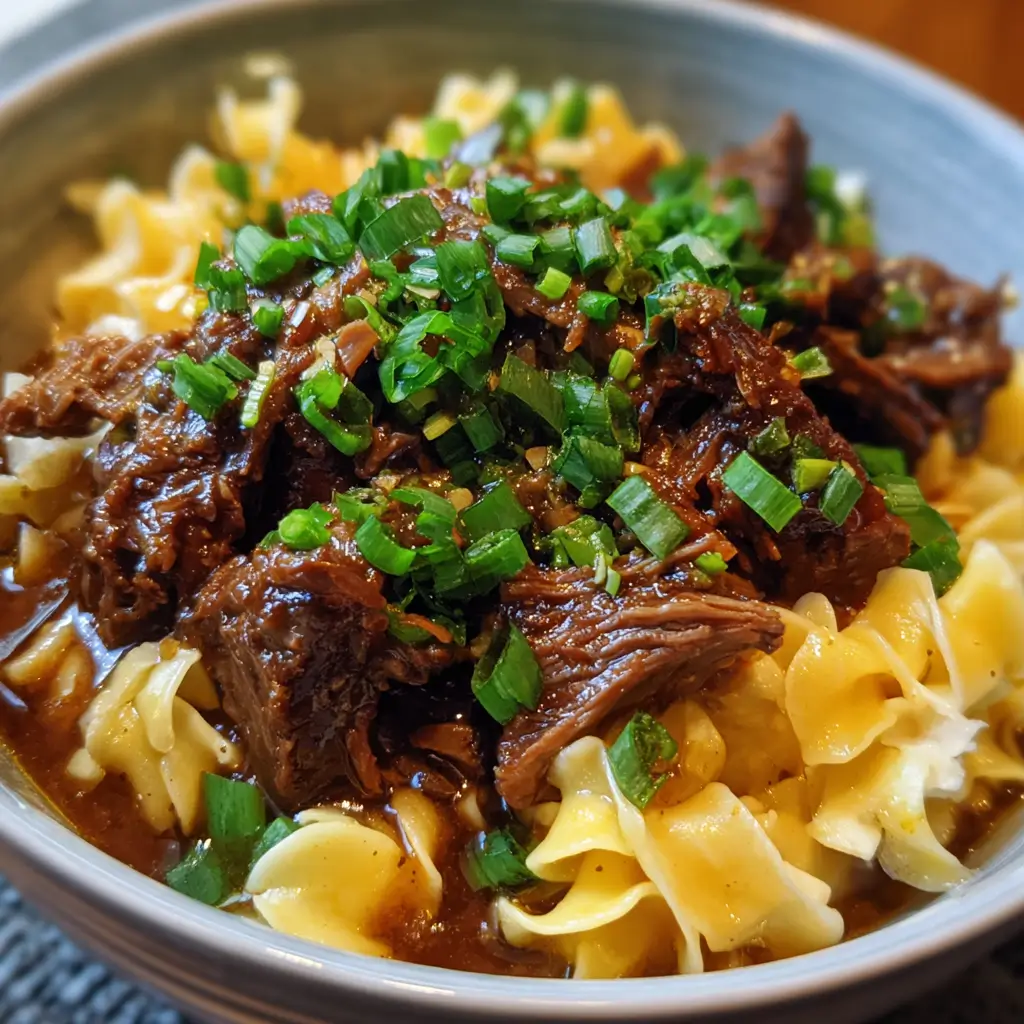
- Assemble and Serve: Divide the hot, drained noodles among deep serving bowls. Ladle generous portions of the tender Korean beef, vegetables, and rich broth over the noodles.
- Garnish: Garnish each bowl generously with thinly sliced scallions and a sprinkle of toasted sesame seeds. For an extra touch, you can add a drizzle of extra toasted sesame oil or chili threads.
![Finished Korean Beef Noodles garnished with scallions and sesame seeds] - Enjoy: Serve immediately and savor the warmth and incredible flavors of your homemade Slow Cooker Korean Beef Noodles.
This detailed guide ensures you can recreate this comforting dish with confidence, resulting in a meal that tastes like it came from your favorite Korean restaurant, with minimal effort on your part.
10. Frequently Asked Questions (FAQ)
Here are some common questions about making and enjoying Slow Cooker Korean Beef Noodles, offering helpful insights and solutions.
1. Can I use a different cut of beef for this recipe?
Absolutely! While beef chuck roast is highly recommended for its tenderness and flavor development during slow cooking, you can certainly experiment with other cuts. Beef short ribs (boneless or bone-in) would make an even richer, more decadent version, though they might require a slightly longer cooking time on low. Beef stew meat, often a mix of different cuts, can also work well, just ensure it’s suitable for slow cooking. Avoid very lean cuts like sirloin or flank steak, as they can dry out and become tough with prolonged cooking.
2. What kind of noodles are best for Korean Beef Noodles?
The best noodles largely depend on your preference! Traditional Korean dishes often use dangmyeon (glass noodles) made from sweet potato starch, which are wonderfully chewy and gluten-free. Ramen noodles (fresh or dried) are a popular choice for their slurpable texture. Udon noodles (thick wheat noodles) also work beautifully, offering a hearty bite. You could even use thicker rice noodles. The key is to cook them separately just before serving to prevent them from becoming mushy.
3. How can I adjust the spice level?
Adjusting the spice level is easy!
- For more spice: Increase the amount of gochujang and/or gochugaru in the sauce. You can also add a pinch of red pepper flakes with the garlic and ginger, or stir in some fresh sliced serrano or bird’s eye chilies directly into the bowls before serving. A drizzle of chili oil at the end also works.
- For less spice: Reduce the amount of gochujang. If you’re very sensitive to spice, you can omit the gochugaru entirely. Note that gochujang provides a unique sweet-spicy-umami flavor, so complete omission might alter the overall profile significantly.
4. Can I make this recipe ahead of time?
Yes, and in some ways, it’s even better! The beef and broth mixture can be prepared entirely ahead of time. The flavors deepen and meld wonderfully overnight in the refrigerator. Just ensure you store the cooked beef and broth separately from the noodles (if they were cooked) to maintain the best texture. When ready to serve, simply reheat the beef and broth mixture on the stovetop and cook fresh noodles. This makes it a fantastic meal prep option for busy weeknights.
5. Is this dish freezer-friendly?
The beef and broth mixture is highly freezer-friendly! Once completely cooled, transfer it to freezer-safe airtight containers or heavy-duty freezer bags, leaving a little headspace. It can be stored in the freezer for up to 2-3 months. Thaw overnight in the refrigerator before reheating. However, freezing cooked noodles is not recommended, as their texture tends to degrade and become mushy upon thawing and reheating. Always cook fresh noodles when you’re ready to enjoy the defrosted beef and broth.
6. What if I don’t have gochujang or gochugaru?
While gochujang and gochugaru are key to the authentic Korean flavor, you can make substitutions if you don’t have them.
- Gochujang: It’s difficult to find a perfect substitute due to its unique fermented, sweet, and spicy profile. A rough approximation for heat and some depth could be a mix of sriracha and miso paste (if you have it), with a pinch of sugar.
- Gochugaru: For color and some heat, you can use paprika and a tiny pinch of cayenne pepper, or even red pepper flakes. The flavor won’t be identical, but it will provide a similar visual and heat component. However, investing in these ingredients from an Asian market is highly recommended for the most authentic taste.
7. How do I prevent the noodles from getting mushy?
This is a very common concern with noodle soups. The trick is two-fold:
- Cook separately and al dente: Always cook the noodles in a separate pot of boiling water and cook them only until they are al dente (slightly firm to the bite), perhaps even a minute or two less than the package directions suggest.
- Add just before serving: Combine the noodles with the hot broth and beef only when you are ready to eat. Do not let them sit in the hot broth for extended periods, as they will continue to absorb liquid and become mushy. If you anticipate leftovers, store the noodles and broth separately, as mentioned in the storage instructions.
