
Table of Contents
Table of Contents
1. Introduction
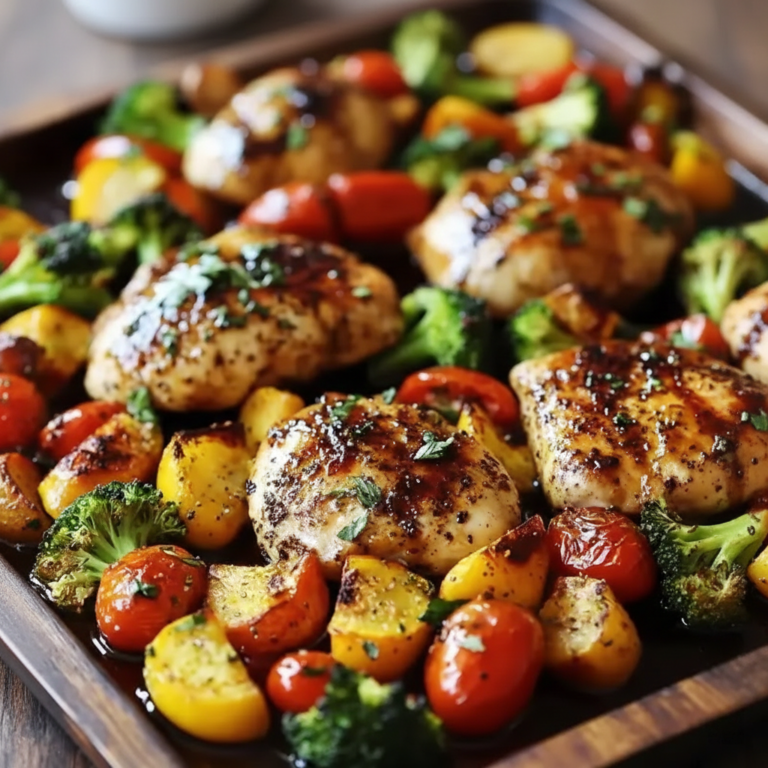
In the symphony of modern life, where every minute is a precious commodity, the culinary world has gifted us with a true masterpiece: the sheet pan dinner. Imagine a meal that delivers vibrant flavors, healthful ingredients, and minimal cleanup, all while requiring little more than your attention for a fleeting moment. Our “Easy Balsamic Glazed Chicken & Veggies (Sheet Pan)” recipe is precisely that – a culinary beacon for busy weeknights, a testament to the idea that delicious, home-cooked food doesn’t have to be complicated or time-consuming.
The allure of the sheet pan dinner isn’t just a trend; it’s a lifestyle revolution. Born from the need for efficiency without sacrificing taste or nutrition, this cooking method has roots in various global cuisines that utilize large, flat surfaces for roasting or baking. Think of rustic European roasts where meats and root vegetables share a pan, or even some Middle Eastern preparations that emphasize the communal aspect of oven-baked dishes. While this specific iteration with chicken and balsamic glaze leans into a distinctly American home-cooking style – driven by convenience and health-consciousness – it draws upon universal principles of roasting: intense, dry heat that caramelizes natural sugars, deepens flavors, and creates wonderfully tender interiors with crisp edges.
What makes this particular recipe stand out? It’s the harmonious marriage of tender chicken, an array of colorful, nutrient-dense vegetables, and a sticky-sweet, tangy balsamic glaze that coats everything in a shimmering, irresistible sheen. The balsamic vinegar, a culinary gem with a history tracing back to medieval Italian nobility, is the star of our glaze. Traditionally aged for years, sometimes decades, in wooden barrels, its complex sweet-tart profile is a testament to time and craftsmanship. For this recipe, we harness its accessible, younger cousin to create a quick, vibrant reduction that elevates simple chicken and vegetables to a gourmet experience. It’s a dish that feels both comforting and sophisticated, familiar yet fresh, and utterly satisfying.
Beyond its undeniable deliciousness, the significance of this sheet pan creation lies in its sheer simplicity and versatility. It encourages experimentation with seasonal produce, making healthy eating both easy and exciting. It’s a gentle nudge towards wholesome meals without the accompanying stress of elaborate preparations or a towering pile of dishes. This recipe isn’t just about cooking; it’s about reclaiming your time, savoring moments around the dinner table, and discovering the joy that comes from creating something wonderful with minimal fuss. It’s the perfect solution for anyone seeking to infuse their routine with effortless elegance and robust flavor.
2. Recipe Summary
This recipe epitomizes modern comfort food, blending ease with exceptional taste.
- Cuisine: American (with strong Italian/Mediterranean influences from the balsamic glaze and choice of vegetables)
- Difficulty Level: Easy. This recipe is perfect for beginners and seasoned home cooks alike, requiring basic chopping and mixing skills.
- Total Preparation and Cooking Time: Approximately 40-50 minutes.
- Preparation Time: 15-20 minutes (chopping vegetables, preparing chicken, mixing marinade).
- Cooking Time: 25-30 minutes (roasting in the oven).
- Dietary Classification:
- Gluten-Free: Naturally gluten-free, provided all ingredients (especially balsamic vinegar and any seasoning blends) are verified as such.
- Dairy-Free: Naturally dairy-free.
- High Protein: Excellent source of lean protein from the chicken.
- Vegetable-Rich: Packed with various essential vitamins, minerals, and fiber from the colorful assortment of vegetables.
- Easily Customizable: Can be adapted for low-carb, Whole30, or vegetarian diets with simple substitutions.
3. Equipment and Utensils
The beauty of a sheet pan meal lies in its minimal equipment requirements, making cleanup a breeze. Here’s everything you’ll need to bring this delightful dish to life:
- Large Rimmed Baking Sheet (Sheet Pan): Essential for this recipe. We recommend at least one 13×18-inch (33×46 cm) standard half-sheet pan. Having two might be beneficial if you’re doubling the recipe or prefer not to overcrowd the pan for better caramelization and crispiness. A rim is crucial to prevent liquids from spilling into your oven.
- Large Mixing Bowls (2-3): You’ll need one for tossing the vegetables and another for the chicken. A third small bowl will be handy for whisking the balsamic glaze components.
- Measuring Cups and Spoons: For precise measurements of ingredients, ensuring the perfect balance of flavors in your glaze and seasoning.
- Sharp Chef’s Knife: For efficiently chopping chicken and a variety of vegetables into uniform pieces.
- Cutting Board: A sturdy, non-slip cutting board is a must for safe and comfortable chopping. Consider having separate boards for meat and vegetables to prevent cross-contamination.
- Whisk: For emulsifying the balsamic glaze and ensuring all ingredients are well combined.
- Tongs or Spatula: Useful for tossing ingredients on the sheet pan during cooking and for serving.
- Aluminum Foil or Parchment Paper (Optional, but highly recommended): Lining your sheet pan makes cleanup virtually effortless. Parchment paper is generally preferred for its non-stick qualities, preventing chicken and veggies from sticking, especially with the sticky balsamic glaze.
- Meat Thermometer (Optional, but highly recommended): To ensure the chicken reaches an internal temperature of 165°F (74°C), guaranteeing it is safely cooked through without being overdone and dry.
- Small Saucepan (Optional): If you prefer to thicken the balsamic glaze slightly on the stovetop before or after roasting.
Ensuring you have these basic kitchen tools ready will make your cooking process smooth, enjoyable, and mess-free.
4. Serving Suggestions
The “Easy Balsamic Glazed Chicken & Veggies (Sheet Pan)” is a complete meal in itself, but a few thoughtful additions can elevate the experience, turning a simple weeknight dinner into a culinary event.
- Plating Recommendations:
- Rustic Elegance: Arrange the glazed chicken pieces and colorful roasted vegetables artfully on a large platter for a family-style presentation.
- Individual Portions: For individual servings, pile the chicken and veggies onto a plate, ensuring a good mix of colors and textures. Drizzle with any extra pan juices and a final sprinkle of fresh herbs like chopped parsley, basil, or chives for a pop of color and freshness.
- Lemon Zest: A light grating of fresh lemon zest over the finished dish can add a bright, aromatic counterpoint to the rich balsamic glaze.
- Side Dish Ideas:
- Grain Companions: Serve alongside a fluffy bed of quinoa, brown rice, or couscous to soak up the delicious balsamic pan juices. A simple wild rice pilaf also makes an excellent choice.
- Crusty Bread: A warm, crusty baguette or artisanal bread is perfect for mopping up every last drop of the flavorful glaze. You might also consider a piece of homemade garlic scapes compound butter recipe for spreading on your bread for an extra layer of flavor.
- Simple Green Salad: A light, fresh green salad with a vinaigrette dressing provides a refreshing contrast to the rich flavors of the roasted dish. Arugula with a light lemon-olive oil dressing would be particularly complementary.
- Potato Options: If you want more carbohydrates, consider a side of roasted potatoes or a light potato salad. For another easy roasted dish, you might enjoy serving it with a side of roasted chicken potatoes beans.
- Soup Starter: Begin your meal with a light soup, such as a creamy pea soup recipe for a delightful contrast in texture and temperature.
- Beverage Pairings:
- Wine:
- Red: A light-to-medium-bodied red wine such as a Pinot Noir, Beaujolais, or a young Chianti would complement the balsamic glaze beautifully without overpowering the chicken.
- White: A crisp Sauvignon Blanc, Pinot Grigio, or an unoaked Chardonnay would offer a refreshing counterpoint, especially if your glaze is on the tangier side.
- Non-Alcoholic:
- Sparkling Water: With a slice of lemon or lime, it’s a simple, palate-cleansing choice.
- Iced Tea: Unsweetened black or green iced tea can be a refreshing option.
- Herbal Infusion: A warm or iced Brazilian herbal tea could offer an interesting and soothing pairing.
No matter how you choose to serve it, this versatile dish promises to be a satisfying and memorable centerpiece for your meal.
5. Nutritional Information
Understanding the nutritional profile of your meal is key to a balanced diet. The “Easy Balsamic Glazed Chicken & Veggies (Sheet Pan)” is not only delicious but also wonderfully nutritious, offering a great balance of macronutrients and essential micronutrients.
- Calories per Serving: (Estimated for 1/4 of the recipe, assuming 1 lb chicken breast and ~4-5 cups mixed vegetables, with 2 tbsp olive oil and 2 tbsp honey in the glaze).
- Approximately 350-450 calories per serving. This can vary based on the specific cuts of chicken (breast vs. thigh), types and amounts of vegetables, and the exact quantity of olive oil and sweetener used.
- Macronutrient Distribution (Estimated per serving):
- Protein: Around 35-45g. The chicken is a powerhouse of lean protein, crucial for muscle repair, satiety, and overall body function.
- Fats: Approximately 12-18g. This primarily comes from the healthy monounsaturated fats in olive oil, with a small contribution from the chicken.
- Carbohydrates: Roughly 20-30g. This includes natural sugars from the balsamic vinegar and honey/maple syrup, along with complex carbohydrates and fiber from the abundance of vegetables.
- Dietary Information:
- High in Lean Protein: Supports muscle growth, repair, and keeps you feeling full.
- Rich in Dietary Fiber: The variety of vegetables provides ample fiber, which aids digestion, helps regulate blood sugar, and contributes to gut health.
- Source of Healthy Fats: Olive oil provides monounsaturated fats, beneficial for heart health.
- Naturally Gluten-Free: Suitable for individuals with celiac disease or gluten sensitivity.
- Naturally Dairy-Free: A great option for those with dairy allergies or intolerances.
- Antioxidant-Rich: Balsamic vinegar, along with many of the vegetables (like bell peppers and cherry tomatoes), are potent sources of antioxidants, which combat free radicals and support cellular health.
- Vitamin and Mineral Powerhouse: The diverse vegetable selection ensures a broad spectrum of vitamins (e.g., Vitamin C from bell peppers, Vitamin K from Brussels sprouts if used, Vitamin A from carrots if added) and minerals (e.g., potassium, magnesium).
- Health Benefits:
- Weight Management: High protein and fiber content promote satiety, helping to reduce overall calorie intake.
- Heart Health: Lean protein and healthy fats contribute to cardiovascular well-being.
- Blood Sugar Regulation: The fiber in vegetables helps to slow down sugar absorption, preventing sharp spikes.
- Immune Support: Abundant vitamins and antioxidants bolster the immune system.
- Digestive Health: High fiber content supports a healthy digestive system.
- Convenience for Healthy Eating: Its “easy sheet pan” nature makes healthy home cooking accessible, reducing reliance on less healthy takeout options.
This recipe is a testament to how simple, wholesome ingredients can come together to form a meal that is both incredibly flavorful and deeply nourishing.
6. Storage and Reheating
Preparing a delicious meal like the Easy Balsamic Glazed Chicken & Veggies (Sheet Pan) often means you’ll have leftovers, which is fantastic for meal prep! Knowing how to properly store and reheat your dish ensures it remains safe, delicious, and retains its quality for subsequent enjoyment.
- Storage Instructions:
- Cool Down: Allow the cooked chicken and vegetables to cool down to room temperature (but no longer than 2 hours) before storing. This prevents condensation from building up inside the container, which can lead to sogginess and bacterial growth.
- Airtight Containers: Transfer the cooled chicken and vegetables into airtight food storage containers. Glass containers are ideal as they don’t absorb odors or colors and are microwave and oven-safe.
- Separate Components (Optional): If you anticipate needing specific components for different meals or want to maintain the best texture, you can separate the chicken from the vegetables, especially if some vegetables might become softer than others over time.
- Refrigeration: Store the airtight containers in the refrigerator. The cooked chicken and vegetables will remain fresh and safe to eat for 3-4 days.
- Refrigeration/Freezing:
- Refrigeration: As mentioned, 3-4 days in the fridge is optimal.
- Freezing: While technically possible, freezing is not ideal for this dish, particularly for the roasted vegetables.
- Vegetables: Many roasted vegetables, especially those with high water content like zucchini and bell peppers, tend to become mushy and lose their texture significantly after being frozen and thawed.
- Chicken: Cooked chicken can be frozen for up to 2-3 months without significant loss of quality, though it might become slightly drier upon reheating.
- Recommendation: If you must freeze, separate the chicken from the vegetables. Freeze the chicken in an airtight freezer-safe bag or container. When ready to eat, thaw the chicken in the refrigerator overnight and then reheat. You might consider roasting fresh vegetables when reheating the chicken for the best texture.
- Reheating Methods:
- Oven (Recommended for Best Texture):
- Preheat your oven to 350°F (175°C).
- Spread the chicken and vegetables in a single layer on a baking sheet. You can line it with parchment paper for easy cleanup.
- Cover loosely with aluminum foil to prevent drying out.
- Heat for 10-15 minutes, or until thoroughly warmed through. Remove the foil for the last 5 minutes if you want to crisp up the chicken and vegetables slightly. This method helps restore some of the original crispness and prevents the chicken from becoming rubbery.
- Microwave (Quickest, but alters texture):
- Place a single serving of chicken and vegetables on a microwave-safe plate.
- Cover with a microwave-safe lid or damp paper towel to retain moisture.
- Heat on high for 1-2 minutes, stirring halfway through, until heated through. Be aware that this method will make the vegetables softer and the chicken might become a bit chewier.
- Skillet (Good for smaller portions):
- Heat a small amount of olive oil in a non-stick skillet over medium heat.
- Add the chicken and vegetables and sauté for 5-7 minutes, stirring occasionally, until thoroughly heated. This can help re-crisp the vegetables and chicken slightly.
By following these storage and reheating guidelines, you can enjoy the deliciousness of your “Easy Balsamic Glazed Chicken & Veggies (Sheet Pan)” for days to come, making it an excellent candidate for meal prepping!
7. Expert Tips and Variations
Unlocking the full potential of any recipe often comes down to a few insider tips and the courage to experiment. Our Easy Balsamic Glazed Chicken & Veggies (Sheet Pan) is incredibly forgiving and adaptable, making it a perfect canvas for culinary creativity.
- Professional Chef Tips for Perfection:
- Don’t Overcrowd the Pan: This is perhaps the most crucial rule for sheet pan cooking. If the pan is too full, ingredients will steam instead of roast, leading to soggy results instead of beautifully caramelized ones. Use two sheet pans if necessary, ensuring everything has enough space to breathe.
- Uniformity in Chopping: Cut your chicken and vegetables into roughly similar-sized pieces. This ensures even cooking, so everything finishes at the same time. For example, if you’re using dense root vegetables like carrots, cut them smaller than softer veggies like zucchini.
- High Heat is Key: Roasting at a higher temperature (like 400°F / 200°C) is essential for achieving that desirable char and caramelization on both the chicken and vegetables.
- Preheat the Pan: For an extra crispy bottom, place your empty sheet pan in the oven while it preheats. Carefully add the seasoned chicken and veggies to the hot pan. This immediate sizzle helps create a fantastic crust.
- Pat Chicken Dry: Before adding any marinade or oil, pat the chicken pieces thoroughly dry with paper towels. Excess moisture on the surface will inhibit browning and lead to a less flavorful, less crispy exterior.
- The Glaze Timing: For the best results, apply the initial balsamic glaze/marinade, roast, and then consider a second, thicker glaze application during the last 5-10 minutes of cooking or even a quick reduction on the stovetop to drizzle over the finished dish. This prevents the sugars in the glaze from burning too early.
- Check Internal Temperature: Always use a meat thermometer to ensure chicken reaches 165°F (74°C) at its thickest part. This guarantees safety and prevents overcooking, which can lead to dry chicken.
- Common Mistakes to Avoid:
- Under-seasoning: Don’t be shy with salt and pepper! Roasting can mute flavors, so ensure your chicken and veggies are well seasoned.
- Forgetting to Toss: Midway through cooking, give the pan a good toss. This promotes even cooking and browning on all sides.
- Using a Cold Pan: As mentioned, a preheated pan helps immensely with crispness.
- Not Lining the Pan: The balsamic glaze can get sticky and burn onto the pan, making cleanup tough. Parchment paper or foil is your friend.
- Recipe Variations:
- Different Proteins: This recipe is wonderfully adaptable. Try it with boneless, skinless pork tenderloin, turkey breast, firm tofu, or even hearty chickpeas for a vegetarian version. If you love chicken and want to try another easy recipe, consider this easy lemon herb baked chicken breast recipe.
- Vegetable Medley Swaps: Get creative with your veggies!
- Root Vegetables: Carrots, parsnips, sweet potatoes (cut smaller for even cooking).
- Cruciferous: Broccoli florets, cauliflower florets, Brussels sprouts.
- Soft Vegetables: Asparagus, green beans (add these later in the cooking process as they cook faster). For another quick side dish idea, check out easy sautéed green beans.
- Herb & Spice Boost: Experiment with different herbs like fresh rosemary, thyme, or a sprinkle of Italian seasoning. A pinch of red pepper flakes can add a subtle kick, or a dash of smoked paprika for depth.
- Sweetener Alternative: Use maple syrup, brown sugar, or even a sugar-free alternative for the honey to adjust the sweetness and dietary profile.
- Citrus Brightness: A squeeze of fresh orange juice or a teaspoon of orange zest can complement the balsamic beautifully.
- Spicy Kick: Add a pinch of cayenne pepper, a dash of hot sauce to the glaze, or even thinly sliced jalapeños to the veggies for those who love heat.
- Seasonal Adaptations:
- Spring: Embrace fresh asparagus, snap peas, and tender new potatoes.
- Summer: Utilize vibrant bell peppers (all colors!), zucchini, yellow squash, and cherry tomatoes (added towards the end so they don’t get mushy).
- Fall: Perfect for Brussels sprouts, carrots, butternut squash (cubed), and red onions.
- Winter: Root vegetables like parsnips, potatoes, and heartier greens that roast well.
By incorporating these tips and trying out variations, you’ll find that the “Easy Balsamic Glazed Chicken & Veggies (Sheet Pan)” can become a versatile staple in your culinary repertoire, delivering delicious, healthy meals tailored to your taste and the season.
8. Ingredients Section
The cornerstone of any fantastic meal is a list of fresh, high-quality ingredients. This “Easy Balsamic Glazed Chicken & Veggies (Sheet Pan)” recipe celebrates simple, wholesome components that come together to create a symphony of flavors.
Yields: 4 servings
Prep time: 15-20 minutes
Cook time: 25-30 minutes
For the Chicken and Vegetables:
- Chicken:
- 1.5 lbs (680g) boneless, skinless chicken breasts, cut into 1-inch (2.5 cm) cubes, or chicken thighs, trimmed
- Sourcing Recommendation: Opt for organic, free-range chicken for superior flavor and ethical considerations. For more insights on choosing and preparing chicken, refer to this grilled chicken guide.
- Substitutions: Boneless, skinless chicken thighs can be used for a moister result (may require slightly longer cooking). Pork tenderloin, firm tofu, or even large portobello mushrooms (for a vegetarian option) can also be substituted.
- Vegetables: Choose a colorful mix for visual appeal and a broader nutritional profile.
- 1 large red bell pepper (approx. 200g), seeded and cut into 1-inch (2.5 cm) pieces
- 1 large yellow bell pepper (approx. 200g), seeded and cut into 1-inch (2.5 cm) pieces
- 1 medium zucchini (approx. 250g), trimmed and cut into ½-inch (1.25 cm) thick half-moons
- 1 medium red onion (approx. 150g), peeled and cut into thick wedges or 1-inch (2.5 cm) pieces
- 1 pint (approx. 340g) cherry or grape tomatoes, left whole
- Sourcing Recommendation: Use fresh, seasonal vegetables for the best flavor and nutritional value. Visit your local farmers market if possible.
- Substitutions: Feel free to customize with other quick-cooking vegetables like broccoli florets, asparagus spears (add during the last 10-15 minutes of cooking), green beans, or even small potato cubes (par-boil first for even cooking).
- Olive Oil:
- 2 tablespoons (30ml) extra virgin olive oil
- Sourcing Recommendation: A good quality extra virgin olive oil will lend a fruity, peppery note to the dish.
- Substitutions: Avocado oil or grapeseed oil can be used for their high smoke points and neutral flavors.
For the Balsamic Glaze:
- Balsamic Vinegar:
- ¼ cup (60ml) good quality balsamic vinegar
- Sourcing Recommendation: While aged balsamic is exquisite, a mid-range balsamic vinegar (look for “Aceto Balsamico di Modena IGP”) offers a great balance of sweetness and acidity for everyday cooking.
- Substitutions: Red wine vinegar mixed with a touch of honey or maple syrup can provide a similar tang, though the flavor profile will differ.
- Honey:
- 1 tablespoon (15ml) honey
- Sourcing Recommendation: Local honey often has unique flavor nuances and supports local beekeepers.
- Substitutions: Maple syrup, brown sugar, or agave nectar can be used as alternatives. For a sugar-free option, use a sugar substitute suitable for cooking.
- Garlic:
- 2 cloves garlic, minced (or 1 teaspoon pre-minced garlic)
- Sourcing Recommendation: Fresh garlic cloves offer the most pungent and authentic flavor.
- Substitutions: ½ teaspoon garlic powder can be used in a pinch, but fresh is highly recommended.
- Dried Herbs:
- 1 teaspoon dried oregano
- ½ teaspoon dried thyme
- Sourcing Recommendation: Ensure your dried herbs are relatively fresh (not years old) for maximum potency.
- Substitutions: Italian seasoning blend (1.5 teaspoons), or fresh herbs (double the amount) like rosemary and basil, finely chopped.
- Salt and Black Pepper:
- ½ teaspoon salt (or to taste)
- ¼ teaspoon black pepper (freshly ground is best)
- Sourcing Recommendation: Use sea salt or kosher salt. Freshly ground black pepper adds a superior aroma and flavor compared to pre-ground.
Having all your ingredients prepped and ready before you start cooking (mise en place) will make the entire process smoother and more enjoyable.
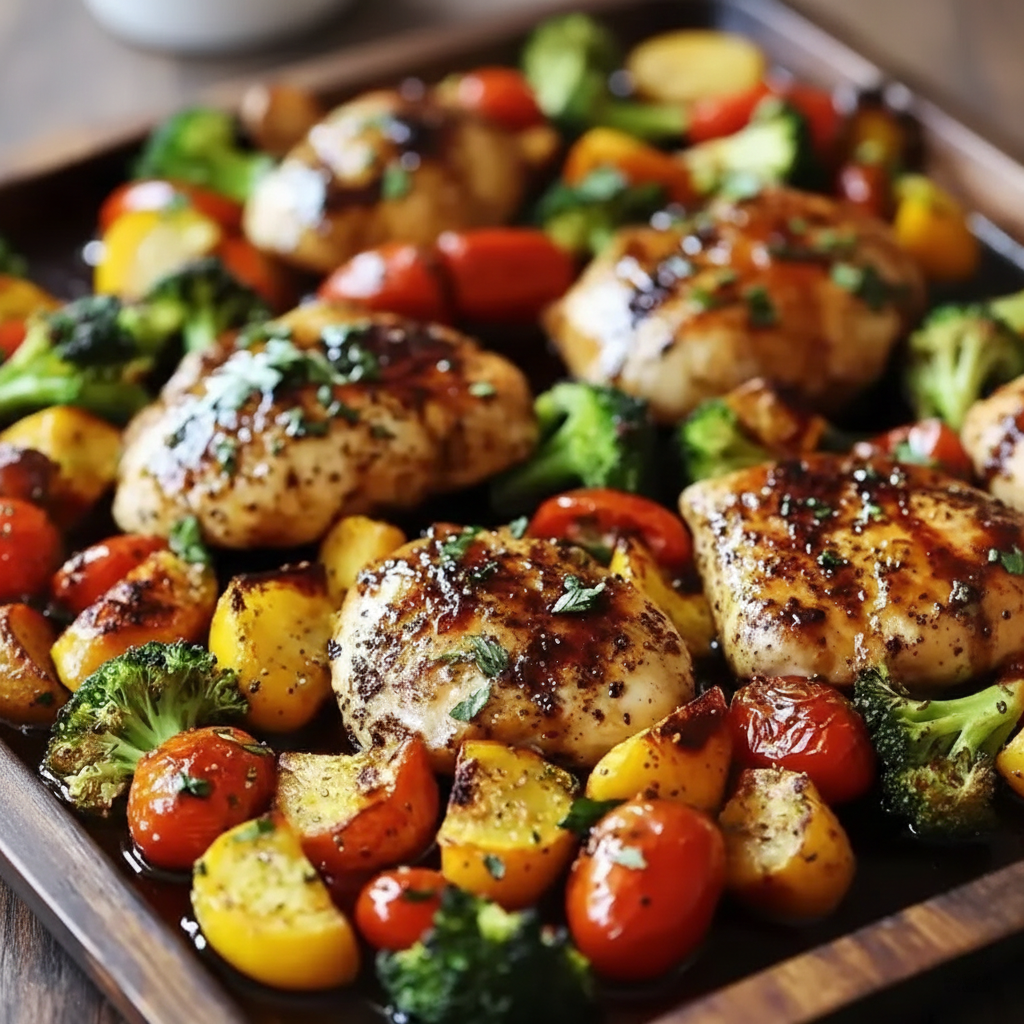
Share this Delicious Easy Balsamic Glazed Chicken and Veggies (Sheet Pan) Recipe with your friends on Facebook or save it to your Pinterest boards for a sunny treat!
9. Step-by-Step Instructions
Creating this “Easy Balsamic Glazed Chicken & Veggies (Sheet Pan)” is a straightforward process, designed for maximum flavor with minimal effort. Follow these detailed steps to achieve a perfectly roasted, deliciously glazed meal every time.
Preparation Time: 15-20 minutes
Cooking Time: 25-30 minutes
Step 1: Preheat Oven and Prepare Sheet Pan
- Preheat: Adjust your oven rack to the middle position and preheat the oven to 400°F (200°C).
- Line Pan (Optional, but recommended): Line a large, rimmed baking sheet (13×18 inches / 33×46 cm) with parchment paper or aluminum foil. This makes cleanup significantly easier, especially with the sticky balsamic glaze. If you prefer to preheat the pan for extra crispiness, place the empty lined pan in the oven while it preheats.
Step 2: Prepare the Balsamic Glaze
- Combine Glaze Ingredients: In a small bowl, whisk together the ¼ cup (60ml) balsamic vinegar, 1 tablespoon (15ml) honey, 2 minced garlic cloves, 1 teaspoon dried oregano, ½ teaspoon dried thyme, ½ teaspoon salt, and ¼ teaspoon black pepper. Whisk until well combined and the honey is fully dissolved. Set aside.
Step 3: Prepare the Chicken
- Cut Chicken: Pat the 1.5 lbs (680g) boneless, skinless chicken breasts (or thighs) dry with paper towels. Cut them into roughly 1-inch (2.5 cm) cubes. This ensures even cooking alongside the vegetables.
- Season Chicken: Place the chicken pieces in a large mixing bowl. Drizzle with about 1 tablespoon (15ml) of the olive oil and 2-3 tablespoons of the prepared balsamic glaze. Toss well to coat every piece of chicken evenly. Make sure not to use all the glaze yet, as some will be reserved for the vegetables and final drizzle.
Step 4: Prepare the Vegetables
- Chop Vegetables: Wash and prepare your vegetables:
- Cut the red and yellow bell peppers into 1-inch (2.5 cm) pieces.
- Slice the zucchini into ½-inch (1.25 cm) thick half-moons.
- Cut the red onion into thick wedges or 1-inch (2.5 cm) pieces.
- Leave the cherry or grape tomatoes whole.
- Season Vegetables: Place the chopped bell peppers, zucchini, and red onion (reserve the cherry tomatoes for later) in another large mixing bowl. Drizzle with the remaining 1 tablespoon (15ml) of olive oil and another 2-3 tablespoons of the balsamic glaze. Toss thoroughly until all vegetables are evenly coated.
Step 5: Assemble and Roast
- Arrange on Sheet Pan: Carefully remove the hot sheet pan (if preheated) from the oven. Spread the seasoned chicken and vegetables in a single layer on the prepared baking sheet. Ensure not to overcrowd the pan. If your pan is too full, use a second baking sheet to allow for proper roasting and caramelization rather than steaming.
- Initial Roast: Place the sheet pan in the preheated oven and roast for 15 minutes.
Step 6: Add Tomatoes and Finish Roasting
- Toss and Add Tomatoes: After 15 minutes, carefully remove the sheet pan from the oven. Using tongs or a spatula, gently toss the chicken and vegetables to ensure even cooking and browning. Scatter the whole cherry or grape tomatoes over the sheet pan.
- Final Roast: Return the sheet pan to the oven and continue roasting for another 10-15 minutes, or until the chicken is cooked through and the vegetables are tender-crisp and slightly caramelized. The internal temperature of the chicken should register 165°F (74°C) at its thickest part. The tomatoes should be softened and beginning to burst.
Step 7: Glaze and Serve
- Final Glaze (Optional, for extra shine): If you desire a thicker, more pronounced glaze, you can quickly reduce any remaining balsamic mixture in a small saucepan over medium heat for 2-3 minutes until slightly syrupy, or drizzle the existing reserved glaze directly over the hot chicken and veggies.
- Rest and Garnish: Once cooked, remove the sheet pan from the oven. Let the chicken and vegetables rest on the pan for 5 minutes before serving. This allows the juices in the chicken to redistribute, keeping it moist.
- Serve: Garnish with fresh chopped parsley, basil, or chives for a burst of color and freshness. Serve hot, either directly from the sheet pan or transferred to a serving platter.
Troubleshooting Tips:
- Chicken is Dry: If your chicken is dry, it was likely overcooked. Ensure you use a meat thermometer and pull the chicken out as soon as it hits 165°F (74°C). Cutting chicken into larger pieces than the vegetables can also lead to overcooked chicken.
- Veggies are Soggy: This is usually due to overcrowding the pan, which leads to steaming. Use two pans if necessary, or ensure enough space between ingredients. Uneven chopping can also lead to some veggies cooking faster than others.
- Glaze Burns: If your glaze is burning, it could be due to too high a temperature or applying too much glaze too early. A sticky glaze benefits from not being applied too heavily at the very beginning. Adding a fresh drizzle of glaze towards the end or after cooking can help.
- Lack of Browning: Ensure your oven is fully preheated and you’re using a high enough temperature. Patting the chicken dry and not overcrowding the pan are also key for good browning.
Enjoy your incredibly easy, flavorful, and healthy balsamic glazed chicken and veggies!
10. Frequently Asked Questions (FAQ)
Here are some common questions about making “Easy Balsamic Glazed Chicken & Veggies (Sheet Pan)” to help you perfect this delightful meal.
Q1: Can I use different cuts of chicken for this recipe?
A1: Absolutely! Boneless, skinless chicken thighs are an excellent alternative to breasts. They tend to be more forgiving and remain juicier even if slightly overcooked. The cooking time might be similar, but always verify doneness with a meat thermometer (165°F / 74°C). Bone-in, skin-on chicken pieces would require a longer cooking time and may need to be started earlier than the vegetables.
Q2: What other vegetables can I use in this sheet pan meal?
A2: The beauty of sheet pan dinners is their versatility! Almost any vegetable that roasts well can be used. Great options include broccoli florets, cauliflower florets, Brussels sprouts (halved), asparagus spears (add during the last 10-15 minutes), cubed sweet potatoes, carrots, or even green beans. Just ensure all vegetables are cut into similar-sized pieces to promote even cooking. If you’re looking for another tasty side, this addictive crack green beans recipe could be a great inspiration!
Q3: How can I make the balsamic glaze thicker?
A3: There are a couple of ways:
- Reduce on Stovetop: After mixing, pour the balsamic glaze into a small saucepan and simmer over medium-low heat for 5-10 minutes, stirring occasionally, until it has reduced and thickened to your desired consistency. Then, use this thicker glaze for tossing and drizzling.
- Cornstarch Slurry: For a quicker thickening method, whisk 1 teaspoon of cornstarch with 1 tablespoon of cold water to create a slurry. Add this to the simmering glaze on the stovetop and cook for another minute until thickened.
Q4: Is this recipe suitable for meal prepping?
A4: Yes, it is! This sheet pan meal is fantastic for meal prepping. Cook the recipe as directed, then divide the cooled chicken and vegetables into individual airtight containers. Store them in the refrigerator for up to 3-4 days. Reheat in the oven or microwave following the instructions in the “Storage and Reheating” section for quick and healthy lunches or dinners throughout the week.
Q5: Can I make this recipe spicier?
A5: Absolutely! To add a kick, incorporate some red pepper flakes into the balsamic glaze mixture (start with ¼ teaspoon and adjust to your preference). You could also add a dash of your favorite hot sauce to the glaze or include thinly sliced jalapeños or serrano peppers with the vegetables on the sheet pan.
Q6: I don’t have honey. What can I use instead?
A6: Maple syrup is an excellent 1:1 substitute for honey, offering a slightly different but equally delicious sweetness. Brown sugar or agave nectar can also be used. For a sugar-free option, ensure you use a cooking-appropriate sugar substitute that measures similarly to honey.
Q7: My vegetables aren’t getting crispy. What am I doing wrong?
A7: The most common reasons for soggy vegetables are:
- Overcrowding the pan: This creates steam instead of allowing the vegetables to roast and caramelize. Use two sheet pans if necessary.
- Too low oven temperature: Ensure your oven is fully preheated to 400°F (200°C) or even slightly higher if your oven runs cool.
- Not patting vegetables dry: Excess moisture on the surface of vegetables can prevent browning. While not always necessary for all veggies, for some like zucchini, it can help.
- Not tossing midway: Giving the vegetables a toss halfway through cooking helps expose all sides to the direct heat, promoting even browning.
