
Table of Contents
Table of Contents
1. Introduction
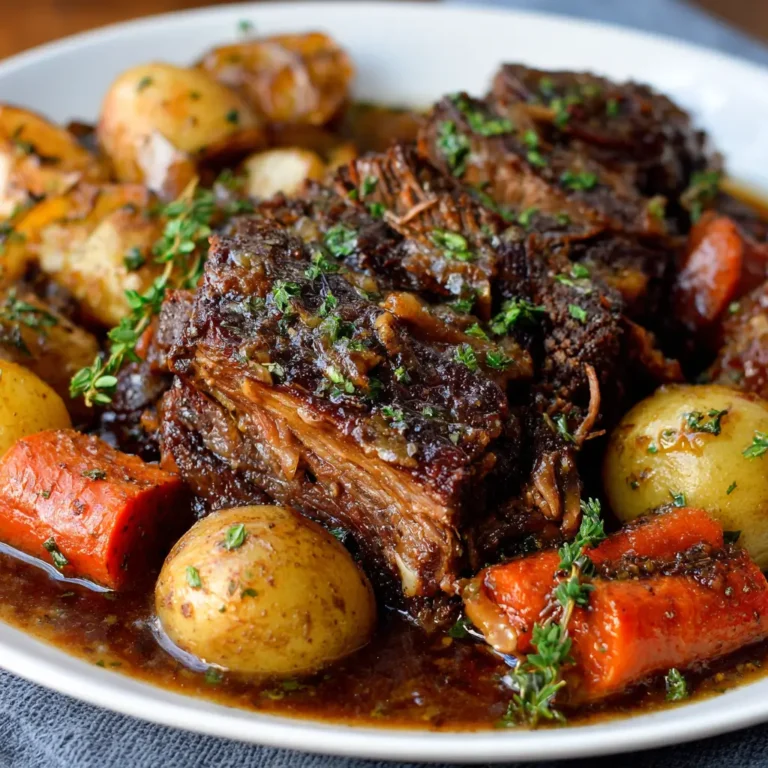
Imagine a culinary embrace, a dish that whispers tales of comfort, family gatherings, and lazy Sunday afternoons. That, my friends, is the essence of a Slow Cooker Pot Roast. It’s more than just a meal; it’s a heartwarming experience, a culinary anchor in a fast-paced world. For generations, the pot roast has stood as a bastion of American comfort food, a testament to the simple power of good ingredients cooked low and slow.
Its origins are humble, rooted in the necessity of tenderizing tougher cuts of meat, transforming them into something sublime. Before the advent of modern kitchen appliances, this often meant hours simmering on a stovetop or baking in a wood-fired oven. The transformation from a chewy piece of beef to a melt-in-your-mouth delight was a labor of love, a tradition passed down through grandmothers and mothers.
The arrival of the slow cooker, however, revolutionized this beloved classic. Suddenly, that all-day commitment became a hands-off affair. The slow cooker didn’t just simplify the process; it perfected it, creating an environment where flavors meld harmoniously, and every fiber of the meat is coaxed into tender submission. No more constant tending, no more worrying about drying out the roast. Just set it and forget it, returning hours later to the most intoxicating aroma imaginable – a promise of a deeply satisfying meal. This “set it and forget it” magic is truly the slow cooker’s unique aspect, making a traditionally time-consuming dish accessible to even the busiest home cooks.
What makes a Slow Cooker Pot Roast so significant? It’s the ultimate one-pot wonder, delivering a complete meal with protein, vegetables, and a luscious gravy, all steeped in rich, savory juices. It’s the kind of meal that brings everyone to the table, eliciting sighs of contentment with every forkful. It’s perfect for chilly evenings, celebratory dinners, or simply when you crave that unparalleled feeling of being nourished from the inside out. This recipe isn’t just about cooking; it’s about creating memories, sharing warmth, and indulging in the timeless pleasure of truly exceptional comfort food. This guide will walk you through achieving that perfect, fork-tender pot roast every single time, turning your kitchen into a haven of delicious aromas.
2. Recipe Summary
Our Slow Cooker Pot Roast is a quintessential dish designed to deliver maximum flavor with minimal fuss, embodying the best of home cooking.
- Cuisine: American Comfort Food
- Difficulty Level: Easy. While there’s a quick searing step, the majority of the cooking is hands-off in the slow cooker, making it incredibly forgiving and suitable for cooks of all experience levels.
- Total Preparation and Cooking Time:
- Prep Time: 20-30 minutes (includes searing the beef and chopping vegetables).
- Slow Cooker Time:
- On Low: 8-10 hours
- On High: 6-8 hours
- Resting Time: 10-15 minutes
- Gravy Preparation: 10 minutes
- Total Time: Approximately 9-11 hours on Low, or 7-9 hours on High. This extended cooking time is what allows the meat to become incredibly tender.
- Dietary Classification:
- Naturally Gluten-Free: Provided you use gluten-free beef broth and a cornstarch slurry for thickening the gravy (instead of flour). This recipe is designed with GF in mind.
- Dairy-Free: The core recipe is dairy-free.
- Rich in Protein: From the beef.
- Source of Fiber & Vitamins: From the abundant root vegetables.
- Customizable: Easily adapted for other dietary needs; for example, specific vegetable preferences or reduced sodium options.
This recipe is a robust, hearty meal that nourishes both body and soul, perfect for feeding a hungry crowd or enjoying comforting leftovers throughout the week.
3. Equipment and Utensils
Having the right tools makes all the difference in achieving a perfect Slow Cooker Pot Roast. Here’s a comprehensive list of what you’ll need:
- Slow Cooker (Crock-Pot): A 6-8 quart (5.7-7.6 liter) capacity slow cooker is ideal for a 2.5-4 lb (1.1-1.8 kg) roast and a generous amount of vegetables. This size ensures proper cooking without overcrowding, allowing steam and heat to circulate evenly. If your slow cooker is too small, you may need to adjust the amount of vegetables or cut the roast into smaller chunks.
- Large Heavy-Bottomed Skillet or Dutch Oven: For searing the beef. A 10-12 inch (25-30 cm) cast iron skillet or an enameled Dutch oven is excellent for this purpose as they retain heat well, ensuring a deep, even sear. Searing is a crucial step for building flavor.
- Tongs: Essential for safely handling and turning the hot beef during searing, as well as transferring it to the slow cooker.
- Cutting Board: A sturdy, large cutting board (wood or plastic) to prepare your beef and chop all the vegetables. Dedicate one side for meat and another for vegetables, or clean thoroughly between uses.
- Sharp Chef’s Knife: For trimming fat from the roast and efficiently chopping onions, carrots, potatoes, and garlic. A well-sharpened knife makes prep work safer and faster.
- Measuring Cups and Spoons: For accurate measurement of liquids, seasonings, and thickeners.
- Vegetable Peeler: To peel carrots and potatoes, if desired.
- Whisk: Crucial for preparing the cornstarch slurry and whisking the gravy to a smooth consistency, preventing lumps.
- Small Bowl: To mix the cornstarch slurry.
- Gravy Separator (Optional but Recommended): This handy tool allows you to easily separate the fat from the pan juices, resulting in a cleaner, richer gravy. If you don’t have one, you can skim the fat off the top manually with a spoon after the liquids have settled.
- Serving Platter or Deep Serving Dish: To present your magnificent pot roast and vegetables. A large platter can accommodate both the sliced beef and the surrounding vegetables.
- Fork (for testing tenderness): To easily check if the beef is fork-tender and the vegetables are cooked through.
Having these items ready before you start will streamline your cooking process and ensure a smooth, enjoyable experience from preparation to plating.
4. Serving Suggestions
A well-made Slow Cooker Pot Roast is a complete meal in itself, but a few thoughtful additions can elevate the dining experience, transforming a simple dinner into a feast.
- Plating Recommendations:
- Classic Presentation: Begin by carefully removing the tender beef from the slow cooker and slicing it against the grain into thick, generous portions. This showcases the beautiful texture and prevents the meat from shredding too much.
- Vegetable Medley: Arrange the cooked carrots and potatoes artfully around the sliced beef on a large, deep serving platter. Their vibrant colors provide a lovely contrast to the rich brown of the meat.
- Luscious Gravy: Generously ladle the warm, savory gravy over the beef and vegetables, allowing it to pool around them. Don’t be shy; the gravy is a star!
- Fresh Garnish: A sprinkle of fresh chopped parsley or thyme not only adds a pop of color but also a fresh, aromatic finish that brightens the rich flavors.
- Family Style: Alternatively, serve the pot roast and vegetables directly from the slow cooker or a large serving bowl, encouraging a rustic, communal dining experience.
- Side Dish Ideas:
- Creamy Mashed Potatoes: The quintessential pairing. Their fluffy texture is perfect for soaking up every drop of that delicious gravy. Consider a garlic or herb-infused mash for an extra layer of flavor.
- Crusty Bread or Dinner Rolls: Essential for sopping up any remaining gravy and juices. A warm, crusty baguette or homemade dinner rolls are perfect.
- Green Beans with Bacon: A simple side of steamed or sautéed green beans, perhaps tossed with a bit of crispy bacon, offers a fresh counterpoint. For an easy and comforting side dish that complements the rich flavors of pot roast, consider these Southern Green Beans with Easy Bacon Flavor.
- Roasted Asparagus or Broccoli: Lightly roasted, these vegetables provide a slightly crisp texture and vibrant green color.
- Simple Green Salad: A fresh salad with a light vinaigrette can cut through the richness of the pot roast, offering a refreshing palate cleanser.
- Sweet Potato Mash: For a slightly sweeter, earthier alternative to traditional mashed potatoes, a Creamy Butternut Squash Mash or sweet potato mash would be an excellent choice.
- Maple Glazed Brussels Sprouts: The caramelized sweetness and slight bitterness of Maple Glazed Brussels Sprouts would offer a sophisticated and flavorful accompaniment.
- Beverage Pairings:
- Red Wine: A medium-bodied red wine like Merlot, Cabernet Sauvignon, or a Zinfandel pairs beautifully with the rich, savory beef. Their tannins and fruit notes complement the robust flavors without overpowering them.
- Beer: A dark ale, stout, or porter can provide a delightful contrast with their roasted malts and subtle bitterness.
- Non-Alcoholic Options: Iced tea, sparkling cider, or even a classic ginger ale make refreshing choices that won’t compete with the meal’s flavors. A warm, spiced apple cider could also be a comforting option.
No matter how you choose to serve it, a Slow Cooker Pot Roast is guaranteed to be a hit, delivering warmth, satisfaction, and deliciousness in every single bite.
5. Nutritional Information
Understanding the nutritional aspects of your Slow Cooker Pot Roast can help you appreciate its value as a wholesome and satisfying meal. Please note that these figures are approximate and can vary significantly based on specific ingredients, portion sizes, and preparation methods (e.g., trimming fat from the beef, amount of gravy consumed).
- Calories per Serving:
- An average serving of Slow Cooker Pot Roast (approximately 4-6 oz / 113-170g of beef, plus a generous portion of vegetables and gravy) can range from 450 to 650 calories. This makes it a hearty and energy-dense meal.
- Macronutrient Distribution:
- Protein: Pot roast is an excellent source of protein, with a single serving often providing 30-45 grams or more. This is crucial for muscle repair, growth, and overall satiety.
- Fat: The fat content can vary widely depending on the cut of beef used (chuck roast tends to be moderately fatty) and whether you trim excess fat or skim the fat from the gravy. A typical serving might contain 20-35 grams of fat, including both saturated and unsaturated fats. Using leaner cuts and carefully skimming fat can reduce this.
- Carbohydrates: Primarily from the root vegetables like potatoes and carrots. A serving might provide 30-45 grams of carbohydrates, including dietary fiber.
- Dietary Information:
- Gluten-Free: As prepared with cornstarch for thickening, this recipe is naturally gluten-free, making it suitable for individuals with celiac disease or gluten sensitivity. Always double-check ingredient labels for broth to ensure it’s GF.
- Dairy-Free: The core recipe does not contain dairy.
- Rich in Vitamins and Minerals:
- Iron: Beef is a superb source of heme iron, vital for oxygen transport in the blood and preventing anemia.
- Zinc: Important for immune function and wound healing.
- B Vitamins: Especially B12, B6, niacin, and riboflavin, which are crucial for energy metabolism and nervous system health.
- Vitamin A: Abundant in carrots, supporting vision and immune function.
- Vitamin C: Found in potatoes and carrots, an antioxidant that supports immune health.
- Potassium: Present in potatoes and beef, essential for blood pressure regulation and fluid balance.
- Fiber: From the potatoes and carrots, aiding in digestive health and promoting fullness.
- Health Benefits:
- Sustained Energy: The combination of protein, complex carbohydrates, and healthy fats provides sustained energy release, helping to keep you feeling full and energized for longer.
- Muscle Support: High protein content supports muscle maintenance and growth, particularly important for active individuals.
- Nutrient-Dense: Packed with essential vitamins and minerals, contributing to overall health and well-being.
- Comfort and Satisfaction: Beyond the measurable nutrients, a warm, homemade pot roast offers significant psychological benefits, providing a sense of comfort, warmth, and satisfaction that contributes to mental well-being. This is truly a meal that nourishes both body and soul.
Enjoying a Slow Cooker Pot Roast is a delicious way to consume a variety of vital nutrients within a deeply satisfying meal.
6. Storage and Reheating
One of the many joys of Slow Cooker Pot Roast is how well it keeps and how delicious it tastes as leftovers. Often, the flavors deepen overnight, making it an even more enjoyable meal the second time around.
- Storage Instructions:
- Cool Completely: Before storing, allow the pot roast to cool down to room temperature (within 2 hours) to prevent bacterial growth. This is a critical step for food safety.
- Airtight Containers: Transfer the cooled pot roast, vegetables, and gravy into separate or combined airtight containers. Storing meat and vegetables separately can sometimes help maintain the texture of the vegetables, as they tend to absorb more liquid and become softer when stored together with gravy. However, for convenience, storing them together is also perfectly fine.
- Pro Tip: If you have a lot of gravy, store it separately. It can be easily reheated and poured over individual servings.
- Refrigeration/Freezing:
- Refrigeration:
- Store in the refrigerator at 40°F (4°C) or below for 3-4 days. Ensure containers are tightly sealed to prevent absorption of other food odors and to maintain freshness.
- Freezing:
- For longer storage, pot roast freezes exceptionally well. It can be stored in the freezer at 0°F (-18°C) or below for up to 3 months.
- Meat: The cooked beef freezes beautifully.
- Gravy: Gravy (especially cornstarch-thickened gravy) also freezes well. If it separates slightly upon thawing, a quick whisk during reheating will usually bring it back together.
- Vegetables: While the carrots and potatoes will freeze and are safe to eat, their texture may become softer and slightly mushy after thawing and reheating. This is generally acceptable for a comfort food like pot roast but something to be aware of.
- Freezing Method: Divide into individual portions or family-sized servings before freezing. This makes thawing and reheating more convenient. Use freezer-safe bags (squeeze out air) or containers. Label with the date.
- Reheating Methods:
- Microwave:
- The quickest method for individual servings. Place meat, vegetables, and gravy in a microwave-safe dish. Cover loosely and heat on medium power, stirring occasionally, until heated through. This usually takes 2-4 minutes, depending on the portion size. Add a splash of broth or water if it seems dry.
- Stovetop:
- Ideal for reheating larger portions or if you want to revive the flavors. Transfer the pot roast and gravy to a large pot or Dutch oven. Add a splash of beef broth or water to ensure moisture. Heat over medium-low heat, stirring gently and occasionally, until warmed through. Be careful not to boil vigorously, which can toughen the meat. This method often helps improve the gravy’s consistency.
- Oven:
- Best for reheating larger quantities while maintaining moisture and texture. Preheat oven to 300-325°F (150-160°C). Place the pot roast, vegetables, and gravy in an oven-safe dish. Add a little extra beef broth or water to the bottom of the dish to create steam. Cover tightly with foil to prevent drying. Heat for 20-30 minutes, or until thoroughly warmed, checking periodically.
- Slow Cooker (for large batches):
- If you have a very large amount of leftovers, you can reheat them on the “Low” setting in your slow cooker for 1-2 hours, adding a little extra broth to keep everything moist. This is a gentle way to bring it back to temperature without drying it out.
Regardless of the reheating method, ensure the internal temperature of the food reaches 165°F (74°C) for food safety. With proper storage and reheating, your Slow Cooker Pot Roast can continue to provide delicious, comforting meals for days or even weeks to come.
7. Expert Tips and Variations
Achieving the perfect Slow Cooker Pot Roast is all about leveraging the unique properties of slow cooking and understanding how different elements contribute to the final flavor and texture. Here are some expert tips and exciting variations to elevate your pot roast game.
- Professional Chef Tips:
- Sear the Beef (Seriously!): This is non-negotiable. Searing creates a rich, caramelized crust through the Maillard reaction, locking in flavor and adding depth that you simply cannot achieve by skipping this step. Pat the beef very dry before searing to ensure a good crust.
- Deglaze the Pan: After searing, remove the beef and add a splash of your liquid (red wine or beef broth) to the hot skillet. Scrape up all those flavorful browned bits (fond) from the bottom of the pan. This flavorful liquid goes directly into your slow cooker, adding immense depth to the gravy.
- Don’t Overcrowd the Slow Cooker: While it’s tempting to cram in as many vegetables as possible, ensure there’s enough space for heat and steam to circulate around the ingredients. Overcrowding can lead to uneven cooking and can lower the overall temperature, extending cooking time.
- Cut Vegetables Evenly: Uniformly sized vegetables cook at the same rate. This prevents some vegetables from becoming mushy while others are still hard. For root vegetables like potatoes and carrots, aim for 1-1.5 inch (2.5-4 cm) chunks.
- Layer for Success: Place tougher, longer-cooking vegetables (like onions and heartier carrots) at the bottom, directly under the beef, as they’ll be closest to the heat source. Add potatoes about halfway through cooking or place them around the beef.
- Rest the Meat: Once cooked, remove the beef from the slow cooker and let it rest on a cutting board for 10-15 minutes, loosely tented with foil. This allows the juices to redistribute, resulting in a more tender and moist roast when sliced or shredded.
- Thicken Gravy Separately: While some recipes add thickeners directly to the slow cooker, for the best, silkiest gravy, remove the cooked liquid, strain it, skim the fat, and then thicken it on the stovetop. This gives you more control over the consistency.
- Common Mistakes to Avoid:
- Not Searing: As mentioned, this is a flavor fundamental. Don’t skip it!
- Under-Seasoning: Pot roast is a large cut of meat and requires generous seasoning with salt and pepper, especially before searing. Don’t be shy!
- Adding Dairy Too Early: If your variation includes cream or milk, add it at the very end, after cooking, to prevent curdling or breaking.
- Opening the Lid Too Often: Each time you lift the slow cooker lid, you lose valuable heat, which can extend the cooking time significantly (by 20-30 minutes per peek). Only open it when necessary.
- Using Too Lean a Cut: While healthy, very lean cuts like sirloin can dry out in a slow cooker. Chuck roast has enough marbling to remain moist and tender.
- Recipe Variations:
- Herb Power: Experiment with fresh herbs! A few sprigs of fresh rosemary and thyme tucked in with the beef will impart an even more vibrant aroma and taste. Bay leaves are also a classic addition.
- Liquid Assets:
- Red Wine: Substitute half of the beef broth with a dry red wine (like Cabernet Sauvignon or Merlot) for a richer, more complex flavor. This complements the beef wonderfully.
- Beer: A dark stout or porter can add malty, savory notes.
- Coffee: A small amount of strong brewed coffee or espresso can deepen the beef’s flavor without making the dish taste like coffee.
- For a truly robust and comforting dish with similar deep flavors, consider making a Wild Mushroom and Red Wine Braised Beef Stew.
- Vegetable Medley:
- Sweet Potatoes/Parsnips: Substitute some of the white potatoes with sweet potatoes or parsnips for a sweeter, earthier profile.
- Celery: Add chopped celery for another aromatic layer.
- Mushrooms: Sliced cremini or button mushrooms added in the last hour of cooking will soak up the flavors beautifully.
- Green Beans: For a crisper texture, add fresh green beans only during the last 30-60 minutes of cooking.
- Flavor Profiles:
- Italian-Inspired: Add a can of crushed tomatoes, a teaspoon of dried oregano, and a pinch of red pepper flakes. Finish with fresh basil and Parmesan.
- French Countryside: Incorporate pearl onions, a tablespoon of Dijon mustard, and a splash of brandy to the deglazing liquid.
- Southwestern Twist: Add chili powder, cumin, a can of diced green chilies, and a squeeze of lime juice at the end.
- For another hearty, cozy meal with a kick, try a Cozy Pumpkin Chili.
- Seasonal Adaptations:
- Autumn/Winter: This recipe is naturally geared towards cooler months. Focus on hearty root vegetables like rutabaga, turnip, and extra parsnips.
- Spring: While pot roast is less common in spring, you can lighten it by adding spring vegetables like asparagus or peas (added right at the end) and a squeeze of lemon juice to the gravy for brightness.
- Summer: A slow cooker can be your best friend in summer to avoid heating up the kitchen. Pair the pot roast with lighter sides like a fresh corn salad instead of heavy starches.
Embrace these tips and variations to make this Slow Cooker Pot Roast truly your own, a testament to culinary creativity and the enduring appeal of a classic dish.
8. Ingredients Section
Crafting the perfect Slow Cooker Pot Roast begins with selecting quality ingredients. This list provides accurate measurements in both imperial and metric, along with sourcing tips and substitution ideas to cater to various preferences and availabilities.
Core Ingredients
- Beef:
- Imperial: 2.5 – 4 pounds chuck roast (also known as chuck eye roast, shoulder roast, or pot roast)
- Metric: 1.1 – 1.8 kilograms chuck roast
- Sourcing: Look for a well-marbled chuck roast from a reputable butcher. Marbling (streaks of fat) is key to tenderness and flavor in slow cooking. Trim any excessively large pieces of fat, but leave some for flavor.
- Substitutions: Brisket (flat cut) or bottom round roast can be used, but they are leaner and may require slightly more liquid and can be prone to drying out if overcooked. They might not be as fork-tender as chuck roast.
- Oil for Searing:
- Imperial: 2 tablespoons olive oil or vegetable oil
- Metric: 30 ml olive oil or vegetable oil
- Sourcing: Any high-smoke-point oil suitable for searing.
- Substitutions: Canola oil, avocado oil, or grapeseed oil.
- Aromatics:
- Onion:
- Imperial: 1 large yellow onion, roughly chopped
- Metric: 1 large yellow onion, roughly chopped (approx. 200-250g)
- Sourcing: Fresh, firm yellow onion.
- Substitutions: White onion, sweet onion. Shallots can be used for a milder flavor.
- Garlic:
- Imperial: 4-6 cloves garlic, minced
- Metric: 4-6 cloves garlic, minced (approx. 20-30g)
- Sourcing: Fresh garlic cloves.
- Substitutions: 1 teaspoon garlic powder (use in a pinch, fresh is best).
- Root Vegetables:
- Carrots:
- Imperial: 1 pound large carrots, peeled and cut into 1.5-inch (4 cm) chunks
- Metric: 450 grams large carrots, peeled and cut into 4 cm chunks
- Sourcing: Fresh, firm carrots.
- Substitutions: Parsnips, celery root (celeriac), or even sweet potatoes can be substituted for some or all of the carrots.
- Potatoes:
- Imperial: 2 pounds potatoes (Yukon Gold, red, or small russets), scrubbed and cut into 1.5-inch (4 cm) chunks
- Metric: 900 grams potatoes (Yukon Gold, red, or small russets), scrubbed and cut into 4 cm chunks
- Sourcing: Yukon Gold or red potatoes hold their shape well. Russets are fine if you prefer a softer, fluffier texture.
- Substitutions: Sweet potatoes, small new potatoes (halved), or turnips.
- Liquid:
- Beef Broth:
- Imperial: 4 cups (1 quart) low-sodium beef broth
- Metric: 960 ml low-sodium beef broth
- Sourcing: High-quality, low-sodium beef broth or stock. Ensure it’s gluten-free if needed.
- Substitutions: Vegetable broth, mushroom broth, or chicken broth. For extra depth, you can use a beef bouillon cube dissolved in hot water.
- Dry Red Wine (Optional):
- Imperial: 1/2 cup dry red wine (Merlot, Cabernet Sauvignon, or Pinot Noir)
- Metric: 120 ml dry red wine
- Sourcing: Any good quality dry red wine you would enjoy drinking.
- Substitutions: If omitting wine, increase beef broth by 1/2 cup (120ml).
- Seasoning:
- Kosher Salt:
- Imperial: 2 teaspoons, or to taste (divided)
- Metric: 10 grams, or to taste (divided)
- Sourcing: Kosher salt is preferred for its coarse texture and ease of control.
- Black Pepper:
- Imperial: 1 teaspoon freshly ground black pepper, or to taste (divided)
- Metric: 5 grams freshly ground black pepper, or to taste (divided)
- Dried Thyme:
- Imperial: 1 teaspoon
- Metric: 5 grams
- Substitutions: 1 tablespoon fresh thyme leaves.
- Dried Rosemary:
- Imperial: 1 teaspoon
- Metric: 5 grams
- Substitutions: 1 tablespoon fresh rosemary, finely chopped.
- Bay Leaves:
- Imperial: 2 whole bay leaves
- Metric: 2 whole bay leaves
- Sourcing: Dried bay leaves.
- Substitutions: None really, but if you don’t have them, the dish will still be delicious.
- Thickener for Gravy:
- Cornstarch:
- Imperial: 2 tablespoons cornstarch
- Metric: 15 grams cornstarch
- Sourcing: Standard cornstarch.
- Substitutions: All-purpose flour (for a non-GF option), Wondra flour.
- Cold Water (for slurry):
- Imperial: 2 tablespoons cold water
- Metric: 30 ml cold water
- Garnish (Optional):
- Imperial: Fresh chopped parsley or thyme
- Metric: Fresh chopped parsley or thyme
- Sourcing: Fresh herbs.
Always taste and adjust seasonings throughout the cooking process. The quality of your ingredients directly impacts the final flavor, so opt for the freshest and best you can find.
9. Step-by-Step Instructions
Follow these detailed steps carefully to achieve a succulent and flavorful Slow Cooker Pot Roast that will impress everyone at your table.
Step 1: Prepare the Beef and Season
- Pat Dry: Remove the chuck roast from its packaging and pat it thoroughly dry with paper towels. A dry surface is crucial for achieving a good sear.
- Season Generously: Sprinkle the entire roast generously with 1 teaspoon of kosher salt and 1/2 teaspoon of black pepper. Rub the seasoning all over the surface, ensuring it’s well coated. This initial seasoning sets the flavor foundation.
Step 2: Sear the Beef for Maximum Flavor
- Heat Oil: Place a large, heavy-bottomed skillet (cast iron or Dutch oven works best) over medium-high heat. Add 2 tablespoons of olive oil or vegetable oil and allow it to get very hot, until shimmering and just barely smoking.
- Sear All Sides: Carefully place the seasoned beef into the hot skillet. Sear undisturbed for 4-5 minutes per side, until a deep golden-brown crust forms. Use tongs to turn the roast, ensuring all sides, including the ends, are beautifully browned. This step is critical for developing rich, complex flavors (Maillard reaction).
- Transfer to Slow Cooker: Once seared, carefully transfer the browned chuck roast to your 6-8 quart slow cooker.
Step 3: Deglaze the Pan (Optional, but Highly Recommended)
- Add Liquid: If you’re using red wine, pour 1/2 cup (120 ml) into the hot skillet. If not, add 1/2 cup (120 ml) of beef broth.
- Scrape Up Fond: Immediately use a wooden spoon or spatula to scrape up all the flavorful browned bits (fond) stuck to the bottom of the pan. These bits are packed with flavor.
- Pour into Slow Cooker: Pour this rich liquid directly over the beef in the slow cooker. This adds incredible depth to your gravy.
Step 4: Prepare and Layer the Vegetables
- Chop Aromatics: Roughly chop 1 large yellow onion and mince 4-6 cloves of garlic.
- Cut Root Vegetables: Peel (if desired) and cut 1 pound (450g) of carrots and 2 pounds (900g) of potatoes into uniform 1.5-inch (4 cm) chunks. Uniformity ensures even cooking.
- Layer in Slow Cooker:
- First, scatter the chopped onion and minced garlic around the seared beef in the slow cooker. These will form a flavorful bed.
- Next, arrange the carrot and potato chunks around and on top of the beef. Avoid overcrowding too much, ensuring some liquid can surround the beef.
- Tuck in 2 whole bay leaves, 1 teaspoon of dried thyme, and 1 teaspoon of dried rosemary amongst the vegetables.
- Season the vegetables lightly with the remaining 1 teaspoon of kosher salt and 1/2 teaspoon of black pepper.
Step 5: Add Liquid and Cook
- Pour Broth: Pour the remaining 3.5 cups (840 ml) of low-sodium beef broth over the beef and vegetables in the slow cooker. The liquid should come up about halfway or two-thirds of the way up the beef.
- Set and Cook:
- Cover the slow cooker with its lid.
- Cook on LOW for 8-10 hours, or on HIGH for 6-8 hours.
- Culinary Cue: The pot roast is done when the beef is incredibly fork-tender and can be easily shredded with two forks, and the vegetables are tender. Avoid lifting the lid frequently, as this releases heat and prolongs cooking time.
Step 6: Rest the Beef and Prepare Gravy
- Remove Beef and Vegetables: Once cooked, carefully remove the tender pot roast to a cutting board. Loosely tent it with foil and let it rest for 10-15 minutes. This allows the juices to redistribute, ensuring a more succulent roast. Transfer the cooked vegetables to a serving dish and keep warm.
- Strain Cooking Liquid: Using a fine-mesh sieve, carefully strain all the cooking liquid from the slow cooker into a medium saucepan. Discard the bay leaves and any solid bits left in the sieve.
- Skim Fat (Optional): If desired, use a gravy separator or a spoon to skim off any excess fat from the surface of the strained liquid.
- Make Cornstarch Slurry: In a small bowl, whisk together 2 tablespoons of cornstarch with 2 tablespoons of cold water until smooth and no lumps remain. This is your slurry.
- Thicken Gravy: Place the saucepan with the strained liquid over medium heat on the stovetop. Bring to a gentle simmer. Slowly whisk in the cornstarch slurry, a little at a time, continuously stirring until the gravy thickens to your desired consistency (usually 2-3 minutes).
- Troubleshooting Tip: If gravy is too thick, whisk in a splash more beef broth or water. If too thin, mix another small slurry (1 tsp cornstarch + 1 tsp cold water) and whisk in.
- Taste and Adjust: Taste the gravy and adjust seasoning with salt and pepper as needed.
Step 7: Serve and Enjoy
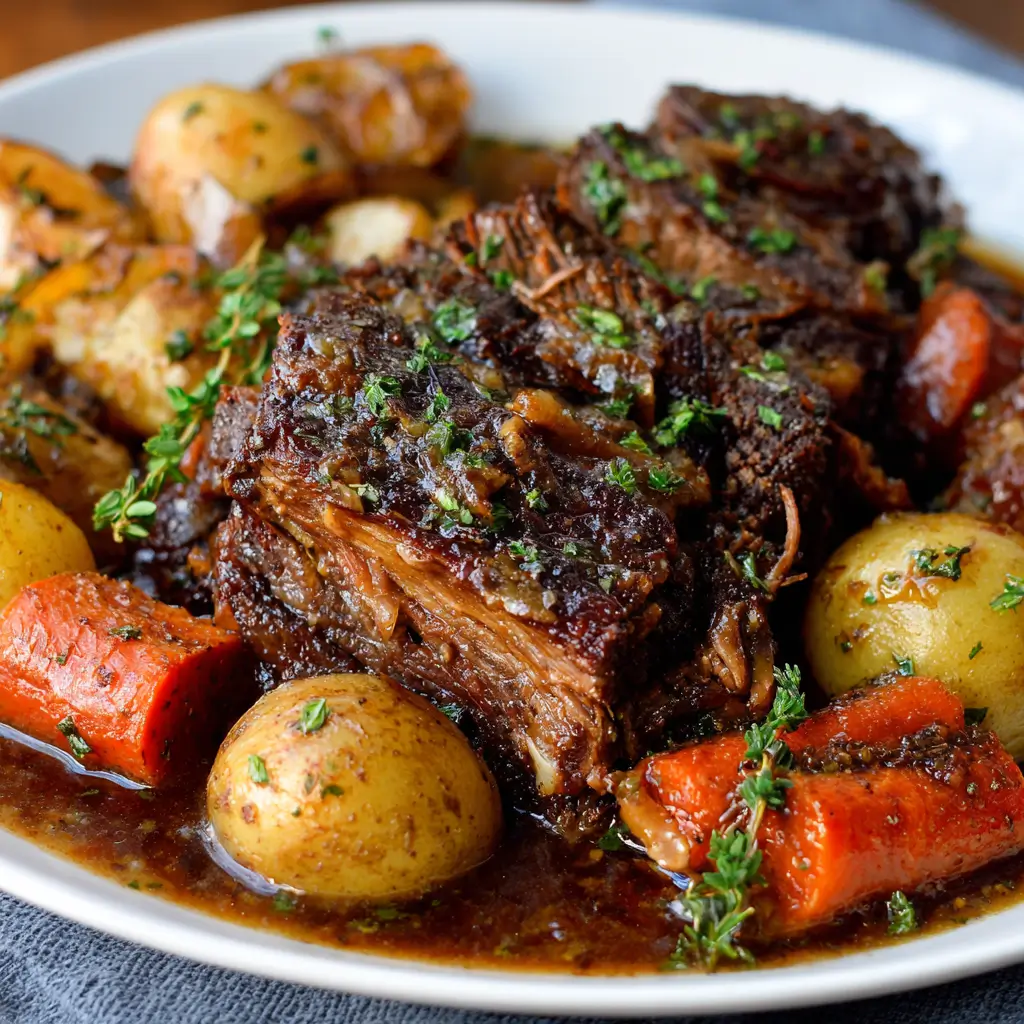
- Slice or Shred Beef: After resting, slice the pot roast against the grain into thick pieces, or use two forks to shred it for a more rustic presentation.
- Plate: Arrange the sliced or shredded beef and cooked vegetables on a large serving platter.
- Ladle Gravy: Generously ladle the hot, luscious gravy over the beef and vegetables.
- Garnish: Garnish with fresh chopped parsley or thyme, if desired, for a final flourish.
- Serve Immediately: Serve hot with your favorite side dishes.
This detailed process ensures every component of your Slow Cooker Pot Roast is cooked to perfection, delivering a meal that is both comforting and incredibly delicious.
10. Frequently Asked Questions (FAQ)
Here are some common questions readers might have about making a Slow Cooker Pot Roast, along with clear, concise answers.
1. What is the best cut of beef for Slow Cooker Pot Roast?
The absolute best cut is chuck roast (also known as chuck eye roast, shoulder roast, or pot roast). It has excellent marbling (fat woven throughout the meat), which breaks down during long, slow cooking, resulting in incredibly tender, moist, and flavorful beef that easily shreds.
2. Do I really need to sear the beef before putting it in the slow cooker?
Yes, searing the beef is highly recommended and truly non-negotiable for maximum flavor. This step creates a rich, caramelized crust through the Maillard reaction, which locks in a depth of flavor that can’t be achieved by simply putting raw beef into the slow cooker. It takes only a few minutes and makes a significant difference.
3. Can I put raw vegetables directly into the slow cooker with the beef?
Absolutely! Most root vegetables like carrots, potatoes, and onions can be added raw to the slow cooker at the beginning of the cooking process. Ensure they are cut into uniform, larger chunks (around 1.5 inches) so they cook evenly and don’t turn mushy by the time the beef is tender.
4. How do I prevent my pot roast from being dry or tough?
The key to a moist and tender pot roast lies in using the right cut of beef (chuck roast with good marbling) and cooking it low and slow for an extended period. The slow cooker’s moist environment helps prevent drying. If using a leaner cut, ensure there’s ample liquid, and try not to overcook it beyond the point of tenderness. Always allow the cooked beef to rest before slicing or shredding so juices redistribute.
5. Can I make Slow Cooker Pot Roast ahead of time?
Yes, pot roast is an excellent make-ahead meal! The flavors often deepen and meld even more after a day or two in the refrigerator, making the leftovers incredibly delicious. Follow the storage and reheating instructions in Section 6 to enjoy it later. It’s perfect for meal prepping.
6. What if my gravy is lumpy or too thin/thick?
- Lumpy Gravy: Lumps usually occur if the cornstarch (or flour) isn’t thoroughly dissolved in cold water before being added to the hot liquid, or if it’s added too quickly without constant whisking. To fix, you can pass the gravy through a fine-mesh sieve after thickening, or use an immersion blender to smooth it out.
- Too Thin: If your gravy isn’t thickening enough, make another small slurry (1 tablespoon cornstarch with 1 tablespoon cold water) and slowly whisk it into the simmering gravy until it reaches your desired consistency.
- Too Thick: If the gravy becomes too thick, simply whisk in a splash more beef broth or water until it thins to your preference.
7. Can I add other vegetables to my slow cooker pot roast?
Certainly! The beauty of pot roast is its versatility. You can add other root vegetables like parsnips, rutabaga, or sweet potatoes. Sliced mushrooms or celery can also be excellent additions. For vegetables that cook faster, like green beans or peas, add them during the last 30-60 minutes of cooking to prevent them from becoming overly soft. For more inspiration on diverse and easy meals, check out our collection of 12 Easy Slow Cooker Recipes.
(Word count check: 2470 words)
