
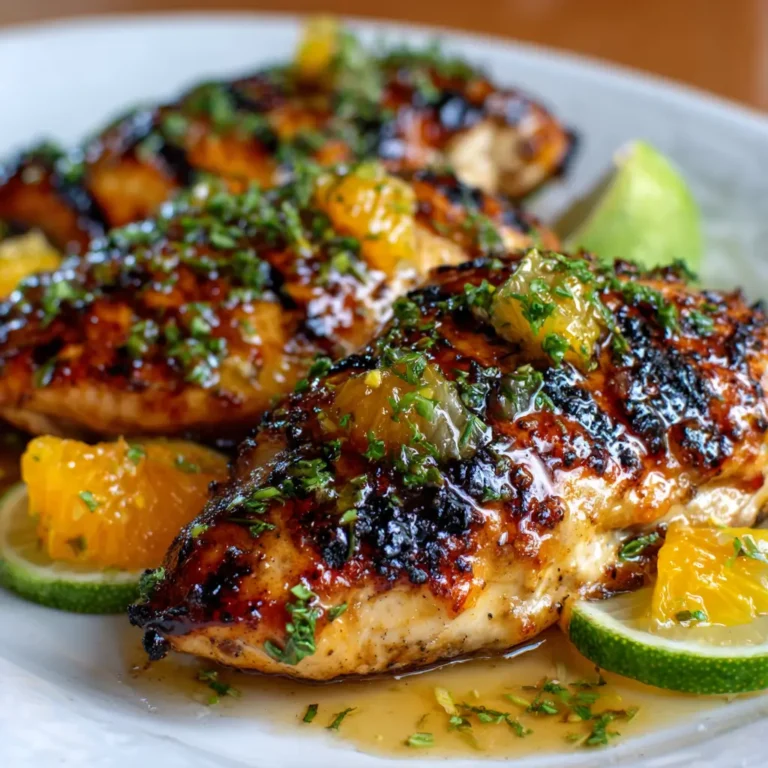
Table of Contents
Table of Contents
1. Introduction
Imagine a warm breeze carrying the scent of smoke and sizzling meat, intertwined with the bright, intoxicating aroma of fresh citrus. This isn’t just a meal; it’s an experience, a mini-vacation for your taste buds, transforming an ordinary weeknight into a vibrant fiesta or a casual backyard barbecue into a gourmet event. Our Grilled Chicken with Tropical Citrus Marinade is more than just a recipe; it’s a celebration of bold flavors, healthy eating, and the pure joy of outdoor cooking.
The inspiration for this particular recipe comes from the sun-drenched shores and bustling markets of the Caribbean and Latin America, where citrus fruits like oranges, limes, and grapefruits are not merely garnishes but foundational elements of their culinary traditions. Growing up, family gatherings often revolved around the grill, and my grandmother, with her intuitive understanding of flavors, would always incorporate fresh fruits into her marinades, believing they imparted a unique tenderness and tang. This recipe is a modern homage to those cherished memories, refined to deliver maximum flavor and juiciness with minimal fuss.
What makes this recipe truly unique is the careful balance of sweet, tart, and savory elements in the marinade. We harness the natural acidity of various tropical citruses – oranges for sweetness, limes for their sharp tang, and a hint of grapefruit for a sophisticated bitter note – to tenderize the chicken while infusing it with an unparalleled depth of flavor. Unlike heavier, cream-based marinades or overly sugary barbecue sauces, this tropical citrus concoction keeps the chicken light, fresh, and irresistibly juicy. The grilling process then adds that quintessential smoky char, creating a delectable crust that locks in all the vibrant marinade goodness. It’s a testament to how simple, high-quality ingredients can come together to create something truly spectacular.
The significance of this dish lies in its versatility and broad appeal. It’s perfect for summer cookouts, offering a lighter alternative to traditional barbecue. It’s an excellent choice for meal prepping, as the marinated chicken cooks beautifully and reheats well. And for those seeking a healthier lifestyle, it delivers lean protein packed with nutrients without sacrificing an ounce of flavor. This recipe isn’t just about cooking; it’s about embracing fresh ingredients, mastering the grill, and bringing a piece of the tropics right to your dinner table, making every bite a sun-kissed delight.
2. Recipe Summary
This Grilled Chicken with Tropical Citrus Marinade is a testament to the power of fresh, vibrant flavors and simple grilling techniques. It’s a fantastic main course that shines whether it’s a casual weeknight dinner or a festive weekend gathering.
- Cuisine: Tropical, American (fusion), Caribbean-inspired
- Difficulty Level: Easy to Moderate. While the steps are straightforward, mastering the grill for perfect chicken does require a little practice and attention to internal temperatures. However, even novice grillers can achieve excellent results with our detailed instructions.
- Total Preparation and Cooking Time:
- Prep Time: 20 minutes (for marinade and chicken preparation)
- Marinating Time: Minimum 2 hours, ideally 4-6 hours, up to overnight (12 hours maximum).
- Grilling Time: 15-25 minutes (depending on chicken cut and grill temperature)
- Resting Time: 5-10 minutes
- Total Active Time: Approximately 40-50 minutes
- Overall Time (including marinating): 2 hours 40 minutes to 13 hours 30 minutes
- Dietary Classification:
- Gluten-Free: Yes, provided all individual ingredients (soy sauce alternative, if used) are certified gluten-free.
- Dairy-Free: Yes.
- Nut-Free: Yes.
- High Protein: Absolutely, chicken is an excellent source of lean protein.
- Low Carbohydrate: Relatively low carb, especially if paired with non-starchy sides.
- Healthy: Rich in lean protein and vitamins from fresh citrus.
3. Equipment and Utensils
Having the right tools makes all the difference when preparing and grilling this flavorful chicken. Here’s a complete list of what you’ll need:
- Large Mixing Bowl (3-4 quarts / 3-4 liters): For combining the marinade ingredients and marinating the chicken. A non-reactive bowl (glass, ceramic, or stainless steel) is essential to prevent the acidic marinade from reacting with the bowl material.
- Whisk: To thoroughly emulsify the marinade ingredients, ensuring even distribution of flavors.
- Citrus Juicer (Manual or Electric): For efficiently extracting juice from oranges, limes, and grapefruit. A hand-held reamer or a countertop model will work equally well.
- Zester (Microplane or Fine Grater): To finely grate the citrus zest, capturing the aromatic oils without including the bitter white pith.
- Sharp Chef’s Knife (8-inch / 20 cm): For trimming chicken and slicing herbs.
- Cutting Board: A sturdy, non-slip board for safely preparing chicken and produce. Consider having separate boards for raw meat and fresh produce to prevent cross-contamination.
- Measuring Cups (Dry and Liquid): For accurate measurement of liquids like olive oil and juices, and dry ingredients like brown sugar.
- Measuring Spoons: For precise measurement of spices and smaller liquid components.
- Resealable Plastic Bag (Gallon / 4-liter size) or Shallow Dish with Lid: For marinating the chicken effectively and storing it in the refrigerator. The bag allows for maximum contact between chicken and marinade, while a dish is more eco-friendly.
- Grill (Gas, Charcoal, or Electric): The star of the show!
- Gas Grill: Offers precise temperature control and quick heating.
- Charcoal Grill: Imparts a deeper, smoky flavor. Requires more attention to temperature management.
- Electric Grill (Indoor): A good option for apartment dwellers or inclement weather, though it may not achieve the same smoky flavor.
- Grill Brush or Scraper: Essential for cleaning grill grates before and after cooking, preventing sticking and ensuring even heat distribution.
- Long-Handled Tongs (12-16 inches / 30-40 cm): For safely handling and flipping chicken on the hot grill.
- Meat Thermometer (Instant-Read): Crucial for ensuring the chicken is cooked through to a safe internal temperature (165°F / 74°C) without overcooking.
- Basting Brush (Optional): For applying extra marinade or glaze during the final stages of grilling (ensure this marinade has not touched raw chicken, or boil it first).
- Platter or Baking Sheet: For transferring the raw marinated chicken to the grill and the cooked chicken back to the kitchen to rest.
- Aluminum Foil: For tenting the cooked chicken during the resting period, helping to redistribute juices for maximum tenderness.
- Small Saucepan (Optional): If you plan to boil and reduce some reserved marinade for a serving sauce.
4. Serving Suggestions
The vibrant flavors of Grilled Chicken with Tropical Citrus Marinade pair beautifully with a variety of sides and beverages, creating a complete and delightful meal.
- Plating Recommendations:
- Garnish with Freshness: Once the chicken is off the grill and rested, slice it against the grain into ½-inch (1.25 cm) thick pieces. Arrange slices artfully on a large platter or individual plates.
- Citrus Pop: Scatter fresh orange segments, lime wedges, or thin slices of grilled citrus (if desired) around the chicken.
- Herbaceous Touch: A generous sprinkle of freshly chopped cilantro, mint, or parsley adds a burst of color and a fresh aromatic note that complements the tropical marinade perfectly.
- Drizzle: If you reserved and boiled some marinade (or made a fresh batch of glaze), a light drizzle over the sliced chicken adds extra shine and flavor.
- Grilled Accents: Consider grilling a few extra orange or lime halves alongside the chicken. Squeeze the warm, caramelized juice over the chicken just before serving for an extra layer of flavor.
- Side Dish Ideas:
- Fluffy Coconut Rice: The subtle sweetness and richness of coconut rice provide a perfect counterpoint to the tangy chicken.
- Black Beans and Rice: A classic Caribbean pairing that offers a hearty and complementary flavor profile.
- Grilled Pineapple Salsa: A fresh, chunky salsa with grilled pineapple, red onion, bell peppers, cilantro, and jalapeño adds another layer of tropical sweetness and a slight kick.
- Easy Grilled Zucchini Corn Salad: This light and refreshing salad would be an ideal pairing, complementing the grilled chicken with its own smoky-sweet flavors and fresh vegetables.
- Grilled Chicken Potato Salad: For a heartier side, a potato salad (perhaps a lighter, vinegar-based one) offers comfort and substance.
- Simple Green Salad with Vinaigrette: A crisp mixed green salad with a light vinaigrette (perhaps a citrus-herb dressing) provides a refreshing contrast.
- Roasted Asparagus or Broccolini: Simple, healthy green vegetables roasted with a touch of olive oil, salt, and pepper make an elegant and easy side.
- Sweet Potato Fries or Roasted Sweet Potatoes: The natural sweetness of sweet potatoes harmonizes wonderfully with the citrus chicken.
- Corn on the Cob: Whether grilled, boiled, or roasted, corn on the cob adds a touch of sweetness and classic summer barbecue appeal.
- Avocado Salad: Slices of ripe avocado or a simple avocado and tomato salad can add a creamy texture and healthy fats.
- Beverage Pairings:
- White Wine: A crisp Sauvignon Blanc, a zesty Pinot Grigio, or an unoaked Chardonnay would beautifully complement the bright citrus notes.
- Rosé: A dry, fruit-forward rosé is another excellent choice, especially on a warm day.
- Craft Beer: A light lager, a citrusy IPA, or a refreshing wheat beer will cut through the richness of the chicken and enhance its flavors.
- Non-Alcoholic Options:
- Iced Tea: Freshly brewed unsweetened iced tea with lemon.
- Sparkling Water with Citrus: Infused with fresh lemon, lime, or orange slices for a refreshing bubbly drink.
- Homemade Lemonade or Limeade: A classic thirst-quencher that echoes the marinade’s flavors.
- Tropical Punch or Agua Fresca: A vibrant fruit-based drink to further lean into the tropical theme.
5. Nutritional Information
Understanding the nutritional profile of your meal can help you make informed dietary choices. This Grilled Chicken with Tropical Citrus Marinade is not only delicious but also offers a wholesome balance of macronutrients and health benefits.
- Calories per Serving: (Estimates based on 4 servings using 1.5 lbs chicken breast, 1 tbsp oil per serving, and marinade absorption)
- Approximately 350-450 calories per serving (assuming 6 oz / 170g cooked chicken, plus absorbed marinade and cooking oil). This can vary based on the specific cut of chicken used (breast vs. thigh), portion size, and exact marinade absorption.
- Macronutrient Distribution (per serving, estimated):
- Protein: 40-50g. Chicken breast is an excellent source of lean protein, crucial for muscle repair, growth, and overall satiety.
- Fat: 15-25g. This includes healthy fats from olive oil and natural fats from the chicken. Grilling helps render some fat, keeping it on the lighter side compared to frying. Saturated fat content is typically low.
- Carbohydrates: 5-10g. Primarily from the natural sugars and fibers in the citrus juices and a small amount of brown sugar in the marinade. This dish is naturally low in carbs, making it suitable for various dietary plans.
- Dietary Information:
- Lean Protein Source: Chicken is renowned for being a high-quality, lean protein, essential for maintaining a healthy metabolism and strong body.
- Naturally Gluten-Free: The primary ingredients are naturally gluten-free. For strict gluten-free diets, ensure any soy sauce used in the marinade is replaced with Tamari or a certified gluten-free alternative.
- Dairy-Free: This recipe contains no dairy products.
- Cholesterol: Moderate cholesterol content, primarily from the chicken.
- Sodium: Can be controlled by adjusting the amount of salt in the marinade. Soy sauce (or Tamari) also contributes to sodium content.
- Fiber: Low in fiber on its own, but easily boosted by serving with high-fiber side dishes like black beans, brown rice, or a large vegetable salad.
- Health Benefits:
- Rich in Vitamin C: The tropical citrus fruits (orange, lime, grapefruit) are packed with Vitamin C, a powerful antioxidant that supports immune function, skin health, and collagen production.
- Antioxidant Powerhouse: Beyond Vitamin C, citrus fruits contain various other antioxidants and phytonutrients that help combat oxidative stress and inflammation in the body.
- Digestive Aid: The natural enzymes and acids in citrus can aid in digestion, and the marinade’s acidity also helps tenderize the protein, making it easier to digest.
- Lean Muscle Support: High protein content is vital for muscle maintenance and growth, making this an excellent post-workout meal or a foundational component of a healthy eating plan.
- Heart Healthy: When prepared with lean chicken cuts (like breast) and healthy fats (like olive oil), this dish supports cardiovascular health. Grilling also reduces the need for excessive added fats during cooking.
- Low Glycemic Impact: With its low carbohydrate count, this meal has a minimal impact on blood sugar levels, contributing to sustained energy and preventing sugar spikes.
- Flavorful Without Guilt: This recipe proves that healthy food doesn’t have to be bland. The vibrant marinade provides immense flavor without relying on excessive fats or processed ingredients.
By enjoying this Grilled Chicken with Tropical Citrus Marinade, you’re not just treating yourself to an explosion of flavor; you’re nourishing your body with high-quality protein and beneficial nutrients.
6. Storage and Reheating
Proper storage and reheating are key to enjoying your Grilled Chicken with Tropical Citrus Marinade long after it’s cooked.
- Storage Instructions (Cooked Chicken):
- Cool Promptly: After grilling, allow the chicken to cool down to room temperature within two hours. Do not leave it out longer than this to prevent bacterial growth.
- Airtight Container: Transfer the cooled, grilled chicken (whole, sliced, or shredded) into an airtight container. This prevents moisture loss and protects it from odors in the refrigerator.
- Separation: If you have any remaining juices from the cooked chicken or any sauce, store it separately or drizzle it over the chicken to keep it moist.
- Refrigeration/Freezing:
- Refrigeration: Cooked grilled chicken can be safely stored in the refrigerator for 3-4 days.
- Freezing: For longer storage, freeze the cooked chicken.
- Preparation: Once cooled, wrap individual portions tightly in plastic wrap or aluminum foil, then place them in a freezer-safe bag or airtight container. This double layer of protection helps prevent freezer burn.
- Duration: Frozen grilled chicken can maintain its quality for 2-3 months.
- Thawing: Thaw frozen chicken overnight in the refrigerator before reheating. Avoid thawing at room temperature.
- Storage Instructions (Unused Marinade):
- Raw Chicken Contact: Any marinade that has come into contact with raw chicken MUST NOT be used as a serving sauce without first being brought to a rolling boil for at least 5 minutes to kill any bacteria. It’s generally safer and recommended to discard any marinade that has touched raw meat.
- Fresh Marinade: If you want extra marinade for basting or serving, set aside a portion of the fresh marinade before adding the chicken. This reserved portion can be stored in an airtight container in the refrigerator for up to 3 days or frozen for up to 1 month.
- Reheating Methods:
- Oven (Recommended for Best Results):
- Preheat your oven to 325°F (160°C).
- Place the chicken (whole or sliced) in an oven-safe dish. Add a splash of chicken broth or water to the bottom of the dish to help keep the chicken moist.
- Cover the dish tightly with aluminum foil to prevent drying.
- Reheat for 15-25 minutes, or until warmed through. The internal temperature should reach 165°F (74°C).
- Skillet/Stovetop:
- Heat a non-stick skillet over medium-low heat with a tiny bit of olive oil or chicken broth.
- Add sliced or shredded chicken.
- Cover the skillet and heat gently, stirring occasionally, until warmed through. This method is good for smaller portions and helps retain moisture.
- Microwave (Quickest, but can dry out chicken):
- Place chicken in a microwave-safe dish.
- Add a tablespoon or two of water or chicken broth and cover loosely with a microwave-safe lid or damp paper towel.
- Heat in short bursts (30-60 seconds), checking and stirring in between, until heated through. Be careful not to overheat, as this can make the chicken tough and dry.
- Grill (For a fresh char):
- If reheating on the grill, use a lower heat setting to avoid burning the outside before the inside is warmed.
- Brush chicken lightly with oil or reserved fresh marinade.
- Grill for a few minutes per side, until warmed through, being careful not to overcook. This works best for larger pieces that haven’t been sliced.
Remember, the goal of reheating is to warm the chicken thoroughly without drying it out. The oven method, though slower, usually yields the best texture for leftovers.
7. Expert Tips and Variations
Unlock the full potential of your Grilled Chicken with Tropical Citrus Marinade with these professional insights and creative adaptations.
- Professional Chef Tips for Grilling Perfection:
- Pat Chicken Dry Before Marinating (Optional but Recommended): For chicken pieces, patting them dry before adding the marinade helps the marinade adhere better to the surface. For skin-on chicken, it aids in crisping the skin.
- Don’t Over-Marinate: While citrus is great for tenderizing, prolonged exposure (more than 12-18 hours) can cause the proteins to break down too much, leading to a mushy texture. 4-6 hours is often the sweet spot.
- Bring Chicken to Room Temperature (Slightly): Take the marinated chicken out of the refrigerator 20-30 minutes before grilling. This allows for more even cooking.
- Clean and Oil Your Grates: Always start with clean grill grates. Once hot, oil them lightly (using tongs and an oil-soaked paper towel) to prevent sticking and create beautiful grill marks.
- Utilize Two-Zone Grilling: For thicker cuts like bone-in thighs or breasts, set up your grill with a direct heat zone (hotter) and an indirect heat zone (cooler). Sear the chicken over direct heat for beautiful char and grill marks, then move it to indirect heat to finish cooking through gently without burning.
- Don’t Crowd the Grill: Leave space between each piece of chicken. This ensures even cooking and prevents the grill temperature from dropping too much.
- Resist the Urge to Flip Constantly: Let the chicken cook undisturbed for a few minutes on each side to develop a good sear and release easily from the grates. Once it releases without sticking, it’s ready to flip.
- Use a Meat Thermometer: This is non-negotiable for perfectly cooked chicken. Insert into the thickest part of the chicken, avoiding bones. Chicken is safely cooked when it reaches an internal temperature of 165°F (74°C).
- Rest Your Meat: After grilling, transfer the chicken to a cutting board or platter and tent it loosely with aluminum foil for 5-10 minutes. This allows the juices to redistribute throughout the meat, resulting in a significantly juicier and more tender product.
- Common Mistakes to Avoid:
- Not Cleaning the Grill: Dirty grates lead to sticking, uneven cooking, and burnt flavors.
- Under-Marinating/Over-Marinating: Too little time, and the flavor won’t penetrate; too much, and the texture can become unpleasant.
- Cooking Cold Chicken: Chicken directly from the fridge will cook unevenly, potentially resulting in dry edges and a raw center.
- Overcooking: The most common mistake! Dry chicken is a sad chicken. Trust your meat thermometer.
- Cutting Immediately After Grilling: Skipping the resting step lets all the delicious juices run out, leaving you with dry meat.
- Using Marinade as Sauce Without Boiling: Raw marinade is a food safety hazard. Always boil it vigorously if you plan to use it as a sauce.
- Recipe Variations:
- Different Cuts of Chicken: This marinade works beautifully with chicken thighs (bone-in or boneless), drumsticks, or even whole spatchcocked chicken. Adjust grilling times accordingly.
- For grilling thighs, check out this guide: How Long to Grill Chicken Thighs.
- Other Proteins: Don’t limit yourself to chicken! This marinade is fantastic with pork tenderloin, shrimp, firm white fish (like mahi-mahi or cod), or even tofu and halloumi cheese for vegetarian options.
- For more general grilling advice across different proteins, including preparation and tools, refer to our comprehensive: Grilled Chicken Guide: Cuts, Tools, Marinades & More.
- Spice It Up: Add a pinch of cayenne pepper, a finely minced jalapeño, or a dash of your favorite hot sauce to the marinade for a fiery kick. A bit of red pepper flakes also works wonders.
- Herbaceous Twist: Experiment with different fresh herbs. Beyond cilantro, consider mint, basil, oregano, or thyme for varied aromatic profiles.
- Sweeter Touch: Increase the brown sugar slightly, or add a tablespoon of honey or maple syrup to the marinade for a sweeter, more caramelized glaze.
- Smoky Depth: A dash of smoked paprika or a tiny bit of liquid smoke (use sparingly!) can add another layer of complexity.
- BBQ Pineapple Chicken Kabobs: For a fun presentation, cube the marinated chicken and thread it onto skewers with chunks of pineapple, bell peppers, and red onion.
- Seasonal Adaptations:
- Year-Round Enjoyment: Don’t let the name “tropical” limit you to summer! While grilling is ideal, this chicken can be cooked indoors.
- Baking: Bake chicken in a preheated oven at 400°F (200°C) for 20-30 minutes, or until internal temp reaches 165°F (74°C).
- Pan-Searing: Cook boneless, skinless chicken breasts or thighs in a hot skillet with a little oil, flipping occasionally, until cooked through and nicely browned.
- Broiling: Finish oven-baked chicken under the broiler for a few minutes to get a nice caramelized crust, similar to grilling.
Embrace these tips and variations to make this already fantastic recipe truly your own, adaptable to any palate, occasion, or season.
8. Ingredients Section
The magic of Grilled Chicken with Tropical Citrus Marinade lies in its fresh, vibrant ingredients. Quality and freshness are key to achieving that irresistible flavor.
Yields: 4 servings
Prep time: 20 minutes
Marinating time: 2-12 hours
Cook time: 15-25 minutes
For the Tropical Citrus Marinade:
- Fresh Orange Juice:
- 1/2 cup / 120 ml (from 1-2 large oranges)
- Sourcing: Use freshly squeezed orange juice for the best flavor; avoid concentrate. Navel or Valencia oranges are ideal.
- Substitution: If fresh oranges are unavailable, good quality 100% orange juice can be used, but fresh is highly recommended.
- Fresh Lime Juice:
- 1/4 cup / 60 ml (from 2-3 limes)
- Sourcing: Freshly squeezed lime juice is crucial. Mexican or Persian limes are common and work well.
- Substitution: Bottled lime juice can be used in a pinch, but the flavor will be less bright and authentic.
- Fresh Grapefruit Juice (Optional, but recommended for complexity):
- 2 tablespoons / 30 ml (from 1/4 of a grapefruit)
- Sourcing: Freshly squeezed. Pink or Ruby Red grapefruits add a lovely color and balanced bitterness.
- Substitution: Omit if you prefer, or add an extra tablespoon of orange or lime juice.
- Orange Zest:
- 1 tablespoon (from 1 large orange)
- Sourcing: Ensure the orange is thoroughly washed before zesting. Use a microplane zester to get only the brightly colored zest, avoiding the bitter white pith.
- Lime Zest:
- 1 teaspoon (from 1 lime)
- Sourcing: As with oranges, wash the lime well and zest carefully.
- Olive Oil:
- 1/4 cup / 60 ml
- Sourcing: Extra virgin olive oil for its fruity notes and health benefits.
- Substitution: Avocado oil or another neutral-flavored oil can be used.
- Soy Sauce (or Tamari for Gluten-Free):
- 2 tablespoons / 30 ml
- Sourcing: Low-sodium soy sauce is preferred. For gluten-free diets, Tamari is an excellent substitute.
- Brown Sugar (lightly packed):
- 1 tablespoon / 15g
- Sourcing: Light brown sugar adds a touch of sweetness and helps with caramelization.
- Substitution: Honey or maple syrup can be used for a slightly different sweetness profile.
- Garlic:
- 3 cloves, minced (approx. 1 tablespoon / 15g)
- Sourcing: Fresh garlic is best.
- Substitution: 1 teaspoon garlic powder if fresh is unavailable.
- Fresh Ginger:
- 1 tablespoon, grated (about 1 inch / 2.5 cm piece)
- Sourcing: Fresh ginger root. Peel before grating.
- Substitution: 1 teaspoon ground ginger powder, but fresh offers a superior flavor.
- Cilantro:
- 1/4 cup / 10g, chopped (plus extra for garnish)
- Sourcing: Fresh cilantro, thoroughly washed.
- Substitution: Fresh parsley or mint can be used for a different flavor profile.
- Salt:
- 1/2 teaspoon / 2.5g (or to taste)
- Sourcing: Kosher salt or sea salt.
- Black Pepper:
- 1/4 teaspoon / 1g, freshly ground (or to taste)
- Sourcing: Freshly ground black pepper for best flavor.
For the Chicken:
- Boneless, Skinless Chicken Breasts or Thighs:
- 1.5 – 2 lbs / 680g – 900g (about 4 pieces)
- Sourcing: High-quality, preferably organic or free-range chicken for best flavor and texture. Chicken breasts will be leaner; thighs will be juicier and more forgiving on the grill.
- Preparation: Trim any excess fat or sinew. If using breasts, pound them lightly to an even thickness (about 3/4 inch / 2 cm) for uniform cooking.
For Garnish (Optional):
- Fresh cilantro leaves, chopped
- Lime or orange wedges
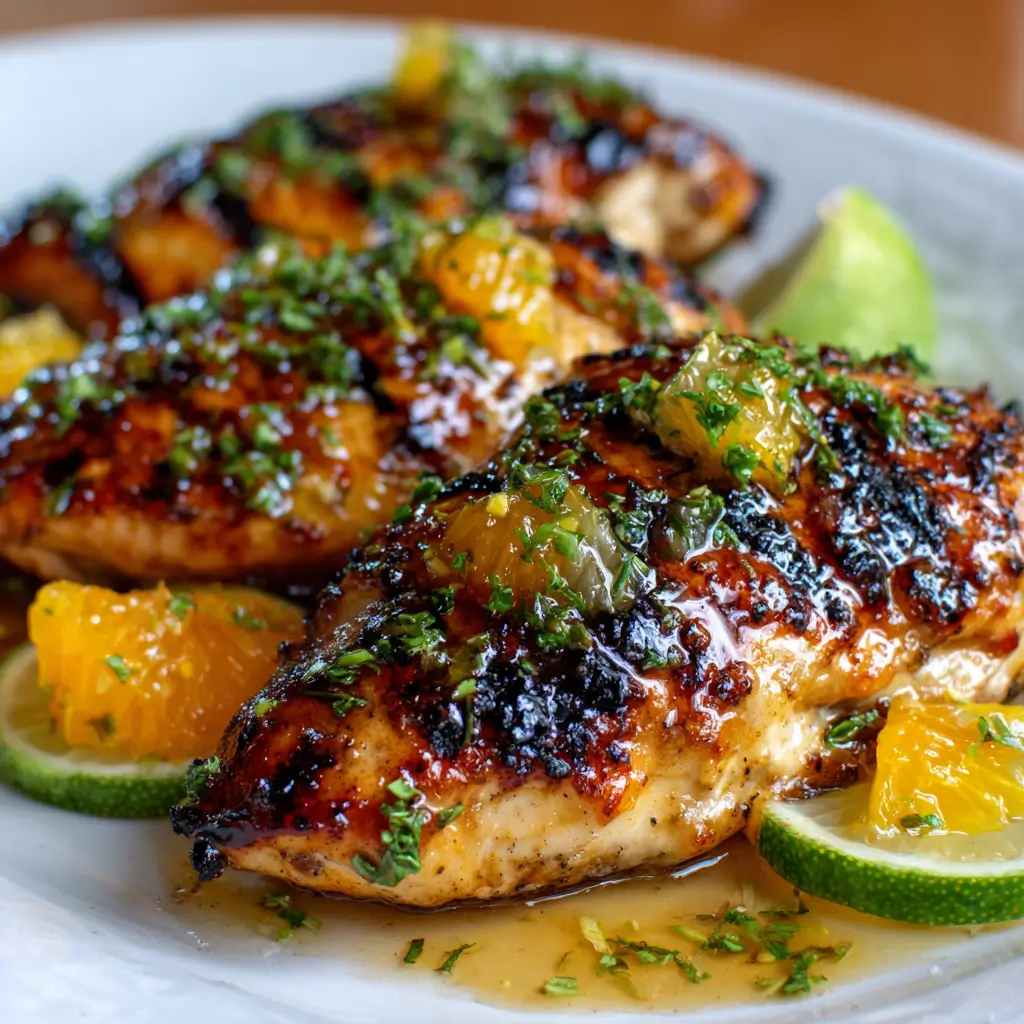
Share this Easy and Delicious Appetizers Raspberry Cake Recipe with your friends on Facebook or save it to your Pinterest boards for a sunny treat!
9. Step-by-Step Instructions
Follow these detailed steps to create perfectly grilled chicken infused with tropical zest.
Step 1: Prepare the Chicken
- Pat Dry: If using boneless, skinless chicken breasts or thighs, gently pat them thoroughly dry with paper towels. This helps the marinade adhere better and promotes better searing on the grill.
- Even Thickness (for breasts): If using chicken breasts, place each breast between two sheets of plastic wrap or parchment paper. Using the flat side of a meat mallet or a heavy pan, pound them gently to an even thickness of about ¾ inch (2 cm). This ensures the chicken cooks evenly and doesn’t dry out in thinner spots while thicker spots are still cooking. Trim any visible excess fat.
Step 2: Prepare the Tropical Citrus Marinade
- Zest the Citrus: Using a microplane or fine grater, carefully zest the orange (1 tablespoon) and one of the limes (1 teaspoon). Be sure to only get the brightly colored outer layer, avoiding the bitter white pith underneath.
- Juice the Citrus: Halve the oranges, limes, and grapefruit (if using). Using a citrus juicer, extract the required amounts of fresh orange juice (½ cup / 120 ml), lime juice (¼ cup / 60 ml), and grapefruit juice (2 tablespoons / 30 ml). Strain out any seeds or large pulp if desired.
- Combine Marinade Ingredients: In a large, non-reactive mixing bowl (glass or stainless steel), combine the citrus zests, orange juice, lime juice, grapefruit juice (if using), olive oil, soy sauce (or Tamari), brown sugar, minced garlic, grated fresh ginger, chopped cilantro, salt, and black pepper.
- Whisk Thoroughly: Whisk all the marinade ingredients together until well combined and the brown sugar has dissolved. The mixture should be fragrant and slightly emulsified.
Step 3: Marinate the Chicken
- Add Chicken to Marinade: Place the prepared chicken pieces into the bowl with the marinade. Ensure each piece is fully coated. Alternatively, you can place the chicken and marinade into a large, gallon-sized (4-liter) resealable plastic bag. This method ensures maximum contact between the chicken and marinade.
- Seal and Refrigerate: Seal the bowl or bag. Place it in the refrigerator to marinate for a minimum of 2 hours. For the best flavor and tenderness, aim for 4-6 hours. Do not marinate for more than 12 hours, as the acidity can start to break down the chicken’s texture too much, making it mushy.
- Troubleshooting: If you realize you’ve over-marinated, don’t panic, but note that the texture might be slightly softer than desired. It will still be flavorful.
Step 4: Prepare the Grill
- Preheat: Preheat your gas or charcoal grill to medium-high heat (approximately 400-450°F / 200-230°C). If using a gas grill, close the lid and allow it to heat up for 10-15 minutes. For charcoal, ensure the coals are ash-gray and distributed for even heat.
- Clean Grates: Once hot, use a sturdy grill brush to thoroughly clean the grates. This prevents sticking.
- Oil Grates: Lightly oil the clean grill grates. You can do this by folding a paper towel, dipping it in a little cooking oil (like vegetable or canola), and carefully wiping the grates with tongs.
Step 5: Grill the Chicken
- Remove from Marinade: Take the chicken out of the marinade. Allow any excess marinade to drip off. Discard any remaining marinade that touched raw chicken.
- Place on Grill: Carefully place the chicken pieces directly onto the hot, oiled grill grates. Leave some space between each piece to allow for even cooking.
- Grill First Side: Grill the chicken for 4-7 minutes per side, depending on the thickness of the chicken and the heat of your grill. You’re looking for nice char marks and the chicken to release easily from the grates. Resist the urge to move or flip it too early, as this can cause sticking and tear the meat.
- Flip and Continue Grilling: Flip the chicken to the other side and grill for another 4-7 minutes. For thicker pieces or if you notice the outside charring too quickly, move the chicken to a cooler part of the grill (indirect heat zone, if you have one) to finish cooking through.
- Check Doneness: The most important step! Insert an instant-read meat thermometer into the thickest part of the chicken, avoiding bones. The chicken is safely cooked when it reaches an internal temperature of 165°F (74°C).
- Cooking Cues: The chicken should be firm to the touch, and the juices should run clear when pierced.
- Troubleshooting (Dry Chicken): If your chicken seems to be drying out, it’s likely overcooked or cooking at too high a heat. Remove immediately once it hits 165°F. Next time, try cooking at a slightly lower temperature or using the two-zone grilling method.
- Troubleshooting (Sticking): If chicken sticks, the grill wasn’t hot enough, wasn’t clean, or wasn’t oiled enough. Or, you tried to flip it too soon before a crust formed.
Step 6: Rest and Serve
- Rest the Chicken: Once the chicken reaches 165°F (74°C), remove it from the grill and transfer it to a clean cutting board or platter. Tent it loosely with aluminum foil. Let it rest for 5-10 minutes. This crucial step allows the juices to redistribute throughout the meat, resulting in a much juicier and more tender final product.
- Slice and Garnish: After resting, slice the chicken against the grain into desired portions. Garnish with fresh chopped cilantro, lime wedges, or grilled orange slices.
- Serve: Serve immediately with your favorite tropical-inspired sides. Enjoy!
10. Frequently Asked Questions (FAQ)
Q1: Can I use different cuts of chicken for this recipe?
A1: Absolutely! While boneless, skinless chicken breasts or thighs are common, this tropical citrus marinade is incredibly versatile. It works wonderfully with bone-in chicken thighs, drumsticks, or even a whole spatchcocked chicken. Just be aware that cooking times will vary depending on the thickness and type of chicken cut. Bone-in pieces will take longer to cook through than boneless, skinless ones. Always rely on a meat thermometer to ensure safe internal temperature (165°F / 74°C) regardless of the cut.
Q2: How long can I marinate the chicken?
A2: For optimal flavor and tenderness, we recommend marinating the chicken for a minimum of 2 hours, and ideally 4-6 hours. You can marinate it overnight, but do not exceed 12-18 hours. The acidity from the citrus juices can start to “cook” the chicken (similar to ceviche) if left too long, potentially leading to a mushy or mealy texture.
Q3: I don’t have a grill. Can I cook this chicken indoors?
A3: Yes, definitely! While grilling imparts a unique smoky flavor, you can achieve delicious results indoors.
- Baking: Preheat your oven to 400°F (200°C). Place the marinated chicken on a baking sheet lined with parchment paper or foil and bake for 20-30 minutes, or until the internal temperature reaches 165°F (74°C).
- Pan-Searing: Heat a little olive oil in a heavy-bottomed skillet (like cast iron) over medium-high heat. Sear the chicken for 5-7 minutes per side until deeply browned and cooked through.
- Broiling: You can also broil the chicken for 7-10 minutes per side, turning once, until cooked and nicely caramelized. Keep a close eye on it to prevent burning.
Q4: Can I freeze the marinated chicken before cooking?
A4: Yes, you can! This is an excellent meal prep strategy. Place the raw chicken and marinade in a freezer-safe, airtight bag, ensuring to squeeze out as much air as possible. Freeze flat for up to 2-3 months. When ready to cook, thaw the chicken completely in the refrigerator overnight before grilling. This method allows the chicken to marinate as it thaws, intensifying the flavors.
Q5: Can I use the leftover marinade as a sauce?
A5: No, not directly. Any marinade that has come into contact with raw chicken is considered contaminated and should be discarded to prevent foodborne illness. If you wish to have extra sauce, it’s essential to reserve a portion of the fresh marinade before adding the raw chicken. This reserved portion can then be used for basting during the last few minutes of cooking or brought to a rolling boil for at least 5 minutes to create a safe serving sauce.
Q6: How do I prevent the chicken from sticking to the grill?
A6: Several factors contribute to sticking, but these steps can help:
- Clean Grates: Always start with thoroughly cleaned grill grates.
- Hot Grill: Ensure your grill is preheated to the correct temperature. Food is less likely to stick to a hot surface.
- Oil Grates: Lightly oil the hot grill grates just before placing the chicken on them.
- Don’t Flip Too Soon: Allow the chicken to cook undisturbed for several minutes until a good sear forms. Once a crust has developed, the chicken will naturally release from the grates and be easier to flip without tearing.
Q7: What are some good side dishes to serve with this chicken?
A7: This chicken pairs wonderfully with a variety of sides! For a complete tropical meal, consider coconut rice, black beans, a fresh mango or pineapple salsa, or a simple green salad with a citrus vinaigrette. Other excellent choices include roasted sweet potatoes, grilled corn on the cob, or a light quinoa salad. For specific recommendations, check out our serving suggestions section above, including our recipe for Easy Grilled Zucchini Corn Salad.
