

Table of Contents
Table of Contents
1. Introduction
There are some dishes that transcend mere sustenance, becoming a warm embrace, a culinary hug that speaks to the soul. Creamy Smothered Chicken and Rice is undeniably one of them. Imagine succulent pieces of chicken, seared to golden perfection, then gently simmered in a velvety, rich cream sauce, infused with aromatic herbs and vegetables, all served atop a bed of perfectly cooked, fluffy rice. It’s a symphony of textures and flavors that conjures images of cozy family dinners, bustling kitchens, and the incomparable feeling of home.
This isn’t just a meal; it’s a legacy. While its exact origins are woven into the vast tapestry of comfort food traditions, particularly resonating with the soul-satisfying dishes of the American South, the concept of “smothering” — slowly cooking meat or vegetables in a thick gravy until meltingly tender — is a time-honored technique found in diverse cuisines worldwide. It’s a testament to the transformative power of slow cooking, turning humble ingredients into something extraordinary. In the Southern tradition, smothered dishes are often a celebratory affair, a way to stretch ingredients and infuse them with maximum flavor, born from a spirit of resourcefulness and a deep love for hearty, nourishing food.
For many, Creamy Smothered Chicken and Rice evokes powerful memories – perhaps a grandmother’s secret recipe passed down through generations, or a go-to dish for busy weeknights that still feels incredibly special. Its unique appeal lies in its simplicity married with profound depth of flavor. The chicken emerges fork-tender, practically melting into the luscious sauce, while the rice soaks up every drop of that creamy goodness.
This recipe celebrates that heritage, offering a modern twist on a classic, ensuring that every spoonful delivers a comforting warmth that truly nourishes both body and spirit. Whether you’re seeking a nostalgic taste of home or a new family favorite, this creamy chicken and rice dish promises to deliver unparalleled satisfaction and become a cherished part of your culinary repertoire. It’s truly an easy weeknight meal that tastes like it took hours, proving that sometimes, the simplest preparations yield the most profound culinary experiences.
2. Recipe Summary
- Cuisine: American Comfort / Southern-inspired
- Difficulty Level: Easy to Medium. While the technique of making a roux and simmering requires attention, it’s straightforward enough for most home cooks to master.
- Total Preparation and Cooking Time:
- Prep Time: Approximately 25-30 minutes (includes chopping vegetables and seasoning chicken).
- Cook Time: Approximately 40-50 minutes (searing chicken, building sauce, simmering rice).
- Total Time: 65-80 minutes
- Dietary Classification: This recipe, as written, is not vegetarian or vegan due to chicken and dairy. However, it can be adapted to be Gluten-Free by using a gluten-free all-purpose flour blend for the roux and ensuring all broth used is certified gluten-free. It can also be made Dairy-Free with appropriate plant-based cream and milk substitutes, though the texture and richness may vary slightly. It’s a hearty, satisfying meal, rich in protein and carbohydrates, making it an ideal comfort food for chilly evenings or a fulfilling family dinner.
3. Equipment and Utensils
To create this delectable Creamy Smothered Chicken and Rice, you’ll need a few essential kitchen tools. Having the right equipment ensures a smooth cooking process and optimal results.
- Large Heavy-Bottomed Skillet or Dutch Oven (5-6 quart capacity): This is crucial for searing the chicken and then simmering the sauce and rice all in one pot. A 12-inch cast-iron skillet or a 5.5-quart Dutch oven is ideal as it retains heat exceptionally well, ensuring even cooking and beautiful browning of the chicken. The high sides also help contain the liquid during simmering.
- Cutting Board: For safely preparing the chicken and chopping vegetables. A sturdy, non-slip board is recommended.
- Sharp Chef’s Knife: Essential for efficiently chopping onions, garlic, and any other vegetables.
- Measuring Cups and Spoons: Accurate measurements are key for a balanced sauce and perfectly cooked rice. You’ll need both dry measuring cups for flour and rice, and liquid measuring cups for broth and cream.
- Whisk: Indispensable for creating a smooth roux and ensuring the sauce is lump-free. A silicone-coated whisk is great for non-stick surfaces.
- Spatula (Heat-Resistant Silicone or Wooden): For stirring the vegetables, scraping the fond from the bottom of the pan, and stirring the rice.
- Tongs: Useful for handling and turning the chicken pieces while searing.
- Small Bowl: For seasoning the chicken.
- Serving Spoon or Ladle: For dishing out this hearty meal.
- (Optional) Meat Thermometer: To ensure the chicken is cooked through to a safe internal temperature of 165°F (74°C).
Ensure all your equipment is clean and ready before you begin cooking to make the process as enjoyable and efficient as possible.
4. Serving Suggestions
The beauty of Creamy Smothered Chicken and Rice lies in its self-contained heartiness, but it truly shines when paired with thoughtful accompaniments that complement its rich flavors and creamy texture.
- Plating Recommendations: For an inviting presentation, serve individual portions in wide, shallow bowls. Garnish generously with a sprinkle of fresh, chopped parsley or chives for a pop of color and a fresh herbaceous note. A dusting of smoked paprika can add visual warmth and a subtle smoky undertone. For an extra touch of elegance, drizzle a tiny bit more heavy cream or a swirl of herb oil just before serving.
- Side Dish Ideas:
- Green Vegetables: To cut through the richness and add a fresh crunch, steamed or lightly sautéed green beans, asparagus, or broccoli are perfect. Our Southern Green Beans with Easy Bacon Flavor would be an excellent, complementary side, bringing another layer of comforting flavors. Alternatively, a simple crisp green salad with a light vinaigrette offers a refreshing contrast. For something with a bit more zest, consider serving with Easy Crispy Zucchini Fritters to add a delightful crunch.
- Bread: A warm, crusty bread like a baguette or cornbread is ideal for soaking up every last drop of the luscious, creamy sauce. You might also consider garlic bread or simple buttered rolls.
- Sweet Potato: Roasted sweet potato cubes or a light sweet potato mash can offer a subtle sweetness that pairs wonderfully with the savory chicken.
- Coleslaw: A tangy, vinegar-based coleslaw provides a refreshing, crunchy counterpoint to the creamy main dish.
- Beverage Pairings:
- Wine: For wine enthusiasts, a crisp, unoaked white wine such as a Sauvignon Blanc or a Pinot Grigio would cut through the creaminess. A light-bodied Chardonnay (especially one that hasn’t seen much oak) could also work. If you prefer red, a light-bodied Pinot Noir or a Beaujolais with its bright acidity and red fruit notes could be a surprising but pleasant pairing.
- Beer: A light lager, a crisp pilsner, or even a dry hard cider would be refreshing choices.
- Non-Alcoholic: Classic sweet tea or unsweetened iced tea are excellent choices, especially if leaning into the Southern comfort food vibe. Sparkling water with a squeeze of lemon or lime can also offer a refreshing palate cleanser. For a comforting non-alcoholic option, a warm herbal tea might be nice on a cold evening.
By thoughtfully selecting your sides and beverages, you can elevate this already incredible Creamy Smothered Chicken and Rice into a truly memorable meal.
5. Nutritional Information
While Creamy Smothered Chicken and Rice is undeniably a rich and satisfying comfort food, understanding its nutritional profile can help you incorporate it into a balanced diet. Please note that exact nutritional values can vary significantly based on specific ingredients, portion sizes, and preparation methods. The estimates below are for one generous serving (approximately 1.5 cups) based on the recipe as provided, assuming four servings in total.
- Calories per serving: Approximately 650-800 calories. This can fluctuate based on the fat content of the chicken, the amount of cream used, and the type of rice. Using leaner chicken breasts and half-and-half instead of heavy cream can reduce this.
- Macronutrient Distribution (Approximate per serving):
- Protein: 45-55 grams. Primarily from the chicken, which is an excellent source of lean protein vital for muscle repair and growth.
- Carbohydrates: 40-50 grams. Largely from the rice and the small amount of flour in the roux. Rice provides complex carbohydrates for sustained energy.
- Fat: 35-45 grams. This comes from the chicken fat (especially if using thighs with skin), butter, and heavy cream. A significant portion will be saturated fat.
- Dietary Information:
- Cholesterol: High.
- Sodium: Can be high depending on the chicken broth and seasoning. Opt for low-sodium broth to control this.
- Fiber: Low, unless additional vegetables are incorporated.
- Health Benefits:
- Excellent Source of Protein: Chicken is a complete protein, providing all essential amino acids necessary for bodily functions.
- Energy Provider: The carbohydrates from the rice offer a good source of energy.
- Satiety: The combination of protein, fat, and complex carbohydrates makes this a very filling and satisfying meal, helping to keep hunger at bay.
- Comfort and Well-being: While not a direct nutritional benefit, comfort food plays a significant role in mental well-being and satisfaction, which can be an important aspect of a holistic diet.
Tips for a Healthier Version:
- Leaner Protein: Use boneless, skinless chicken breasts or leaner chicken thighs, trimmed of excess fat.
- Reduce Fat: Substitute heavy cream with half-and-half or even evaporated milk for a lighter sauce, or use a smaller amount of cream and increase the broth.
- Increase Fiber/Vitamins: Stir in a generous handful of spinach, frozen peas, or sliced mushrooms during the last 10 minutes of simmering to boost vegetable intake.
- Whole Grains: While traditionally made with white rice, brown rice can be used for added fiber and nutrients, though it will require a longer cooking time and potentially more liquid.
- Sodium Control: Always opt for low-sodium chicken broth and taste before adding extra salt.
Enjoying Creamy Smothered Chicken and Rice in moderation, or by making a few simple adjustments, allows you to savor its comforting flavors while keeping an eye on your dietary goals.
6. Storage and Reheating
Proper storage and reheating are key to enjoying your Creamy Smothered Chicken and Rice leftovers while maintaining their delicious flavor and texture.
- Storage Instructions:
- Cool Promptly: Allow the dish to cool down to room temperature as quickly as possible (within 1-2 hours) after cooking. Do not leave it out for longer to prevent bacterial growth.
- Airtight Container: Transfer the cooled chicken and rice mixture into an airtight container. This prevents air exposure, which can dry out the food and lead to spoilage.
- Separate Portions (Optional): If you plan to eat individual servings throughout the week, portioning the leftovers into smaller containers can be convenient for quick reheating.
- Refrigeration:
- Duration: Stored properly in an airtight container, Creamy Smothered Chicken and Rice will last for 3-4 days in the refrigerator.
- Observation: Always check for any signs of spoilage (off odors, unusual textures, mold) before consuming.
- Freezing:
- Preparation: For best results, allow the dish to cool completely. Transfer individual or family-sized portions into freezer-safe airtight containers or heavy-duty freezer bags. If using bags, squeeze out as much air as possible before sealing.
- Duration: Frozen, the dish can maintain its quality for 2-3 months. Beyond this, it will still be safe to eat but might experience a decline in texture and flavor.
- Thawing: For optimal reheating, it’s best to thaw frozen portions in the refrigerator overnight. If you’re in a hurry, you can gently reheat from frozen on the stovetop or in the microwave, though it might take longer and require more attention to prevent drying out.
- Reheating Methods:
- Microwave: This is the quickest method for individual servings.
- Place a portion of the chicken and rice in a microwave-safe dish.
- Add a tablespoon or two of chicken broth or milk to rehydrate the sauce and prevent it from drying out.
- Cover the dish (with a microwave-safe lid or plastic wrap, vented).
- Heat on medium power for 2-3 minutes, stirring halfway through, until thoroughly heated. If reheating from frozen, it may take 5-8 minutes or more.
- Stovetop: Ideal for larger quantities or for maintaining a creamier texture.
- Transfer the chicken and rice to a heavy-bottomed pot or skillet over medium-low heat.
- Add a splash of chicken broth, milk, or a tiny bit of cream to help loosen the sauce.
- Stir occasionally, gently breaking up any clumps, until the dish is heated through and the sauce is creamy again. This typically takes 5-10 minutes. Avoid high heat, which can cause the sauce to separate or scorch.
- Oven (for larger batches or crispier edges):
- Preheat oven to 325°F (160°C).
- Place the chicken and rice in an oven-safe dish. Add a splash of broth or milk and cover tightly with foil.
- Bake for 20-30 minutes, or until heated through. You can remove the foil for the last 5-10 minutes if you prefer a slightly crispier top layer.
No matter your preferred reheating method, remember that the goal is to gently warm the dish until it’s steaming hot throughout, without overcooking or drying out the chicken and rice. A little extra liquid is often the secret to restoring that creamy, comforting consistency.
7. Expert Tips and Variations
Elevating your Creamy Smothered Chicken and Rice from good to unforgettable is all about technique and a dash of creativity. Here are some expert tips to perfect your dish and exciting variations to keep things fresh.
Professional Chef Tips
- Don’t Skimp on Browning the Chicken: This is the foundation of flavor. Searing the chicken until it develops a deep golden-brown crust (the “fond”) creates incredible depth. Don’t overcrowd the pan; work in batches if necessary to ensure proper searing, not steaming. The browned bits at the bottom of the pan are liquid gold for your sauce.
- Build Your Roux Correctly: The roux (butter and flour mixture) is crucial for a smooth, thick sauce. Cook it for at least 1-2 minutes after the flour is incorporated to cook out the raw flour taste. A light blonde roux is perfect here, as it doesn’t overpower the creamy chicken flavor.
- Deglaze Thoroughly: After searing the chicken and sautéing the aromatics, use the chicken broth to deglaze the pan. Scrape up all those flavorful browned bits (the “fond”) from the bottom of the skillet. This adds immense umami to your sauce.
- Temper the Cream: When adding heavy cream, especially if it’s cold, temper it by whisking a small amount of the hot broth mixture into the cream first, then slowly adding the warmed cream back into the skillet. This helps prevent the cream from curdling due to a sudden temperature change, ensuring a silky-smooth sauce.
- Season in Layers: Season the chicken, then the vegetables, then the sauce. Tasting and adjusting seasoning at each step ensures a well-balanced flavor profile. Don’t forget a final taste test before serving.
- Rest the Chicken: If removing the chicken to shred or slice before adding back to the sauce, let it rest for 5-10 minutes after cooking. This allows the juices to redistribute, resulting in more tender, moist chicken.
Common Mistakes to Avoid
- Overcrowding the Pan: As mentioned, this prevents proper browning of the chicken and can lead to rubbery chicken.
- Undercooking the Roux: A raw flour taste can ruin the sauce. Cook it out properly.
- Adding Cold Cream Directly: Risks curdling and an unappealing texture.
- Overcooking the Rice: This can result in mushy rice. Monitor carefully and add liquid gradually as needed. The rice should be tender but still have a slight bite.
- Not Stirring Enough: Especially after adding the rice, occasional stirring prevents it from sticking to the bottom of the pan and ensures even cooking.
- Too Much Liquid Too Soon: This can dilute the flavor and make the sauce too thin. Add broth and cream in the recommended amounts, then adjust if needed.
Recipe Variations
- Spicy Kick: Add a pinch of cayenne pepper, a dash of hot sauce, or a finely diced jalapeño along with the onions for a little heat. For a different kind of warmth, consider a touch of Spicy Korean Beef Ramen with Creamy Sauce as inspiration for a milder, more aromatic spice blend.
- Vegetable Boost: Enhance nutritional value and flavor by adding diced bell peppers, sliced mushrooms, frozen peas, or fresh spinach. Add harder vegetables like carrots or celery with the onions, and tender greens like spinach in the last few minutes.
- Cheese Please: Stir in some shredded cheddar, Monterey Jack, or Parmesan cheese at the end for an extra creamy, cheesy indulgence.
- Herbaceous Alternatives: Experiment with different fresh or dried herbs. Rosemary, sage, or a bay leaf can offer distinct flavor profiles.
- Protein Swap: While chicken is classic, this method works well with other proteins. Cubed pork loin or sliced turkey cutlets could be “smothered” in a similar fashion.
- Grain Alternatives: While white rice is traditional, you can try brown rice for added fiber, though it will require a longer cooking time and more liquid. Or, for a different texture, try orzo pasta.
- Creamy Mushroom Chicken & Rice: Sauté a generous amount of sliced cremini or wild mushrooms with the onions for an earthy variation.
- Cajun/Creole Style: Incorporate the “holy trinity” of celery, bell peppers, and onions, along with Cajun seasoning (instead of plain paprika/thyme) for a flavorful Southern twist. For another hearty, creamy comfort dish, consider trying our Creamy Cajun Potato Soup.
- Creamy Garlic Chicken & Rice: Increase the amount of garlic and perhaps add a touch of garlic powder to the seasonings. If you love other creamy chicken and rice combinations, you might also enjoy our Creamy Garlic Chicken Rice Bowls.
Seasonal Adaptations
- Autumn/Winter: Embrace warming spices like a pinch of nutmeg or allspice. Add diced butternut squash or sweet potato with the onions for a richer, heartier feel.
- Spring/Summer: Lighten the dish with fresh lemon zest stirred in at the end. Incorporate tender vegetables like spring peas, asparagus tips, or chopped fresh dill. Use a lighter hand with cream, perhaps opting for half-and-half.
By keeping these tips in mind and being open to experimentation, you can truly make this Creamy Smothered Chicken and Rice recipe your own, adapting it to your taste and the ingredients you have on hand.
8. Ingredients Section
Crafting the perfect Creamy Smothered Chicken and Rice begins with selecting high-quality ingredients. Here’s what you’ll need, along with helpful sourcing tips and potential substitutions.
Accurate Ingredient List
- For the Chicken:
- 2 tablespoons olive oil
- 1.5 pounds (approx. 680g) boneless, skinless chicken thighs or breasts, cut into 1-inch (2.5 cm) pieces
- 1 teaspoon salt
- 1/2 teaspoon black pepper
- 1 teaspoon smoked paprika
- 1/2 teaspoon dried thyme
- For the Roux and Aromatics:
- 3 tablespoons unsalted butter
- 1 medium yellow onion, finely diced
- 3 cloves garlic, minced
- 3 tablespoons all-purpose flour (for gluten-free, use a GF all-purpose blend)
- For the Creamy Sauce and Rice:
- 3 cups (720ml) chicken broth, low sodium preferred
- 1 cup (240ml) heavy cream
- 1.5 cups (approx. 300g) long-grain white rice (such as Basmati or Jasmine)
- 1 bay leaf
- Salt and black pepper to taste
- Fresh parsley or chives, chopped, for garnish
Measurement Conversions (Metric and Imperial)
All measurements are provided in both imperial and metric for your convenience.
Sourcing Recommendations
- Chicken: Opt for good quality chicken. Free-range or organic chicken can offer better flavor and texture. Boneless, skinless chicken thighs are recommended for their tenderness and ability to stay moist during simmering, but chicken breasts also work if you prefer leaner meat. For more details on different chicken cuts and cooking methods, check out our Grilled Chicken Guide: Cuts, Tools, Marinades & More.
- Olive Oil: Use a good quality extra virgin olive oil for searing, or a neutral oil like canola or vegetable oil.
- Butter: Unsalted butter gives you more control over the sodium content of the dish.
- Onions and Garlic: Fresh is always best for maximum flavor. Look for firm, unblemished onions and garlic cloves.
- Flour: Standard all-purpose flour works well. If gluten-free, ensure your chosen blend is suitable for making sauces.
- Chicken Broth: A good quality, low-sodium chicken broth is crucial as it forms the base of your sauce. Homemade broth is ideal if available.
- Heavy Cream: Full-fat heavy cream provides the richest, most decadent sauce. Avoid “light” creams as they may curdle under heat.
- Rice: Long-grain white rice like Basmati or Jasmine is preferred for its fluffy texture and ability to absorb flavors without becoming gummy. Avoid short-grain or sushi rice, which can be too starchy.
- Herbs and Spices: Use fresh, high-quality dried spices for the best flavor. Fresh parsley or chives for garnish add a vibrant finish.
Substitutions
- Chicken: If boneless, skinless chicken is unavailable, you can use bone-in, skin-on chicken thighs. Sear them, then remove the skin and bones after cooking for easier eating. You’ll need to adjust cooking times. Cubed pork tenderloin or turkey breast can also be used as alternatives.
- Olive Oil: Any neutral cooking oil (canola, vegetable, avocado oil) can be used.
- Unsalted Butter: Salted butter can be used, but adjust the added salt accordingly. Margarine or plant-based butter alternatives can work for dairy-free versions, but flavor and texture may vary.
- All-Purpose Flour: For a gluten-free option, use a 1:1 gluten-free all-purpose flour blend. Cornstarch can also be used as a thickener (mixed with a little cold water to form a slurry before adding to the hot liquid, at the end of cooking), but it produces a glossier, less opaque sauce than a roux.
- Chicken Broth: Vegetable broth can be used for a lighter flavor, though it may lack the depth of chicken broth. Water is not recommended as it will dilute the flavor significantly.
- Heavy Cream: For a slightly lighter sauce, you can use half-and-half or even evaporated milk. For a dairy-free alternative, full-fat coconut milk (canned) can provide a rich, creamy texture, though it will impart a subtle coconut flavor. Plant-based heavy cream alternatives are also available.
- Long-Grain White Rice: While long-grain is best, medium-grain white rice can be used. Brown rice is an option for added fiber, but increase the cooking liquid and time (e.g., 2 cups broth per 1 cup brown rice, simmer for 30-40 minutes).
- Bay Leaf: Optional, but adds a subtle depth. Can be omitted if not available.
- Dried Thyme: Other dried herbs like oregano, Italian seasoning, or a poultry seasoning blend can be used. Fresh thyme (about 1 tablespoon) can also be used, added with the bay leaf.
- Smoked Paprika: Regular sweet paprika can be used, but smoked paprika adds a wonderful depth of flavor. A pinch of chili powder can also add warmth.
Choosing your ingredients wisely and knowing your substitution options ensures that you can always create a delicious version of this comforting dish, even if you need to adapt to dietary needs or what you have on hand.
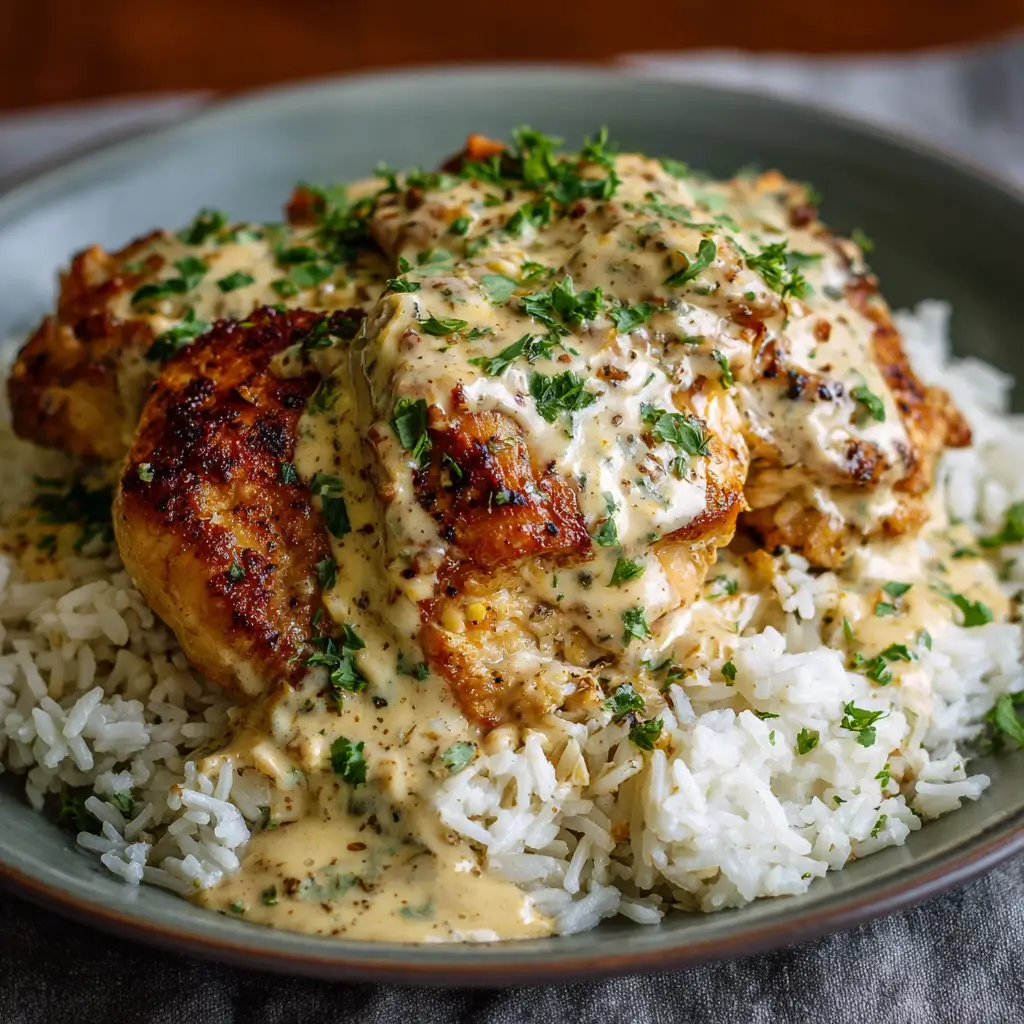
Share this Delicious Creamy Smothered Chicken and Rice Recipe with your friends on Facebook or save it to your Pinterest boards for a sunny treat!
9. Step-by-Step Instructions
Follow these detailed steps to create a truly unforgettable Creamy Smothered Chicken and Rice. Pay attention to the culinary techniques and cooking cues for the best results.
Prep Ahead:
- Prepare Chicken: Pat the chicken pieces dry with paper towels. In a medium bowl, toss the chicken with 1 teaspoon salt, 1/2 teaspoon black pepper, 1 teaspoon smoked paprika, and 1/2 teaspoon dried thyme until evenly coated. Set aside.
- Chop Vegetables: Finely dice the yellow onion and mince the garlic. Measure out your broth, cream, and rice.
Cooking Steps:
- Sear the Chicken:
- Heat 2 tablespoons of olive oil in your large heavy-bottomed skillet or Dutch oven over medium-high heat until shimmering.
- Add the seasoned chicken pieces in a single layer, working in batches if necessary to avoid overcrowding the pan.
- Sear for 3-4 minutes per side, until deeply golden brown and a crust forms. The chicken does not need to be cooked through at this stage.
- Remove the browned chicken from the skillet and set aside on a plate.
- (Culinary Technique: Searing): This step is crucial for developing rich flavor and creating a flavorful “fond” at the bottom of the pan, which will enrich your sauce.
- Sauté Aromatics and Make the Roux:
- Reduce the heat to medium. Add 3 tablespoons of unsalted butter to the same skillet. Let it melt.
- Add the finely diced yellow onion to the skillet. Cook, stirring occasionally, for 5-7 minutes until the onion softens and becomes translucent.
- Add the minced garlic and cook for another 1 minute until fragrant, being careful not to burn it.
- Sprinkle 3 tablespoons of all-purpose flour over the onions and garlic. Stir continuously with a whisk or spatula for 1-2 minutes, allowing the flour to cook and form a light blonde roux. It should smell slightly nutty, not raw floury.
- (Culinary Technique: Roux): Cooking the flour ensures a smooth sauce without a raw, pasty taste.
- Build the Creamy Sauce:
- Gradually whisk in 3 cups (720ml) of chicken broth, adding a little at a time, incorporating each addition fully before adding more. This prevents lumps.
- Bring the mixture to a gentle simmer, stirring constantly, until the sauce begins to thicken, about 2-3 minutes.
- Reduce the heat to low.
- (Troubleshooting Tip: Lumpy Sauce): If your sauce becomes lumpy, remove it from heat and whisk vigorously until smooth, or use an immersion blender for a truly silky texture.
- Add Rice and Simmer:
- Stir in 1.5 cups (300g) of long-grain white rice and 1 bay leaf into the thickened sauce.
- Return the seared chicken pieces (and any accumulated juices from the plate) to the skillet, nestling them into the sauce and rice.
- Pour in 1 cup (240ml) of heavy cream. Stir gently to combine.
- Bring the mixture to a very gentle simmer, then cover the skillet tightly with a lid.
- Cook on low heat for 18-20 minutes, or until the rice is tender and has absorbed most of the liquid. Avoid lifting the lid too often during this time, as it releases steam crucial for cooking the rice.
- (Cooking Cues): The rice should be tender but not mushy, and the liquid should be mostly absorbed, leaving a thick, creamy sauce coating the chicken and rice.
- Finish and Serve:
- Once the rice is cooked, turn off the heat. Remove the bay leaf.
- Let the dish rest, covered, for 5 minutes. This allows the flavors to meld and the rice to steam further, becoming perfectly fluffy.
- Taste and adjust seasoning with salt and pepper as needed. You might find it needs a little more salt after the rice has absorbed liquid.
- Garnish generously with fresh chopped parsley or chives before serving.
Enjoy your deeply satisfying and incredibly flavorful Creamy Smothered Chicken and Rice!
10. Frequently Asked Questions (FAQ)
Q1: Can I use chicken breasts instead of thighs for this recipe?
A1: Yes, absolutely! Boneless, skinless chicken breasts can be used as a leaner alternative. However, chicken breasts tend to dry out more easily than thighs. To prevent this, be careful not to overcook them during the initial searing, and ensure they are fully submerged in the sauce during simmering. You might also consider cutting them into slightly larger pieces.
Q2: What type of rice is best for Creamy Smothered Chicken and Rice?
A2: Long-grain white rice, such as Basmati or Jasmine, is highly recommended. These varieties cook up fluffy and separate, absorbing the creamy sauce beautifully without becoming overly sticky or mushy. Short-grain or arborio rice can release too much starch, leading to a gummier texture, which isn’t ideal for this dish.
Q3: How can I make this recipe gluten-free?
A3: To make this dish gluten-free, simply substitute the all-purpose flour in the roux with a 1:1 gluten-free all-purpose flour blend. Ensure that your chicken broth is also certified gluten-free, as some brands may contain gluten. The rest of the ingredients are naturally gluten-free.
Q4: My sauce is too thin/too thick. How can I fix it?
A4:
- If the sauce is too thin: After the rice has cooked and absorbed liquid, if the sauce is still too watery, uncover the skillet and simmer gently for a few more minutes, stirring occasionally, allowing some liquid to evaporate and the sauce to thicken naturally. You can also mix 1 tablespoon of cornstarch with 2 tablespoons of cold water to create a slurry, then stir it into the simmering sauce and cook for another minute until thickened.
- If the sauce is too thick: Stir in a splash more chicken broth or milk (or cream) until it reaches your desired consistency. This is especially helpful when reheating leftovers.
Q5: Can I add extra vegetables to this dish?
A5: Absolutely! Adding more vegetables is a great way to boost flavor and nutrition. Diced bell peppers (any color), sliced mushrooms, frozen peas, or fresh spinach are excellent additions.
- For heartier vegetables like bell peppers or mushrooms, add them with the onions and cook until softened.
- For quick-cooking vegetables like frozen peas or spinach, stir them in during the last 5-10 minutes of simmering, allowing them to heat through and spinach to wilt.
Q6: Is Creamy Smothered Chicken and Rice freezer-friendly?
A6: Yes, it is! This dish freezes quite well. Allow it to cool completely, then transfer to freezer-safe airtight containers or heavy-duty freezer bags. It can be frozen for up to 2-3 months. Thaw overnight in the refrigerator before reheating gently on the stovetop or in the microwave, adding a splash of broth or milk to restore its creamy texture.
Q7: What exactly does “smothered” mean in a culinary context?
A7: In cooking, “smothered” refers to a technique where meat or vegetables are cooked slowly in a covered pot or skillet with a flavorful, often thick, gravy or sauce. The purpose is to tenderize the main ingredient and infuse it deeply with flavor from the sauce, creating a rich, comforting, and hearty dish where the chicken is literally “smothered” in creamy goodness.
