
Table of Contents
Table of Contents
1. Introduction
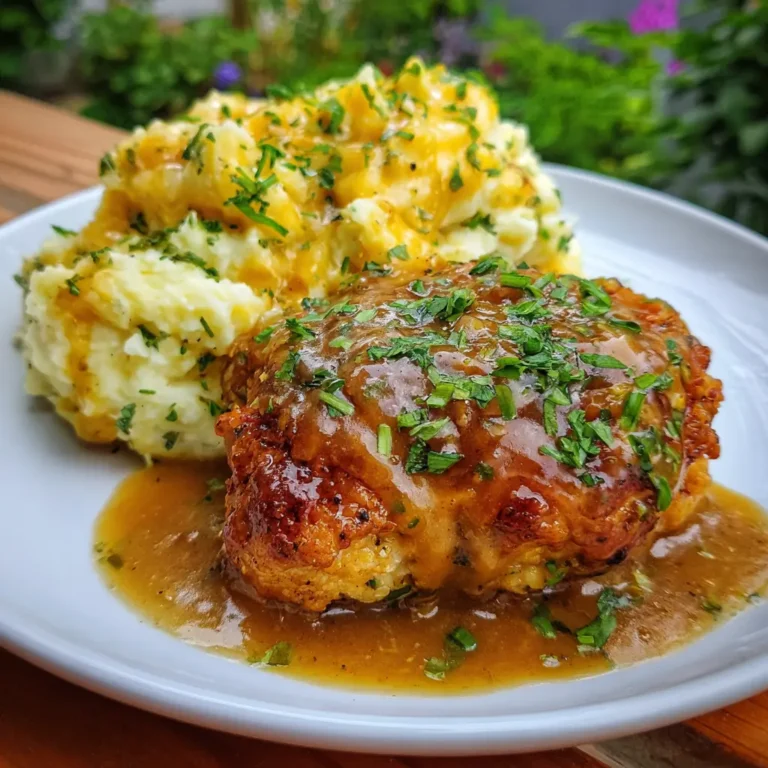
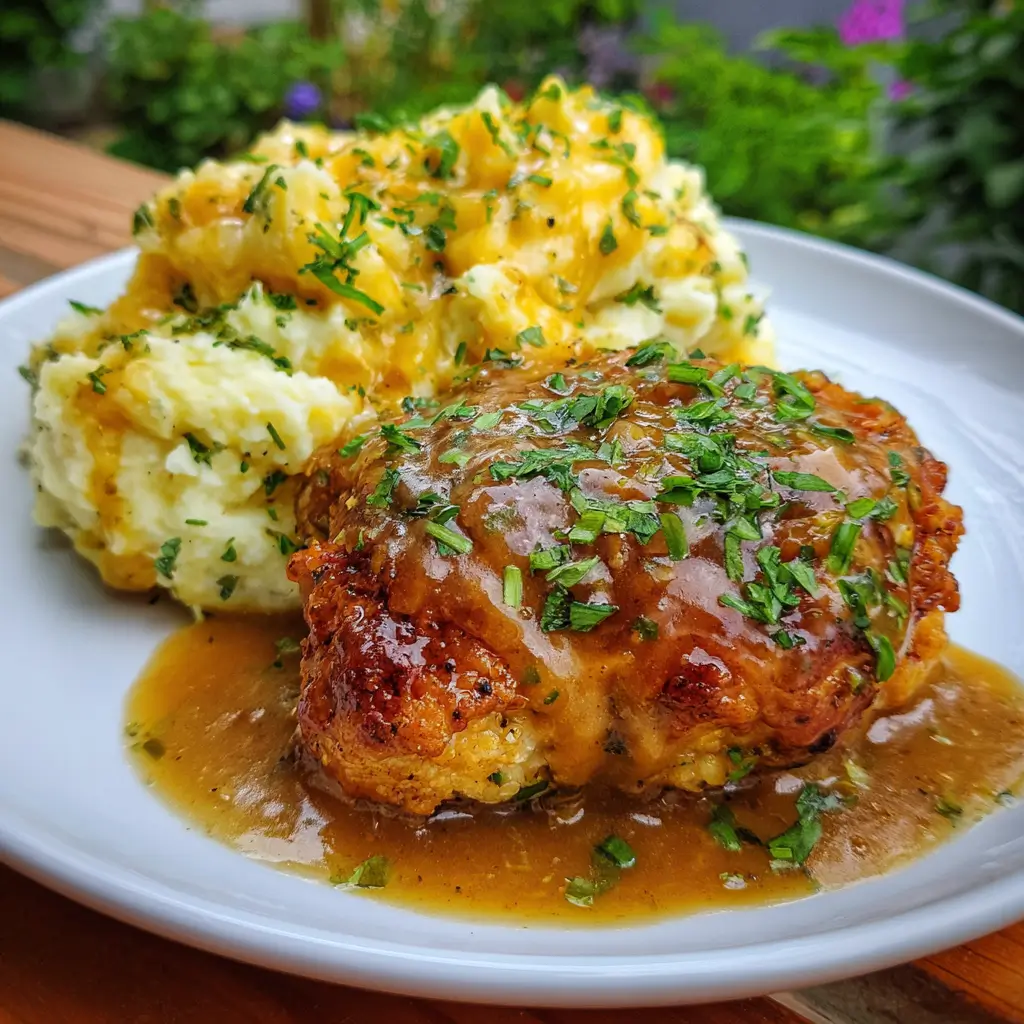
There are some meals that don’t just fill your stomach; they fill your soul. This Chicken and Garlic Gravy with Cheesy Mashed Potatoes recipe is precisely one of those culinary masterpieces. Imagine, if you will, perfectly seared, tender chicken breasts, swimming in a rich, aromatic garlic gravy, its savory depths hinting at herbs and pan drippings. Beneath this luscious cascade lies a generous mound of creamy mashed potatoes, infused with just the right amount of sharp cheddar and smooth cream cheese, creating a harmonious symphony of textures and flavors. This dish isn’t merely food; it’s an experience, a warm embrace on a chilly evening, a testament to the power of simple, wholesome ingredients transformed into something extraordinary.
This recipe holds a special place in the canon of ultimate comfort food, a category deeply rooted in the heart of home cooking traditions. It’s reminiscent of Sunday dinners at Grandma’s house, where the aroma of roasting chicken and bubbling gravy would waft through the air, promising a meal crafted with love and care. While its components – pan-seared chicken, savory gravy, and mashed potatoes – are staples in many Western cuisines, particularly American and European homestyle cooking, their combination in this specific, garlic-forward, cheesy iteration elevates it beyond the ordinary. It’s a dish that speaks to a universal craving for warmth, satisfaction, and the uncomplicated joy of good food shared with loved ones.
The unique aspect of this particular rendition lies in the careful balance of robust garlic flavor in the gravy, which is meticulously built from the flavorful fond left behind by searing the chicken, and the indulgent creaminess of the mashed potatoes, where the sharpness of cheddar cuts through the richness, preventing it from being overly heavy. We’re not just making mashed potatoes; we’re crafting a cheesy potato dream.
This isn’t a dish tied to a single historical origin point, but rather a beautiful evolution of classic culinary techniques—the art of pan-searing for a golden crust, the science of roux for a silky gravy, and the simple magic of mashing potatoes to fluffy perfection. It’s a culinary hug, a dish that signifies nourishment, celebration, and the simple pleasure of a truly satisfying meal. Whether it’s a weeknight dinner, a special occasion, or simply a craving for the most comforting of comfort foods, this recipe promises to deliver.
2. Recipe Summary
This Chicken and Garlic Gravy with Cheesy Mashed Potatoes is a quintessential American Comfort Food dish, designed to bring warmth and satisfaction to any table.
- Cuisine: American Comfort / Homestyle
- Difficulty Level: Medium. While individual components are straightforward, orchestrating them simultaneously requires a moderate level of cooking experience. Perfect for an ambitious home cook looking to impress without undue stress.
- Total Preparation and Cooking Time: Approximately 1 hour 30 minutes.
- Preparation Time: 30-40 minutes (for chopping, seasoning, and initial prep).
- Cooking Time: 50-60 minutes (for chicken searing, gravy simmering, and potato boiling/mashing).
- Dietary Classification: This recipe is a hearty, omnivore-friendly meal. It is not vegetarian, vegan, or gluten-free as written. However, with simple substitutions (e.g., gluten-free flour for the roux, or a vegetarian gravy base for a meatless version if only the potatoes are desired), it can be adapted. It is a rich, satisfying dish, providing substantial energy and protein.
3. Equipment and Utensils
Having the right tools makes all the difference in preparing this comforting meal. Here’s a complete list of what you’ll need, with some specific recommendations:
- Large Skillet or Dutch Oven: A 10-12 inch (25-30 cm) cast-iron skillet or a 5-6 quart (4.7-5.7 L) Dutch oven is ideal for searing the chicken and building the gravy. Its ability to retain and distribute heat evenly is crucial for a perfect sear and consistent gravy.
- Large Saucepan (for potatoes): A 3-4 quart (2.8-3.8 L) saucepan with a lid is necessary for boiling the potatoes. Ensure it’s large enough to hold the potatoes comfortably with sufficient water.
- Smaller Saucepan (for milk/cream): A small, 1-quart (0.9 L) saucepan to gently warm milk and cream for the mashed potatoes. This prevents cold dairy from cooling down the potatoes and keeps them fluffy.
- Cutting Board: A sturdy, non-slip cutting board for preparing chicken, garlic, and herbs.
- Sharp Chef’s Knife: Essential for slicing and mincing garlic, chopping herbs, and butterflying chicken breasts if needed.
- Meat Thermometer: To ensure the chicken is cooked through to a safe internal temperature of 165°F (74°C).
- Whisk: A balloon whisk for creating a smooth roux and thoroughly combining the gravy ingredients, preventing lumps.
- Potato Masher or Ricer: For achieving creamy, lump-free mashed potatoes. A ricer yields the smoothest results, but a traditional masher works perfectly well for a slightly chunkier texture.
- Measuring Cups and Spoons: For precise measurement of ingredients, crucial for consistent results.
- Tongs or Spatula: For flipping the chicken during searing.
- Wooden Spoon or Heat-Resistant Spatula: For stirring ingredients in the skillet and scraping up fond.
- Large Bowl: For mixing and mashing potatoes.
- Small Bowls: For mise en place (prepping and organizing ingredients).
- Shallow Plate or Dish: For seasoning the chicken.
- Fine-Mesh Sieve (optional): For a super silky gravy, you can strain it through a sieve.
- Grater: For shredding cheddar cheese for the mashed potatoes.
- Serving Platter or Individual Plates: For presenting your delicious meal.
4. Serving Suggestions
This hearty and comforting dish deserves to be presented and enjoyed with thoughtful accompaniments. The richness of the chicken and gravy, paired with the creamy potatoes, calls for sides that offer contrast in texture and flavor.
Plating Recommendations
For an appealing presentation, aim for a rustic yet elegant look.
- Classic Mound: Create a generous mound of cheesy mashed potatoes in the center of a shallow plate.
- Chicken on Top: Carefully place one or two seared chicken breasts atop the mashed potatoes.
- Gravy Cascade: Ladle a generous amount of the warm garlic gravy over the chicken and allow it to cascade down over the potatoes. The visual appeal of the glistening gravy is irresistible.
- Garnish: Finish with a sprinkle of fresh chopped parsley, chives, or thyme for a burst of color and a fresh aromatic note. A light dusting of freshly cracked black pepper also adds a professional touch.
Side Dish Ideas
To balance the richness of the main course, opt for fresh, crisp, or lightly cooked vegetables.
- Green Beans: Steamed, roasted, or lightly sautéed green beans with a hint of garlic or lemon zest make an excellent pairing. The crispness provides a wonderful textural contrast. For a truly irresistible option, try our addictive crack green beans recipe.
- Roasted Asparagus: Simple roasted asparagus, seasoned with salt, pepper, and a drizzle of olive oil, adds a touch of elegance and a slightly bitter note that complements the savory gravy.
- Simple Garden Salad: A light, fresh mixed green salad with a bright vinaigrette (lemon-herb or apple cider) can cut through the richness and cleanse the palate.
- Broccoli or Brussels Sprouts: Steamed or roasted broccoli florets or crispy roasted Brussels sprouts are fantastic for adding nutrients and a slightly different texture.
- Glazed Carrots: Sweet and tender glazed carrots can offer a lovely sweetness that contrasts nicely with the savory main dish.
- Alternative Mash: For another comforting side, if you’re looking to vary the starch, you might enjoy a creamy butternut squash mash alongside or instead of the cheesy potatoes on occasion.
Beverage Pairings
Choosing the right beverage can enhance the dining experience.
- Wine:
- White Wine: A medium-bodied Chardonnay (oaked or unoaked, depending on preference) with its creamy texture and notes of butter or apple, would complement the rich chicken and gravy beautifully. A crisp Pinot Grigio or Sauvignon Blanc could also work if you prefer something lighter to cut through the richness.
- Red Wine: A light to medium-bodied Pinot Noir or a fruity Merlot would be an excellent choice. Their softer tannins and red fruit notes won’t overpower the delicate chicken while still standing up to the savory gravy.
- Beer:
- Ale: A good quality Amber Ale or a slightly malty Brown Ale would pair well, offering nutty and caramel notes that complement the savory flavors.
- Lager: A crisp American Lager or a Bohemian Pilsner can offer a refreshing counterpoint to the rich meal.
- Non-Alcoholic Options:
- Sparkling Cider or Apple Juice: The sweetness and fizziness provide a refreshing contrast.
- Unsweetened Iced Tea: A classic choice that cleanses the palate.
- Lemon-Infused Water: Simple, clean, and refreshing.
5. Nutritional Information
It’s important to note that the following nutritional information is an estimate and can vary significantly based on specific ingredients used, exact portion sizes, and preparation methods (e.g., amount of oil used for searing, fat content of dairy products, size of chicken breasts). This dish is designed as a hearty, comforting meal, and as such, it tends to be higher in calories and macronutrients.
Estimated Nutritional Information Per Serving (based on 4 servings):
- Calories: Approximately 700-850 kcal
- Macronutrient Distribution (Approximate):
- Protein: 45-55g (primarily from chicken, some from dairy and potatoes)
- Fat: 40-55g (from chicken, butter, cheese, cream, milk, and oil)
- Carbohydrates: 35-45g (from potatoes, flour in gravy, and milk)
- Fiber: 4-6g (primarily from potatoes and minimal from garlic/herbs)
Detailed Dietary Information:
- Sodium: This dish can be moderately high in sodium, depending on the salt added during cooking, the type of chicken broth/stock used (low-sodium options are available), and the salt content of the cheese.
- Cholesterol: Will be present due to the chicken, butter, and cheese.
- Sugar: Very low, primarily naturally occurring sugars from dairy and vegetables.
- Vitamins and Minerals:
- Potatoes: A good source of Vitamin C, Vitamin B6, Potassium, and Manganese.
- Chicken: Excellent source of lean protein, Niacin, Vitamin B6, Selenium, and Phosphorus.
- Dairy (milk, cream, cheese): Rich in Calcium, Vitamin D, and Vitamin B12.
- Garlic: Contains small amounts of Vitamin C, Vitamin B6, and Manganese, along with beneficial sulfur compounds.
Health Benefits (in moderation):
- High Protein: Chicken is an excellent source of complete protein, essential for muscle repair, growth, and overall bodily functions.
- Satiety: The combination of protein, fat, and complex carbohydrates from the potatoes makes this a highly satisfying and filling meal, which can help prevent overeating later.
- Energy: Potatoes provide readily available carbohydrates, offering a good source of energy.
- Nutrient Density: Despite being a “comfort food,” it provides a good array of essential vitamins and minerals, especially from the potatoes and chicken.
- Immune Support: Garlic is known for its immune-boosting properties and contains antioxidants.
- Comfort and Well-being: The psychological benefits of enjoying a comforting, homemade meal should not be underestimated. Food that brings joy and satisfaction contributes to overall well-being.
As with any rich dish, enjoying Chicken and Garlic Gravy with Cheesy Mashed Potatoes in moderation, perhaps alongside a generous serving of non-starchy vegetables, is key to maintaining a balanced diet.
6. Storage and Reheating
This comforting meal often makes for fantastic leftovers, but proper storage and reheating are crucial to maintain its deliciousness and food safety.
Storage Instructions
- Cool Quickly: Allow the chicken, gravy, and mashed potatoes to cool down to room temperature within two hours of cooking. Do not leave them out for longer.
- Separate Components: For best results, store the chicken, garlic gravy, and cheesy mashed potatoes in separate, airtight containers. This prevents the potatoes from becoming too soggy and allows each component to retain its individual flavor and texture.
- Refrigeration: Place the airtight containers in the refrigerator. The leftovers will keep well for 3-4 days.
- Freezing:
- Gravy: Garlic gravy freezes exceptionally well. Pour it into a freezer-safe container or heavy-duty freezer bag, leaving a little headspace. It can be frozen for up to 3 months. Thaw in the refrigerator overnight before reheating.
- Chicken: Cooked chicken can also be frozen. Wrap individual portions tightly in plastic wrap, then place them in a freezer-safe bag or container. It can be frozen for up to 2-3 months. Thaw in the refrigerator.
- Mashed Potatoes: Mashed potatoes can be frozen, but their texture can change upon thawing, often becoming a bit grainy or watery. If freezing, ensure they are well-wrapped to prevent freezer burn and consider adding a little extra cream or butter when reheating to restore moisture and richness. Best consumed within 1-2 months if frozen.
Refrigeration/Freezing Best Practices
- Labeling: Always label your containers with the date they were prepared to easily track freshness.
- Portioning: If you know you’ll be eating leftovers over several days or freezing, portion them into individual servings before storing. This makes reheating much more convenient and reduces waste.
Reheating Methods
Reheating Chicken
- Oven (Recommended for best texture): Preheat oven to 300°F (150°C). Place chicken breasts in an oven-safe dish with a splash of chicken broth or water to keep them moist. Cover with foil and heat for 15-20 minutes, or until warmed through.
- Stovetop: Gently reheat chicken in a skillet over medium-low heat with a tablespoon of broth or water, covered, until warmed through. Be careful not to overcook and dry it out.
- Microwave: For quick reheating, place chicken on a microwave-safe plate, cover loosely, and heat in 30-60 second intervals until warm. This method can sometimes dry out the chicken.
Reheating Garlic Gravy
- Stovetop (Recommended): Pour gravy into a small saucepan over medium-low heat. Whisk continuously as it heats to prevent scorching and ensure a smooth consistency. If it’s too thick, add a splash of chicken broth or milk until desired consistency is reached. If it’s too thin, you can make a quick cornstarch slurry (1 tsp cornstarch mixed with 1 tsp cold water) and whisk it in, simmering for 1-2 minutes until thickened.
- Microwave: Heat in a microwave-safe bowl, stirring every 30 seconds, until hot. Again, adjust consistency with broth or milk if needed.
Reheating Cheesy Mashed Potatoes
- Stovetop (Recommended): Transfer mashed potatoes to a saucepan over medium-low heat. Add a splash of milk, cream, or a knob of butter. Stir frequently until heated through and creamy again.
- Oven: Place potatoes in an oven-safe dish, cover with foil, and bake at 325°F (160°C) for 20-30 minutes, or until heated through. You can add a pat of butter on top before baking.
- Microwave: Heat in a microwave-safe bowl, stirring every minute, until hot. You might need to add a touch of milk or butter and stir vigorously to restore creaminess.
Always ensure food is reheated to an internal temperature of 165°F (74°C) to ensure food safety.
7. Expert Tips and Variations
Elevate your Chicken and Garlic Gravy with Cheesy Mashed Potatoes from simply good to truly unforgettable with these expert tips and creative variations.
Professional Chef Tips
- Proper Chicken Sear: Don’t overcrowd the pan when searing the chicken. Cook in batches if necessary to ensure a beautiful golden-brown crust. This crust, called fond, is the foundation of your flavorful gravy. Pat the chicken dry thoroughly before seasoning and searing for optimal browning.
- Deglaze with Purpose: After searing the chicken, immediately deglaze the pan with a splash of chicken broth or white wine. Scrape up all the browned bits (the fond) from the bottom of the pan. This is where immense flavor resides and is crucial for a rich gravy.
- Roux Perfection: When making the roux for your gravy, cook the flour and butter for at least 1-2 minutes, stirring constantly, to cook out the raw flour taste. A light golden roux yields a lighter gravy, while a darker roux will give a deeper, nuttier flavor.
- Warm Dairy for Mashed Potatoes: Always warm your milk, cream, and butter before adding them to your cooked, hot potatoes. Cold dairy will cool down the potatoes, making them gummy and harder to achieve a smooth, fluffy texture.
- Don’t Overwork Mashed Potatoes: Over-mashing potatoes releases too much starch, leading to a gluey or gummy texture. Mash just until smooth and creamy. A potato ricer is excellent for this as it breaks down the potatoes without overworking them.
- Seasoning in Layers: Season your chicken, your gravy, and your mashed potatoes at different stages of cooking. Taste as you go and adjust. This layered seasoning ensures a well-rounded flavor profile.
Common Mistakes to Avoid
- Lumpy Gravy: This usually happens if the roux isn’t properly whisked, or if cold liquid is added too quickly to a hot roux (or vice-versa). Ensure your roux is smooth, and gradually whisk in warm broth.
- Dry Chicken: Overcooking is the number one culprit. Use a meat thermometer to ensure chicken reaches 165°F (74°C) and then remove it from heat. A brief rest period allows juices to redistribute.
- Bland Gravy: Not utilizing the pan drippings (fond) or not seasoning adequately can lead to a flat-tasting gravy. Don’t be shy with garlic, herbs, and salt/pepper.
- Gummy Mashed Potatoes: As mentioned, over-mashing or adding cold dairy can lead to this undesirable texture. Choose the right potato (Russet or Yukon Gold) and handle them gently.
Recipe Variations
- Herbaceous Gravy: Experiment with fresh herbs like rosemary, sage, or thyme in your gravy. Add them during the last few minutes of simmering to infuse flavor without overpowering.
- Mushroom Gravy: Sauté sliced mushrooms (cremini, shiitake, or a wild mushroom blend) with the garlic before adding the flour for an earthier, more complex gravy.
- Cheese Alternatives for Potatoes: Instead of cheddar, try Gruyère for a nutty, complex flavor, Parmesan for a salty umami punch, or a smoked gouda for a subtle smoky depth.
- Chicken Thighs: If you prefer dark meat, chicken thighs are an excellent alternative. They are more forgiving and remain moist even if slightly overcooked. For more insights on various chicken preparations, explore our comprehensive guide to grilling chicken, which covers different cuts and their handling.
- Spicy Kick: Add a pinch of red pepper flakes to the gravy for a subtle warmth.
- Creamy Garlic Parmesan Chicken Variation: If you love the creamy garlic profile but want a slightly different preparation, you might also enjoy our creamy garlic parmesan chicken.
- Wine Infusion: Deglaze the pan with 1/4 cup dry white wine (like Chardonnay or Pinot Grigio) after searing the chicken, before adding broth, for an extra layer of sophisticated flavor in the gravy.
Seasonal Adaptations
- Autumn/Winter: Incorporate roasted root vegetables (carrots, parsnips) into the gravy or serve them as a side. A pinch of dried sage or a bay leaf can add a cozy, autumnal note.
- Spring/Summer: Lighten the dish with fresh spring herbs like tarragon or chives. Serve with blanched asparagus or snap peas for a fresh, vibrant side. A squeeze of lemon juice in the gravy at the end can brighten the flavors.
8. Ingredients Section
Crafting this ultimate comfort meal requires quality ingredients for both taste and texture. Here’s a detailed breakdown for each component, along with sourcing recommendations and substitution ideas.
For the Chicken:
- Chicken Breasts: 4 boneless, skinless chicken breasts (about 1.5-2 lbs / 680-900g total).
- Sourcing: Look for organic, free-range chicken if possible for better flavor and texture. Ensure breasts are roughly uniform in size for even cooking.
- Substitutions: Boneless, skinless chicken thighs (about 1.5 lbs / 680g) work wonderfully and tend to stay moister. Adjust cooking time slightly.
- Olive Oil: 2 tablespoons (30ml) for searing.
- Sourcing: Use a good quality extra virgin olive oil for flavor, or a high smoke point oil like avocado oil for searing.
- Substitutions: Vegetable oil, canola oil, or grapeseed oil.
- Salt: 1 teaspoon (5g), or to taste.
- Black Pepper: 1/2 teaspoon (2.5g), freshly ground, or to taste.
- Garlic Powder: 1/2 teaspoon (2.5g).
- Substitutions: Onion powder for a milder flavor.
For the Garlic Gravy:
- Butter: 4 tablespoons (1/2 stick / 56g) unsalted butter.
- Sourcing: High-quality butter makes a difference in flavor and richness.
- Substitutions: Margarine or olive oil for a slightly different flavor profile (though butter is preferred for roux).
- Garlic: 4-6 cloves, minced (about 2 tablespoons / 30g).
- Sourcing: Fresh garlic is crucial for the best flavor.
- Substitutions: 1 teaspoon (5g) garlic powder if fresh is unavailable (add with flour, not sautéed).
- All-Purpose Flour: 1/4 cup (30g).
- Sourcing: Standard all-purpose flour.
- Substitutions: For a gluten-free gravy, use 1/4 cup (30g) gluten-free all-purpose flour blend or 1-2 tablespoons (15-30g) cornstarch (mixed with cold water to form a slurry, then whisked in at the end to thicken).
- Chicken Broth/Stock: 2 cups (480ml), low sodium.
- Sourcing: Good quality, low-sodium chicken broth allows you to control the saltiness. Homemade chicken stock is even better.
- Substitutions: Vegetable broth.
- Heavy Cream: 1/4 cup (60ml).
- Sourcing: Full-fat heavy cream for ultimate richness.
- Substitutions: Half-and-half (will be less rich).
- Fresh Parsley: 2 tablespoons (10g), chopped, for garnish (optional).
- Sourcing: Fresh is best for color and flavor.
- Substitutions: 1 teaspoon (2g) dried parsley (add with broth), or chives.
- Salt and Black Pepper: To taste.
For the Cheesy Mashed Potatoes:
- Potatoes: 2 lbs (900g) Russet or Yukon Gold potatoes, peeled and quartered.
- Sourcing: Russet potatoes yield a fluffy mash, while Yukon Golds offer a naturally buttery flavor and creamy texture.
- Substitutions: Red potatoes (leave skins on for a rustic mash).
- Milk: 1/2 cup (120ml) whole milk.
- Sourcing: Whole milk for creaminess.
- Substitutions: 2% milk (will be slightly less rich), or more heavy cream.
- Heavy Cream: 1/4 cup (60ml).
- Sourcing: Full-fat heavy cream.
- Substitutions: Sour cream or Greek yogurt (for a tangier flavor and slight reduction in fat).
- Unsalted Butter: 4 tablespoons (1/2 stick / 56g), cut into pieces.
- Sourcing: Again, quality butter.
- Cheddar Cheese: 1 cup (110g) sharp cheddar cheese, shredded.
- Sourcing: Shred your own from a block for better melting and flavor compared to pre-shredded (which often contains anti-caking agents).
- Substitutions: Gruyère, Fontina, or Colby Jack cheese.
- Cream Cheese: 2 ounces (56g), softened.
- Sourcing: Full-fat cream cheese for best results.
- Substitutions: Mascarpone for a slightly sweeter, richer flavor.
- Salt: 1 teaspoon (5g), or to taste.
- Black Pepper: 1/2 teaspoon (2.5g), freshly ground, or to taste.
Remember to have all your ingredients prepped and measured (mise en place) before you begin cooking to ensure a smooth and enjoyable cooking process.
9. Step-by-Step Instructions
This recipe involves a few coordinated steps, but breaking it down makes it simple and enjoyable. We’ll start with the potatoes, then move to the chicken and gravy simultaneously to ensure everything is hot and ready at the same time.
Part 1: The Cheesy Mashed Potatoes
- Prepare Potatoes: Peel the potatoes and cut them into roughly 1.5-inch (3-4 cm) chunks. Aim for uniform size so they cook evenly.
- Boil Potatoes: Place the potato chunks in a large saucepan. Cover them with cold water by about 1 inch (2.5 cm). Add 1 teaspoon (5g) of salt to the water. Bring to a boil over high heat, then reduce heat to medium-low, cover, and simmer for 15-20 minutes, or until the potatoes are fork-tender.
- Troubleshooting: If potatoes are not tender after 20 minutes, continue cooking for another 5-10 minutes.
- Warm Dairy: While potatoes are cooking, combine milk, heavy cream, and butter in a small saucepan. Heat over low heat until the butter is melted and the mixture is warm but not boiling. Remove from heat.
- Drain and Mash: Once tender, carefully drain the potatoes completely in a colander. Return the drained potatoes to the empty hot saucepan over low heat for 1-2 minutes, shaking gently, to help evaporate any excess moisture. Remove from heat.
- Mash and Combine: Add the warmed milk mixture, softened cream cheese, and shredded cheddar cheese to the potatoes. Using a potato masher or ricer, mash until smooth and creamy. Do not overmix; overworking can make potatoes gummy.
- Season: Taste and season with additional salt and freshly ground black pepper as needed. Cover to keep warm while you prepare the chicken and gravy.
- Troubleshooting: If potatoes are lumpy, keep mashing gently. If too stiff, add a touch more warm milk or cream until desired consistency.
Part 2: The Chicken and Garlic Gravy
- Prepare Chicken: Pat chicken breasts dry thoroughly with paper towels. Season both sides generously with salt, black pepper, and garlic powder.
- Sear Chicken: Heat olive oil in a large skillet (preferably cast iron or heavy-bottomed) over medium-high heat until shimmering. Carefully place the seasoned chicken breasts in the hot skillet. Do not overcrowd; cook in batches if necessary. Sear for 5-7 minutes per side, until golden brown and cooked through (internal temperature reaches 165°F / 74°C).
- Culinary Technique: A good sear creates a flavorful crust and leaves behind the ‘fond’ in the pan, crucial for the gravy.
- Troubleshooting: If chicken browns too quickly, reduce heat slightly. If it’s not browning, increase heat.
- Rest Chicken: Once cooked, transfer the chicken to a plate, tent loosely with foil, and let it rest for at least 5-10 minutes. This allows the juices to redistribute, ensuring moist and tender chicken.
- Make the Roux: Reduce heat to medium-low. Add the butter to the skillet (if needed, add a little extra from the gravy ingredients). Scrape up any browned bits (fond) from the bottom of the pan with a wooden spoon or spatula. Add the minced garlic and cook for 1 minute until fragrant, being careful not to burn it. Sprinkle the all-purpose flour over the butter and garlic. Whisk constantly for 1-2 minutes to create a smooth roux, cooking out the raw flour taste.
- Culinary Technique: The roux is the base thickener for your gravy. Cooking it long enough is key for flavor.
- Add Broth: Gradually whisk in the chicken broth, a little at a time, ensuring each addition is fully incorporated before adding more. This prevents lumps and creates a smooth gravy. Continue whisking until the gravy begins to thicken and simmer, about 3-5 minutes.
- Troubleshooting: If gravy is lumpy, remove from heat and whisk vigorously. You can also strain it through a fine-mesh sieve for ultra-smoothness.
- Finish Gravy: Stir in the heavy cream and continue to simmer for another 1-2 minutes, until heated through and slightly thickened to your desired consistency.
- Season Gravy: Taste the gravy and season with additional salt and black pepper as needed. Remember the chicken was seasoned, and the broth had salt, so season carefully.
- Serve: Slice the rested chicken breasts against the grain, if desired. Serve immediately over generous portions of the hot cheesy mashed potatoes, smothered with the warm garlic gravy. Garnish with fresh chopped parsley, if using.
For another indulgent and hearty chicken dish that goes well with creamy sides, consider trying our Marry Me Chicken Pasta.
10. Frequently Asked Questions (FAQ)
Q1: Can I use chicken thighs instead of breasts?
A1: Absolutely! Boneless, skinless chicken thighs are an excellent alternative. They tend to be more forgiving and retain moisture better, resulting in an even juicier final dish. Cook them for about the same amount of time, or until their internal temperature reaches 165°F (74°C).
Q2: How can I prevent lumpy mashed potatoes?
A2: Several tips help prevent lumps:
- Choose the Right Potatoes: Russet or Yukon Gold potatoes are best for mashing due to their high starch content.
- Cook Thoroughly: Ensure potatoes are fork-tender throughout before draining.
- Drain Well: Return drained potatoes to the hot pot for a minute over low heat to steam off excess water.
- Warm Dairy: Always warm your milk, cream, and butter before adding them.
- Don’t Overwork: Mash just enough to get them smooth. Over-mashing releases too much starch, making them gummy. A potato ricer is great for lump-free results.
Q3: How do I make the gravy gluten-free?
A3: To make the gravy gluten-free, substitute the all-purpose flour with a gluten-free all-purpose flour blend (measure by weight for best results, or use the same volume). Alternatively, you can use 1-2 tablespoons (15-30g) of cornstarch. Mix the cornstarch with an equal amount of cold water to create a slurry, then whisk it into the simmering gravy at the end. Simmer for 1-2 minutes until thickened.
Q4: Can I make this recipe ahead of time?
A4: You can prepare components ahead:
- Mashed Potatoes: Can be made up to a day in advance and reheated with extra milk/butter on the stovetop or in the oven.
- Gravy: Can be made 2-3 days ahead and stored in the fridge. Reheat gently on the stovetop, whisking and adding a splash of broth or milk if it’s too thick.
- Chicken: Best cooked fresh for optimal texture, but you can season it a few hours ahead of time. Reheating cooked chicken can sometimes dry it out.
Q5: What kind of cheese works best for the mashed potatoes?
A5: Sharp cheddar is classic for its robust flavor and good melting qualities. However, feel free to experiment with other cheeses like Gruyère for a nutty depth, Fontina for extra meltiness and mild flavor, or even a blend of Parmesan and mozzarella for a different profile. Shredding cheese from a block yourself ensures better flavor and melting.
Q6: Why is my gravy bland?
A6: Bland gravy usually stems from a few issues:
- Lack of Fond: Not properly deglazing the pan after searing the chicken means missing out on crucial flavor.
- Insufficient Seasoning: Don’t be afraid to taste and adjust salt and pepper at the end. A pinch of herbs (like thyme or rosemary) or a dash of Worcestershire sauce can also boost flavor.
- Under-cooked Roux: Ensure the flour and butter are cooked for at least 1-2 minutes to eliminate the raw flour taste.
Q7: Can I use dried herbs instead of fresh ones in the gravy?
A7: Yes, you can. As a general rule, use about 1/3 of the amount of dried herbs compared to fresh. For example, if the recipe calls for 2 tablespoons of fresh parsley, use about 2 teaspoons of dried parsley. Add dried herbs earlier in the cooking process (with the broth) to allow them time to rehydrate and release their flavor. Fresh herbs are often preferred for their vibrant flavor and color as a garnish.
