
Table of Contents
Table of Contents
1. Introduction
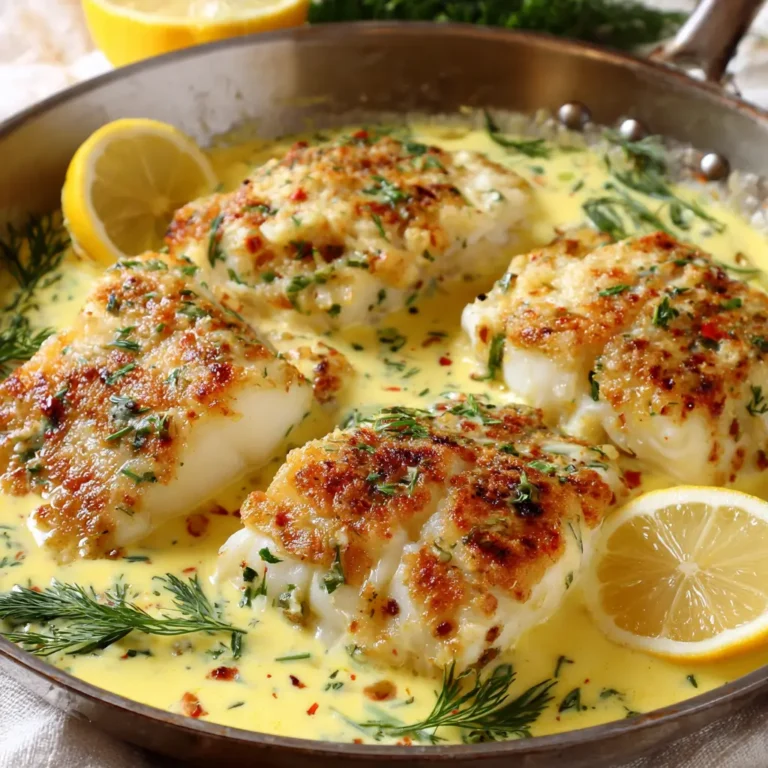
Imagine a culinary escape where the delicate whispers of the ocean meet the vibrant zest of the tropics, all culminating in a dish that is both elegant and effortlessly satisfying. This Baked Cod in Coconut Lemon Cream Sauce offers precisely that journey. It’s a symphony of flavors, where tender, flaky cod fillets are lovingly enveloped in a rich, aromatic sauce that perfectly balances the creamy sweetness of coconut with the bright, tangy kick of fresh lemon. This dish isn’t just a meal; it’s an experience, designed to captivate your senses and leave a lasting impression of sophisticated simplicity.
My inspiration for this particular recipe stemmed from a desire to create a seafood dish that felt indulgent without being heavy, and exotic without being overly complicated. I’ve always been fascinated by the harmonious blend of flavors found in various coastal and Southeast Asian cuisines, where coconut milk often forms the velvety base of savory dishes, and citrus is used to cut through richness and add a refreshing lift.
I wanted to bring this dynamic duo to a beloved lean white fish like cod, offering a healthy yet deeply flavorful alternative to more traditional, butter-laden preparations. The goal was to develop a recipe that could easily fit into a weeknight routine, yet shine brightly enough for a special occasion, showcasing how simple, fresh ingredients can create profound culinary art.
What makes this Baked Cod in Coconut Lemon Cream Sauce truly unique is the ingenious marriage of its two star ingredients. Cod, with its mild flavor and firm, white flesh, acts as the perfect canvas, absorbing the nuanced notes of the sauce while remaining incredibly moist and tender. Unlike conventional dairy-based cream sauces, the full-fat coconut milk provides a naturally sweet, dairy-free richness that is both lighter on the palate and surprisingly opulent. The critical role of fresh lemon zest and juice cannot be overstated; the zest provides an aromatic brightness, while the juice adds a piquant tang that prevents the sauce from becoming cloying, creating a vibrant balance that awakens every taste bud.
This recipe is a modern fusion, drawing inspiration from global flavors but distilled into a comforting, approachable form. It’s a testament to contemporary cooking, prioritizing wholesome ingredients, ease of preparation, and bold, complementary tastes. The dish celebrates the delicate nature of fresh seafood and the transformative power of a well-balanced sauce, turning humble cod into an extraordinary centerpiece. It’s perfect for those seeking to expand their culinary repertoire with a dish that feels both familiar and exciting, proving that healthy eating can also be incredibly delicious and deeply satisfying.
2. Recipe Summary
This Baked Cod in Coconut Lemon Cream Sauce provides a delightful and accessible culinary experience.
- Cuisine: Modern Fusion (Coastal-inspired with subtle Southeast Asian influences). It marries the lean simplicity of baked fish with vibrant, globally-inspired flavors.
- Difficulty Level: Easy to Moderate. While the steps are straightforward and require basic kitchen skills, precise timing for the fish and careful balancing of the sauce ensure optimal results. It’s forgiving enough for beginners but offers depth for more experienced cooks.
- Total Preparation and Cooking Time:
- Preparation Time: Approximately 15-20 minutes. This includes thawing and drying the cod, mincing garlic, zesting and juicing lemons, and assembling the sauce ingredients. Efficiency in mise en place can shorten this.
- Cooking Time: Approximately 15-20 minutes. The cod bakes relatively quickly, allowing for a swift transition from oven to table. The sauce requires minimal simmering.
- Total Time: 30-40 minutes. This makes it an excellent choice for a busy weeknight dinner when you desire something flavorful and wholesome without a lengthy time commitment.
- Dietary Classification:
- Gluten-Free: This recipe is inherently gluten-free, provided all secondary ingredients like broths and spices are certified gluten-free.
- Dairy-Free: By utilizing full-fat coconut milk, the dish is completely dairy-free, making it suitable for those with lactose intolerance or dairy allergies.
- High Protein: Cod is an outstanding source of lean, high-quality protein, essential for muscle health and satiety.
- Low Carb: With no starches in the main dish itself, it naturally aligns with low-carbohydrate eating plans.
- Pescatarian: A flavorful and satisfying option for individuals following a pescatarian diet.
3. Equipment and Utensils
Having the correct tools makes the preparation and cooking process much more efficient and enjoyable. Here is a comprehensive list of equipment and utensils you’ll need for your Baked Cod in Coconut Lemon Cream Sauce:
- Oven: Essential for baking the cod to tender perfection. Ensure it’s preheated to 200°C (400°F).
- 9×13 inch (23×33 cm) Baking Dish or Casserole Dish: A ceramic or glass dish is recommended for even heat distribution and allows for easy presentation directly from the oven. If you have fewer fillets, a smaller oven-safe dish will work, but avoid overcrowding.
- Small Saucepan or Skillet: A 1.5 to 2-quart (1.4 to 1.9-liter) saucepan is ideal for preparing the coconut lemon cream sauce. Its size allows for easy whisking and simmering.
- Whisk: Crucial for combining sauce ingredients smoothly, preventing lumps, and ensuring a uniform creamy texture.
- Measuring Cups and Spoons: For precise measurements of all liquids and dry ingredients, ensuring consistent results every time.
- Dry measuring cups: 1/4 cup, 1/2 cup, 1 cup increments.
- Liquid measuring cup: at least 1-cup (250 ml) capacity.
- Measuring spoons: 1/4 tsp, 1/2 tsp, 1 tsp, 1 tbsp increments.
- Cutting Board: A stable and clean surface for safely preparing the cod fillets and chopping aromatics like garlic and herbs.
- Sharp Chef’s Knife: Necessary for mincing garlic, chopping fresh herbs, and portioning the fish if purchased as a larger fillet.
- Microplane Grater or Zester: Specifically designed for removing only the vibrant outer layer of citrus zest, avoiding the bitter white pith. This tool is key for capturing the intense lemon aroma.
- Citrus Juicer: To efficiently extract the maximum amount of fresh lemon juice. A hand reamer, reamer attachment, or a small electric juicer works well.
- Small Mixing Bowls: Useful for holding prepped ingredients like minced garlic, lemon zest, or chopped herbs, facilitating an organized and stress-free cooking experience (mise en place).
- Paper Towels: For thoroughly patting dry the cod fillets before seasoning and baking. This step is vital for achieving the desired texture.
- Heat-Resistant Rubber Spatula: For scraping down the sides of the saucepan and mixing the sauce thoroughly.
- Aluminum Foil (Optional): To loosely cover the baking dish if the fish or sauce surface begins to brown too quickly, helping to retain moisture and prevent scorching.
- Digital Meat Thermometer (Highly Recommended): An invaluable tool for ensuring the cod is cooked perfectly to 63°C (145°F) without overcooking, guaranteeing tender, juicy fish every time.
4. Serving Suggestions
The versatility and inherent elegance of Baked Cod in Coconut Lemon Cream Sauce make it a perfect candidate for various dining settings.
Plating Recommendations
Thoughtful presentation can significantly elevate the dining experience.
- Garnish for Visual Appeal and Freshness: A generous sprinkle of freshly chopped herbs, such as parsley or cilantro, provides a vibrant burst of green that contrasts beautifully with the creamy white sauce and fish. These herbs also contribute a fresh, aromatic finish.
- Citrus Highlight: Arrange a couple of thin, fresh lemon slices or a small lemon wedge directly on top of or alongside each cod fillet. This not only signals the dish’s core flavor profile but also allows diners to add an extra squeeze of brightness if desired.
- A Touch of Richness: For an additional layer of flavor and a lovely sheen, a very light drizzle of high-quality extra virgin olive oil over the finished dish before serving can enhance its gourmet appeal.
- Serve Warm: Ensure plates are warm before serving to maintain the dish’s temperature and enhance the overall experience.
Side Dish Ideas
The rich, zesty nature of the coconut lemon cream sauce pairs beautifully with sides that can soak up its exquisite flavors or offer a complementary textural contrast.
- Grains for Sauce Absorption:
- Jasmine or Basmati Rice: The fluffy texture and subtle aroma of these rice varieties are classic accompaniments, perfect for soaking up every drop of the luscious sauce.
- Quinoa: A protein-rich, gluten-free alternative that also readily absorbs flavors.
- Couscous: Offers a light and quick-cooking option.
- Cauliflower Rice: An excellent low-carb choice that mimics the texture of traditional rice.
- Steamed or Roasted Vegetables:
- Asparagus: Its slightly crisp texture and mild earthy flavor complement the fish without overpowering it.
- Green Beans: Simply steamed, lightly blanched, or quickly sautéed with a touch of garlic, they add a fresh crunch. For a heartier side, you might enjoy these Southern Green Beans with Easy Bacon Flavor, though you’d want to keep the bacon minimal for this delicate fish dish.
- Broccoli or Broccolini: Roasted until just tender with slightly charred edges, they offer depth and a pleasant bitterness.
- Spinach or Kale: Lightly wilted with a hint of garlic, these provide a quick, healthy, and vibrant green element.
- Simple Salad: A crisp, fresh green salad tossed with a light vinaigrette (perhaps a lemon-herb dressing) offers a refreshing counterpoint, cleansing the palate between bites of the rich fish and sauce.
Beverage Pairings
To harmonize with the delicate flavors of the cod and the bright, creamy sauce, choose beverages that are crisp, refreshing, and won’t overwhelm the dish.
- White Wine:
- Sauvignon Blanc: Its characteristic bright acidity, herbaceous notes, and citrus undertones are a perfect match for the lemon in the sauce, creating a synergistic pairing.
- Pinot Grigio: Light-bodied, crisp, and dry, it’s a versatile choice that cleanses the palate without competing with the fish.
- Unoaked Chardonnay: A lighter-style Chardonnay, without heavy oak influence, can offer a subtle fruitiness and smooth texture that complements the creaminess of the sauce.
- Non-Alcoholic Options:
- Sparkling Water with Lemon or Lime: Simple, elegant, and reinforces the dish’s citrus notes.
- Unsweetened Iced Tea: A light black tea or a herbal tea with lemon or ginger can be wonderfully refreshing.
- Coconut Water: For an extra tropical touch and hydrating complement.
- Light Beer: A crisp lager, a Belgian witbier, or a session IPA can offer a refreshing balance to the dish.
5. Nutritional Information
Embracing this Baked Cod in Coconut Lemon Cream Sauce not only treats your taste buds but also provides a host of health benefits, especially when thoughtfully paired with complementary sides.
(Note: The nutritional information provided is an estimate based on approximately 150g / 5oz cod fillet with a proportionate amount of sauce, without additional side dishes. Actual values may vary depending on specific brands, exact measurements, and preparation methods.)
Estimated Nutritional Value per Serving:
- Calories: 320-380 kcal
- Macronutrient Distribution (approximate):
- Protein: 30-35 grams (primarily from the lean cod, crucial for muscle repair and satiety)
- Fats: 20-28 grams (predominantly from full-fat coconut milk and olive oil; approximately 16-22g saturated fat from coconut milk)
- Carbohydrates: 6-10 grams (from lemon juice, garlic, and natural sugars in coconut milk)
- Fiber: 1-2 grams (minimal, but can be increased with fibrous side dishes)
Detailed Dietary Information & Health Benefits:
- Cod (The Star Protein):
- High-Quality Lean Protein: Cod is an excellent source of complete protein, vital for building and repairing tissues, and supporting a healthy metabolism. It’s particularly valuable for those looking for lean protein sources.
- Rich in Essential Nutrients: It’s packed with Vitamin B12, crucial for nerve health and red blood cell production, and also provides significant amounts of iodine, selenium, and phosphorus, which play roles in thyroid function, antioxidant defense, and bone health, respectively.
- Low in Fat, Good for Heart Health: Being naturally low in total fat and unhealthy saturated fats, cod is a heart-healthy choice that can contribute to maintaining healthy cholesterol levels.
- Omega-3 Fatty Acids: While not as rich in Omega-3s as fattier fish like salmon, cod still contributes beneficial eicosapentaenoic acid (EPA) and docosahexaenoic acid (DHA), which are renowned for their anti-inflammatory properties, supporting cardiovascular and cognitive health.
- Coconut Milk (The Creamy Base):
- Source of Healthy Fats (MCTs): Full-fat coconut milk contains medium-chain triglycerides (MCTs), a type of fat that is easily digested and rapidly converted into energy by the body, potentially boosting metabolism.
- Dairy-Free Alternative: It’s a wonderful, naturally creamy substitute for dairy products, making this dish suitable for those with lactose intolerance or dairy allergies.
- Micronutrients: Provides small amounts of potassium, magnesium, and iron, contributing to electrolyte balance and energy production.
- Lemon (The Brightener):
- High in Vitamin C: A potent antioxidant that plays a key role in immune system function, collagen synthesis for healthy skin, and enhances the absorption of non-heme iron from plant-based foods.
- Natural Flavor Enhancer: Its natural acidity allows for a reduction in the need for added salt, contributing to a lower sodium diet, which is beneficial for blood pressure management.
- Garlic (The Aromatic Powerhouse):
- Immune-Boosting Properties: Garlic contains allicin, a compound known for its strong immune-modulating and antimicrobial effects, potentially helping to ward off illness.
- Cardiovascular Benefits: Research suggests garlic may contribute to heart health by helping to lower blood pressure and reduce cholesterol levels.
- Olive Oil (Healthy Fat):
- Monounsaturated Fats: Extra virgin olive oil is a cornerstone of the Mediterranean diet, rich in monounsaturated fatty acids (MUFAs) which are known to be beneficial for heart health, helping to reduce levels of “bad” LDL cholesterol.
- Antioxidants: Contains powerful antioxidants, including polyphenols, which protect the body’s cells from oxidative damage.
Overall Health Benefits of the Dish:
This recipe, particularly when served with a generous portion of steamed vegetables, forms a wonderfully balanced and nutritious meal. It is:
- Heart-Healthy: Low in saturated fat (excluding that from coconut milk, which has distinct properties) and rich in beneficial fatty acids and nutrients.
- Immune Supportive: Packed with vitamins and compounds from cod, lemon, and garlic that bolster the body’s defenses.
- Digestion Friendly: The lean protein and natural ingredients are generally easy to digest.
- Weight Management Friendly: High in protein to promote satiety, and relatively low in calories and carbohydrates, depending on the chosen sides.
- Anti-inflammatory: Benefiting from Omega-3s, antioxidants, and anti-inflammatory compounds.
By choosing this Baked Cod in Coconut Lemon Cream Sauce, you are not just savoring an exquisite flavor profile; you are actively nourishing your body with wholesome, health-promoting ingredients.
6. Storage and Reheating
To preserve the delicate texture and vibrant flavors of your Baked Cod in Coconut Lemon Cream Sauce, proper storage and reheating techniques are essential. Fish, especially lean white fish like cod, can easily become dry or develop undesirable textures if not handled correctly.
Storage Instructions
- Prompt Cooling: As soon as possible after serving (ideally within two hours), allow any leftover baked cod and sauce to cool down to room temperature. This minimizes the time food spends in the “danger zone” for bacterial growth.
- Airtight Container: Carefully transfer the cooled cod fillets and the remaining coconut lemon cream sauce into a clean, airtight food storage container. An airtight seal is crucial for preventing odors from permeating other foods in your refrigerator and for protecting the fish from absorbing foreign smells.
- Refrigeration: Store the sealed container in the coldest part of your refrigerator. Cooked fish and seafood are best consumed within 2-3 days of preparation. Beyond this timeframe, the quality can significantly degrade, and food safety becomes a concern.
Freezing
The freezing and thawing process can impact the delicate texture of cod and potentially cause the coconut cream sauce to separate or become grainy.
- Generally Not Recommended for Optimal Quality: While you can freeze cooked cod in a sauce, it’s typically not advised for this particular dish if you prioritize the absolute best texture and flavor. The fish tends to become drier and more fibrous, and the creamy sauce may lose some of its original silky consistency.
- If You Choose to Freeze: If freezing is necessary, ensure the dish is completely cooled. Transfer it to a freezer-safe, airtight container or a heavy-duty freezer bag, expelling as much air as possible to prevent freezer burn. Label the container with the date. It can be safely frozen for up to 1 month.
- Thawing Process: Always thaw frozen cod and sauce overnight in the refrigerator. Avoid thawing at room temperature to prevent bacterial growth. Do not attempt to reheat directly from a frozen state, as this will lead to uneven cooking and a poor texture.
Reheating Methods
The primary goal when reheating is to gently warm the fish through without further cooking it, which would result in dry, rubbery fish.
- Oven (Recommended for Best Quality):
- Preheat your oven to a low temperature of 150°C (300°F). A gentle, low heat is key to preserving moisture.
- Place the leftover cod fillets and a generous amount of sauce into an oven-safe dish.
- If the sauce appears thick or has separated slightly, stir in a tablespoon or two of water or fresh coconut milk to help rehydrate and smooth it out.
- Cover the dish loosely with aluminum foil. This creates a steamy environment, helping to retain moisture and preventing the fish from drying out or the sauce from scorching.
- Bake for 10-15 minutes, or until the fish is warmed through. You can use a digital thermometer to check; aim for an internal temperature of around 63°C (145°F).
- Remove the foil for the final couple of minutes if you wish to slightly crisp any edges, but monitor closely to avoid overcooking.
- Microwave (Quickest, but Exercise Caution):
- For individual servings, place the cod and sauce in a microwave-safe dish.
- Add a small splash of water or coconut milk to the sauce if it looks dry.
- Cover the dish with a microwave-safe lid or a damp paper towel to trap steam.
- Heat on medium power for 1-2 minutes, then check. Continue heating in 30-second intervals, rotating the dish, until warmed through.
- Be very careful not to overheat, as the microwave can quickly dry out delicate fish. The texture may not be as tender as when reheated in an oven.
- Stovetop (Best for Sauce, Tricky for Fish):
- This method is ideal if you’re primarily reheating the sauce to serve over a freshly cooked piece of fish, or if you have significantly more sauce than fish.
- Gently warm the sauce in a small saucepan over low heat, stirring frequently, until it’s heated through. Adjust consistency with a little broth or coconut milk if needed.
- Attempting to reheat the fish directly on the stovetop can cause it to break apart or dry out quickly. If you must, place the fish in a non-stick skillet with some sauce, cover, and gently warm over very low heat for 5-7 minutes, flipping once with extreme care.
Always aim to reheat only the portion you intend to eat, as repeated reheating can further diminish the quality and flavor of the dish.
7. Expert Tips and Variations
Elevate your Baked Cod in Coconut Lemon Cream Sauce from simply delicious to truly unforgettable with these professional insights and creative adaptations.
Professional Chef Tips
- Prioritize Quality Fish: The foundation of this dish is fresh, high-quality cod. Seek out fillets that are firm, moist, and translucent with a clean, mild oceanic scent. If using frozen cod, ensure it is fully thawed and, crucially, patted bone-dry with paper towels before seasoning. Excess moisture will steam the fish and dilute your sauce, hindering a perfect bake.
- The Golden Rule: Don’t Overcook: Cod is a lean fish and cooks remarkably quickly. The ultimate secret to flaky, moist fish is precision. Remove the cod from the oven the moment it reaches an internal temperature of 63°C (145°F) at its thickest point. A good digital instant-read thermometer is an indispensable tool here. Overcooked cod inevitably becomes tough and dry.
- Master the Lemon Balance: Use fresh lemon zest and juice. The zest, containing essential oils, provides intense lemon aroma without the full tartness of the juice. Add both towards the very end of the sauce-making process to preserve their vibrant, fresh notes. Taste and adjust to your preference – a pinch of sugar can temper excessive tartness.
- Opt for Full-Fat Coconut Milk: For a truly rich, velvety sauce, full-fat canned coconut milk is non-negotiable. “Light” versions often have a higher water content, resulting in a thinner, less satisfying sauce. Shake the can vigorously before opening to emulsify any separated cream.
- Build Flavor in Layers: Briefly sautéing your minced garlic in olive oil before adding the coconut milk is a small but impactful step. This process gently toasts the garlic, releasing its potent aromatics and deepening the foundational flavor of your sauce.
- Season Liberally and Taste Constantly: Don’t shy away from salt and freshly ground black pepper. Season the cod fillets directly before baking. More importantly, taste the sauce before pouring it over the fish and adjust the seasonings as needed. This ensures a perfectly balanced dish.
- Allow for Resting: While not as crucial as for larger cuts of meat, allowing the baked cod to rest for 2-3 minutes after it comes out of the oven enables the juices to redistribute throughout the fillet, ensuring a more tender and moist result.
Common Mistakes to Avoid
- Overcrowding the Baking Dish: Placing too many cod fillets too close together in the dish will cause them to steam rather than bake evenly, leading to a less desirable texture. Use a larger dish or bake in batches if necessary.
- Neglecting to Pat Dry the Fish: Wet fish will struggle to develop any appealing exterior texture and can result in a soggy dish. Always pat the cod completely dry with paper towels.
- Adding Lemon Juice Too Early: Cooking lemon juice or zest for an extended period can cause its bright, fresh notes to dissipate or become bitter. Incorporate it in the final stages of sauce preparation.
- Forgetting to Shake the Coconut Milk Can: If the fat and water in canned coconut milk have separated, an unshaken can will lead to an inconsistent, potentially chunky sauce. A good shake ensures a smooth, creamy texture.
- Ignoring the Thermometer: Guessing the doneness of fish often leads to overcooking. A digital thermometer provides precision and confidence.
Recipe Variations
- Introduce Spice and Warmth: For a subtle warmth, add a pinch more red pepper flakes. For a more exotic and aromatic depth, consider stirring in 1 teaspoon of finely grated fresh ginger or a tiny pinch of turmeric (which also gives a beautiful golden hue to the sauce). If you love a spicy kick, this sauce is adaptable, much like an Easy Spicy Shrimp Coconut Soup.
- Herb Experimentation: While parsley is a classic garnish, swap it for fresh cilantro for a more pronounced Southeast Asian flair, or fresh dill for a brighter, almost Nordic influence. A touch of fresh thyme or oregano (beyond the dried version) can also add lovely aromatics.
- Vegetable Medley: Transform this into a one-pan meal by adding quick-cooking vegetables directly to the baking dish. Think thinly sliced bell peppers, vibrant cherry tomatoes, fresh spinach (stirred into the sauce or placed around the fish during the last 5 minutes of baking), or pre-cooked green beans.
- Alternative Fish Choices: This versatile sauce pairs beautifully with other mild, flaky white fish such as halibut, haddock, snapper, or tilapia. Adjust baking times as needed for the thickness of the fillet. For a richer fish, it also complements salmon exquisitely, offering a similar delightful combination to a Coconut Mango Salmon Recipe.
- Dairy-Rich Option: If dietary restrictions aren’t an issue, replace some or all of the coconut milk with heavy cream for a more traditional, indulgent dairy-based sauce.
- Textural Contrast: Before serving, sprinkle toasted unsweetened shredded coconut, finely chopped macadamia nuts, or toasted slivered almonds over the dish for an added layer of crunch and flavor.
Seasonal Adaptations
This recipe’s core ingredients are widely available, making it suitable year-round.
- Spring/Summer: Serve with lighter, crisper sides like fresh steamed asparagus, blanched sugar snap peas, or a vibrant mixed green salad. Garnish liberally with fresh herbs like dill, chives, or mint.
- Autumn/Winter: Pair with comforting, hearty sides such as creamy mashed potatoes, roasted root vegetables (carrots, parsnips), or sautéed Brussels sprouts. A sprig of fresh rosemary or thyme in the sauce can lend a warming, earthy aroma.
By exploring these tips and variations, you can confidently customize this delicious Baked Cod in Coconut Lemon Cream Sauce to suit your personal preferences and the produce of any season, ensuring it remains a celebrated dish in your culinary repertoire.
8. Ingredients Section
The foundation of an exceptional Baked Cod in Coconut Lemon Cream Sauce lies in selecting fresh, high-quality ingredients. Below is a detailed list, including precise measurements, recommendations for sourcing, and useful substitution options.
Accurate Ingredient List
For the Baked Cod:
- 4 fillets (approximately 150-180g / 5-6 oz each) fresh or fully thawed cod (total 600-720g / 1.3-1.6 lbs)
- 1 tablespoon (15 ml) olive oil, plus extra for lightly greasing the baking dish
- Salt and freshly ground black pepper, to taste
For the Coconut Lemon Cream Sauce:
- 1 tablespoon (15 ml) olive oil
- 3-4 cloves garlic, finely minced (yields approximately 1 tablespoon / 15g)
- 1 can (400 ml / 13.5 fl oz) full-fat coconut milk (ensure it is well-shaken before opening)
- 1/2 cup (120 ml) vegetable or chicken broth (opt for low sodium to control saltiness)
- 2 tablespoons (30 ml) fresh lemon juice (typically from 1-2 medium lemons)
- 1 teaspoon (5 ml) lemon zest (from 1 medium lemon)
- 1/2 teaspoon (2.5 ml) dried oregano (or 1.5 teaspoons / 7.5 ml fresh, finely chopped oregano)
- 1/4 teaspoon (1.25 ml) red pepper flakes (optional, for a subtle warmth and hint of heat)
- Salt and freshly ground black pepper, to taste
- 2 tablespoons (30 ml) fresh parsley or cilantro, finely chopped (for vibrant garnish)
Measurement Conversions
- Cod: 150-180g is equivalent to approximately 5-6 oz. The total for 4 fillets will be around 600-720g or 1.3-1.6 lbs.
- Olive Oil: 1 tablespoon = 15 milliliters
- Garlic: Each average clove yields about 1 teaspoon of minced garlic.
- Coconut Milk: A standard can typically contains 400 ml, which is roughly 13.5 fluid ounces.
- Broth: 1/2 cup = 120 milliliters
- Lemon Juice: 2 tablespoons = 30 milliliters
- Lemon Zest: 1 teaspoon = 5 milliliters
- Dried Oregano: 1/2 teaspoon = 2.5 milliliters. If using fresh, 1.5 teaspoons = 7.5 milliliters.
- Red Pepper Flakes: 1/4 teaspoon = 1.25 milliliters
- Fresh Parsley/Cilantro: 2 tablespoons = 30 milliliters
Sourcing Recommendations
- Cod: For the best results, seek out fresh, wild-caught cod from a reputable fishmonger or a well-stocked supermarket seafood counter. Look for fillets that are firm, translucent, and have a mild, clean oceanic scent. High-quality frozen cod, properly thawed, is an excellent alternative.
- Coconut Milk: Crucial for the sauce’s creaminess. Purchase full-fat canned coconut milk, usually found in the international or baking aisle. Brands known for their richness include Aroy-D, Thai Kitchen, or Goya. Avoid “light” coconut milk, as it will yield a watery sauce.
- Lemons: Always opt for fresh lemons for both the zest and juice. Pre-bottled lemon juice lacks the vibrant, aromatic oils and fresh acidity essential for this dish. Choose firm, bright yellow lemons.
- Herbs: Fresh parsley or cilantro will significantly enhance both the flavor and visual appeal. Look for bright green, crisp bunches in the produce section. While dried oregano is acceptable, fresh provides a superior aromatic quality.
- Olive Oil: A good quality extra virgin olive oil is recommended for its flavor benefits, but a standard olive oil is perfectly fine for the sautéing step.
- Broth: Select a low-sodium vegetable or chicken broth to maintain control over the overall saltiness of your dish.
Substitutions
- Cod:
- Other White Fish: Halibut, haddock, tilapia, snapper, or mahi-mahi are all excellent substitutes that will perform well with this sauce. Remember to adjust baking times based on the thickness and density of your chosen fish.
- Salmon: For a richer, more robust flavor profile and a boost of Omega-3s, salmon is a fantastic alternative that pairs beautifully with this creamy lemon-coconut sauce, much like this Coconut Mango Salmon Recipe.
- Coconut Milk:
- Heavy Cream/Half-and-Half (Dairy Option): If you’re not concerned about keeping the dish dairy-free, heavy cream or a mixture of heavy cream and milk can be used. Be aware that this will alter the flavor profile from tropical to a more traditional rich cream sauce.
- Lemon:
- Lime: Fresh lime juice and zest can be used instead of lemon for a slightly sharper, more overtly Southeast Asian flavor.
- Vegetable/Chicken Broth:
- Fish Stock: For an even deeper seafood essence, fish stock can be used.
- Water: In a pinch, plain water can replace the broth, though the sauce may lose a slight layer of savory depth.
- Oregano:
- Other Herbs: Fresh or dried thyme, marjoram, or a general Italian seasoning blend can be used, keeping in mind that strong herbs like rosemary should be used sparingly.
- Parsley/Cilantro:
- Chives or Green Onions: Finely chopped chives or the green parts of spring onions make excellent, fresh garnishes.
Remember that any substitutions may subtly alter the final flavor and texture of the dish, but they also offer exciting avenues for culinary creativity and adapting the recipe to your pantry or dietary needs.
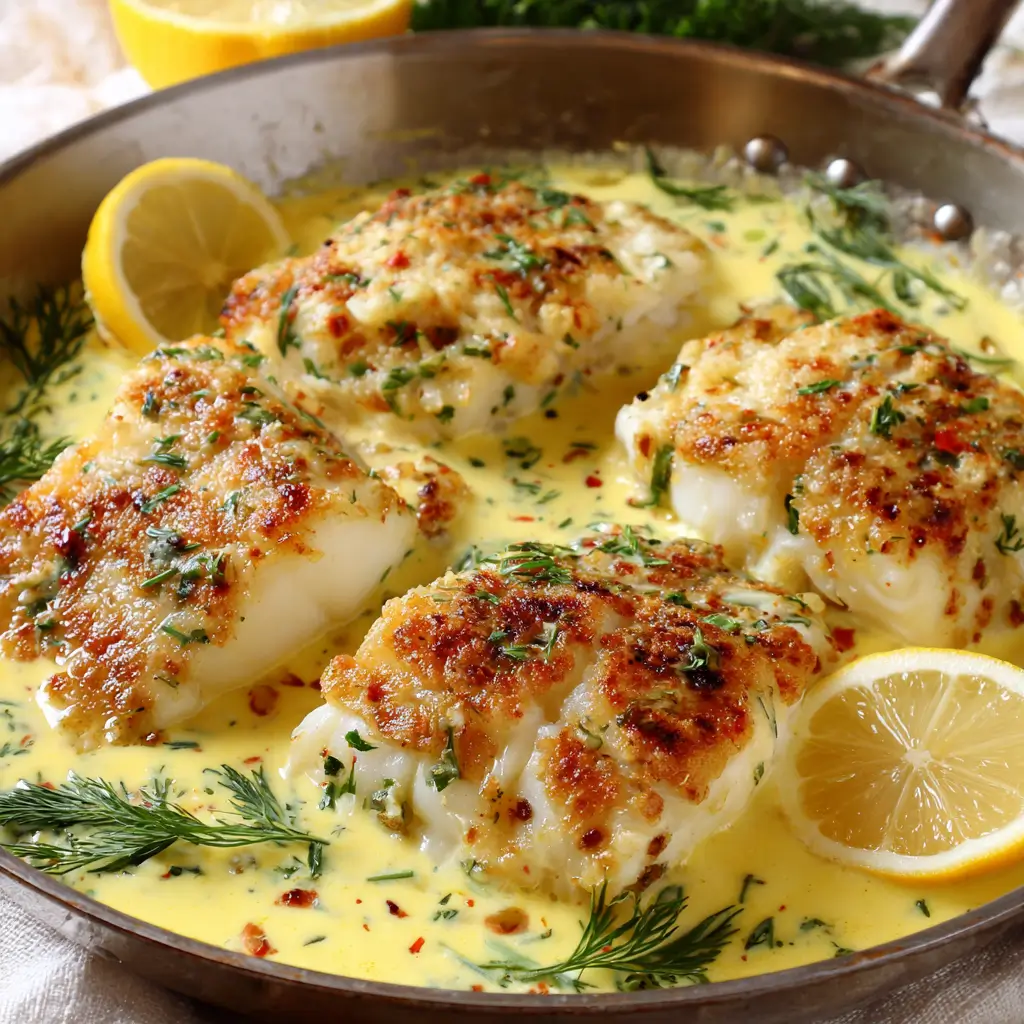
Share this Delicious Baked Cod in Coconut Lemon Cream Sauce Recipe with your friends on Facebook or save it to your Pinterest boards for a sunny treat!
9. Step-by-Step Instructions
Follow these detailed, numbered steps carefully to create your exquisite Baked Cod in Coconut Lemon Cream Sauce. Paying close attention to the culinary techniques and visual cues will ensure a perfectly cooked and flavorful meal.
Preparation Phase (15-20 minutes)
- Preheat Oven and Prepare Baking Dish: Start by preheating your oven to 200°C (400°F). While the oven heats, lightly grease a 9×13 inch (23×33 cm) baking dish with a thin layer of olive oil. This prevents the cod from sticking.
- Prepare Cod Fillets: If using frozen cod, ensure it is completely thawed. Carefully pat each cod fillet thoroughly dry on all sides using paper towels. This crucial step removes excess moisture, which helps the fish bake evenly and prevents a watery sauce. Season both sides of each fillet generously with salt and freshly ground black pepper. Set the seasoned cod aside.
- Troubleshooting Tip: If your fish still feels damp after patting, gently press it between fresh layers of paper towels to absorb more moisture.
- Mince Garlic and Zest Lemon: Peel the garlic cloves and finely mince them. Using a microplane grater or a fine zester, carefully remove the bright yellow zest from one medium lemon, being very careful to avoid grating the bitter white pith underneath. Place the minced garlic and lemon zest in separate small bowls.
- Juice Lemons: Halve the zested lemon (and a second lemon if necessary) and extract 2 tablespoons (30 ml) of fresh lemon juice. Set this aside.
- Chop Fresh Herbs: Finely chop the fresh parsley or cilantro that will be used for garnish. Keep this separate from your other prepped ingredients.
Cooking Phase (15-20 minutes)
- Sauté Aromatics for Sauce: In a small saucepan or skillet, heat 1 tablespoon (15 ml) of olive oil over medium heat. Add the minced garlic and the red pepper flakes (if you’re using them for a hint of warmth). Sauté for 1-2 minutes, stirring continuously, until the garlic is fragrant and lightly golden. Be vigilant to prevent the garlic from burning, as burnt garlic becomes bitter.
- Culinary Technique: This initial sautéing step “blooms” the garlic, releasing its essential oils and creating a flavorful base for your sauce.
- Combine Liquid Ingredients: Pour the full-fat coconut milk (ensure the can has been vigorously shaken to combine any separated cream) and the vegetable or chicken broth into the saucepan with the sautéed garlic. Stir everything together gently. Bring the mixture to a gentle simmer, then reduce the heat to low.
- Infuse Flavors into Sauce: Stir in the prepared lemon zest and dried oregano. Allow the sauce to gently simmer for 3-5 minutes, stirring occasionally. This simmering time allows the flavors to meld beautifully and the sauce to thicken slightly.
- Troubleshooting Tip (Sauce too thin): If your sauce isn’t thickening sufficiently after 5 minutes, whisk together 1/2 teaspoon of cornstarch with 1 tablespoon of cold water in a separate small bowl, then slowly stir this slurry into the simmering sauce. Continue to simmer for another minute, stirring, until the desired consistency is achieved.
- Troubleshooting Tip (Sauce too thick): If the sauce becomes too thick, simply stir in a splash more broth or coconut milk until it reaches your preferred consistency.
- Finalize Sauce Seasoning: Remove the saucepan from the heat. Stir in the 2 tablespoons (30 ml) of fresh lemon juice. Taste the sauce and adjust seasonings as needed, adding more salt, pepper, or a tiny pinch of sugar if the lemon’s tartness is too dominant.
- Culinary Technique: Adding fresh lemon juice off the heat ensures that its vibrant, bright acidity is preserved, as prolonged cooking can diminish it.
- Arrange Cod in Baking Dish: Place the seasoned cod fillets carefully into your prepared baking dish, ensuring they are arranged in a single layer without overlapping. This allows for even cooking.
- Pour Sauce Over Cod: Evenly pour the warm coconut lemon cream sauce over all the cod fillets in the baking dish, making sure each piece is generously coated.
- Bake the Cod: Carefully transfer the baking dish to the preheated oven. Bake for 15-20 minutes. The exact cooking time will depend significantly on the thickness of your cod fillets. The fish is done when it turns opaque throughout and flakes easily with a fork.
- Cooking Cues: The most reliable cue for doneness is an internal temperature of 63°C (145°F) when measured at the thickest part of the cod fillet with a digital thermometer.
- Troubleshooting Tip (Browning/Drying): If you notice the top of the fish or the sauce starting to brown too quickly, loosely tent the baking dish with aluminum foil for the remainder of the baking time to prevent overcooking and retain moisture.
- Rest and Garnish: Once the cod is perfectly cooked, remove the baking dish from the oven. Allow the fish to rest for 2-3 minutes directly in the dish. This brief resting period helps the juices redistribute, ensuring the cod remains tender and moist.
- Serve Immediately: Garnish generously with the fresh chopped parsley or cilantro. Serve your exquisite Baked Cod in Coconut Lemon Cream Sauce immediately with your chosen side dishes.
Enjoy the delightful fusion of flavors and textures in this satisfying meal!
10. Frequently Asked Questions (FAQ)
Here are some common questions about preparing and serving Baked Cod in Coconut Lemon Cream Sauce.
Q1: Can I use frozen cod for this recipe?
A1: Yes, absolutely! High-quality frozen cod works perfectly well. The most crucial step is to ensure it’s fully thawed in the refrigerator before you begin. Once thawed, thoroughly pat the cod fillets dry with paper towels to remove any excess moisture, which helps prevent a watery sauce and ensures the fish bakes beautifully.
Q2: What’s the best way to prevent my cod from drying out?
A2: The secret to moist, flaky cod is precise cooking. Cod is lean and cooks quickly, typically within 15-20 minutes. Use a digital meat thermometer to check for an internal temperature of 63°C (145°F) at the thickest part of the fillet, then remove it immediately from the oven. Also, ensure your cod is well-patted dry, and if the top seems to brown too quickly, loosely tent the dish with aluminum foil.
Q3: I don’t have coconut milk. Can I use regular dairy cream?
A3: Yes, you can substitute dairy cream, but be aware that the flavor profile will change. Heavy cream or half-and-half can be used in the same quantity as coconut milk. This will result in a delicious creamy lemon sauce, but it will lose the unique tropical notes and dairy-free characteristic of the original recipe.
Q4: Can I add vegetables to make this a one-pan meal?
A4: Definitely! Adding quick-cooking vegetables is an excellent idea. Options like thinly sliced bell peppers, cherry tomatoes, or pre-cooked asparagus can be added directly to the baking dish alongside the cod. For greens like spinach, stir them into the sauce or add them around the fish during the last 5 minutes of baking. This approach is similar to how you might integrate green beans with crispy bacon into a meal, making it a convenient and complete dish.
Q5: How can I make this dish spicier?
A5: To introduce more heat, you have a few easy options: increase the amount of red pepper flakes in the sauce, add a pinch of cayenne pepper, or garnish with thin slices of fresh jalapeño or a drizzle of sriracha just before serving. For more spicy inspiration, you might enjoy exploring something like a Spicy Pomegranate Guacamole from our site.
Q6: Can I prepare the sauce ahead of time?
A6: Yes, the coconut lemon cream sauce can be prepared up to 1-2 days in advance. Store it in an airtight container in the refrigerator. When ready to use, gently reheat the sauce on the stovetop over low heat, stirring occasionally, until warm before pouring it over the cod fillets. You may need to add a splash of broth or coconut milk to thin it if it has thickened too much.
Q7: What are some good low-carb side dish options for this recipe?
A7: Excellent low-carb pairings include cauliflower rice, steamed or roasted green beans, asparagus, broccoli, or a simple side salad with a light, vinaigrette dressing. These options complement the rich sauce without adding significant carbohydrates, making for a perfectly balanced meal.
