

Table of Contents
Table of Contents
1. Introduction
Imagine stepping into a rustic Tuscan kitchen, the aroma of garlic and herbs wafting through the air, mingling with the earthy scent of simmering beans. That’s the essence of our Hearty Tuscan White Bean Soup, a dish that embodies the very soul of Italian comfort food. This isn’t just any soup; it’s a bowlful of history, tradition, and profound culinary simplicity that speaks volumes about the “cucina povera” – the peasant cooking – ethos of Tuscany. Born from necessity, using readily available and inexpensive ingredients, this soup has evolved into a beloved classic, cherished for its nourishing qualities and deeply satisfying flavor profile.
Tuscany, a region renowned for its rolling hills, ancient vineyards, and sun-drenched olive groves, boasts a culinary heritage that prioritizes fresh, high-quality ingredients and straightforward preparation. The Hearty Tuscan White Bean Soup, often referred to as “Zuppa di Fagioli” or “Ribollita” (though Ribollita is typically a re-boiled bread and vegetable soup, this bean soup shares its humble origins and hearty nature), stands as a testament to this philosophy.
White beans, particularly cannellini beans, are a cornerstone of Tuscan cooking, celebrated for their creamy texture and ability to absorb the rich flavors of their accompaniments. This soup harks back to generations of Italian grandmothers (“nonnas”) who perfected the art of transforming simple pantry staples into a meal that feeds both body and soul.
What makes this soup truly unique is its ability to be both incredibly light and deeply satisfying. It’s not heavy or overly creamy, yet it delivers a profound sense of warmth and nourishment. The combination of aromatic vegetables – carrots, celery, and onion forming the classic soffritto – with robust herbs like rosemary and sage, provides a foundational flavor that is unmistakably Italian. A good quality olive oil, a staple in every Tuscan kitchen, is not just an ingredient but a finishing touch, imparting a silky mouthfeel and peppery note that elevates every spoonful.
This recipe is more than just a meal; it’s an invitation to experience a slice of Tuscan life, a culinary journey that brings the warmth and heart of Italy right to your dining table. Whether you’re seeking a cozy meal on a chilly evening or a wholesome, flavorful dish to share with loved ones, this Hearty Tuscan White Bean Soup promises to deliver an authentic taste of Italian comfort.
2. Recipe Summary
- Cuisine: Italian (Tuscan)
- Difficulty Level: Easy to Medium (primarily due to chopping vegetables, but the cooking process itself is straightforward)
- Total Preparation and Cooking Time:
- Prep time: 25 minutes
- Cook time: 45-60 minutes
- Total time: Approximately 1 hour 10 minutes to 1 hour 25 minutes (excluding soaking time for dried beans, if used)
- Dietary Classification:
- Vegetarian
- Vegan (if using vegetable broth and omitting Parmesan garnish)
- Gluten-Free (naturally, ensure broth is GF)
- High in Fiber, Plant-Based Protein
3. Equipment and Utensils
To create this delightful Tuscan White Bean Soup, you’ll need a few essential kitchen tools. Having the right equipment makes the cooking process smoother and more enjoyable.
- Large Dutch Oven or Heavy-Bottomed Pot: A 6-quart (approximately 5.7 liters) Dutch oven is ideal for its even heat distribution and ability to go from stovetop to table. A heavy-bottomed stockpot of similar volume will also work perfectly.
- Cutting Board: A sturdy board for chopping vegetables.
- Sharp Chef’s Knife: Essential for precise and safe vegetable preparation.
- Measuring Cups and Spoons: For accurate ingredient measurements.
- Vegetable Peeler: For peeling carrots.
- Can Opener: If using canned cannellini beans.
- Wooden Spoon or Spatula: For stirring and scraping the bottom of the pot.
- Ladle: For serving the soup.
- Immersion Blender (Optional): For a creamier texture without needing to transfer hot soup to a stand blender. Alternatively, a regular blender can be used (blend in batches, carefully).
- Small Bowl: For soaking dried beans (if using).
- Colander: For rinsing beans and other vegetables.
- Grater (Optional): For fresh Parmesan cheese garnish.
4. Serving Suggestions
The Hearty Tuscan White Bean Soup is a meal in itself, but its simple elegance lends itself beautifully to thoughtful pairings that enhance the dining experience.
- Plating Recommendations: Serve the soup in deep, rustic bowls. A drizzle of high-quality extra virgin olive oil over each serving just before bringing it to the table not only adds a beautiful sheen but also a burst of fresh, peppery flavor. Garnish with a sprig of fresh rosemary or a scattering of finely chopped fresh parsley for color and aroma. A generous sprinkle of freshly grated Parmesan or Pecorino Romano cheese is also highly recommended, adding a salty, umami depth that complements the beans perfectly.
- Side Dish Ideas:
- Crusty Bread: This is almost non-negotiable. A warm, crusty loaf of artisanal bread – think sourdough, ciabatta, or a rustic country bread – is perfect for dipping into the flavorful broth and soaking up every last drop. Lightly toast slices and rub with a raw garlic clove for an extra layer of flavor.
- Simple Green Salad: A crisp, lightly dressed green salad provides a refreshing contrast to the warmth and richness of the soup. A vinaigrette made with good quality olive oil, red wine vinegar, a touch of Dijon mustard, salt, and pepper is all you need. Consider adding some toasted pine nuts or cherry tomatoes for texture and color.
- Bruschetta: For a more substantial starter, prepare classic bruschetta with ripe tomatoes, fresh basil, garlic, and olive oil, or perhaps a mushroom bruschetta.
- Roasted Vegetables: If you’re looking for another vegetable component, simple roasted asparagus or broccoli florets seasoned with garlic and lemon would be an excellent accompaniment.
- Beverage Pairings:
- Wine: A light to medium-bodied Tuscan red wine like a young Chianti or a Rosso di Montalcino would be an ideal pairing, complementing the earthy flavors of the soup without overpowering it. If you prefer white, a dry Vernaccia di San Gimignano or a crisp Vermentino would also work beautifully.
- Non-Alcoholic: For a non-alcoholic option, sparkling water with a slice of lemon or lime provides a refreshing palate cleanser. A simple iced tea or even a warm herbal tea could also be comforting choices.
This soup, with its humble origins, shines brightest when paired with equally honest and simple accompaniments. For a full Italian-inspired meal, consider starting with some Easy Antipasto Skewers and following the soup with a hearty pasta dish like Creamy Tuscan Sausage Pasta or a substantial main like a Savory Butternut Squash Ricotta and Sage Lasagna.
5. Nutritional Information
The Hearty Tuscan White Bean Soup is not only delicious but also a nutritional powerhouse, aligning perfectly with the health-promoting principles of the Mediterranean diet. The estimates below are for a single serving, assuming 6-8 servings from the recipe. Actual values may vary based on specific ingredients and portion sizes.
- Calories per serving: Approximately 250-350 calories (depending on oil usage, broth type, and garnishes).
- Macronutrient Distribution (Approximate per serving):
- Protein: 12-18g (primarily from white beans)
- Carbohydrates: 35-45g (with about 10-15g of fiber)
- Fats: 5-15g (healthy monounsaturated fats from olive oil)
- Dietary Information:
- High in Fiber: White beans are an excellent source of dietary fiber, crucial for digestive health, blood sugar regulation, and promoting a feeling of fullness.
- Plant-Based Protein: A great source of protein for vegetarians and vegans, contributing to muscle maintenance and repair.
- Low in Saturated Fat: Naturally low in unhealthy fats, especially when prepared with vegetable broth.
- Cholesterol-Free: This soup is naturally cholesterol-free.
- Rich in Vitamins and Minerals: Contains significant amounts of folate, iron, magnesium, potassium, and B vitamins from the beans and vegetables. Antioxidants are also present from the herbs and vegetables.
- Health Benefits:
- Heart Health: The high fiber content, lean protein, and healthy fats from olive oil contribute to cardiovascular health by helping to lower cholesterol levels and maintain healthy blood pressure.
- Blood Sugar Management: The complex carbohydrates and fiber in white beans help stabilize blood sugar levels, making this a suitable meal for individuals managing diabetes.
- Weight Management: The fiber and protein content promote satiety, helping to reduce overall calorie intake and support healthy weight management.
- Gut Health: Dietary fiber acts as a prebiotic, feeding beneficial gut bacteria and promoting a healthy microbiome.
- Anti-inflammatory Properties: Many of the ingredients, particularly olive oil, garlic, and fresh herbs like rosemary and sage, are known for their anti-inflammatory and antioxidant properties, which can help protect the body against chronic diseases.
This Hearty Tuscan White Bean Soup is a testament to how simple, whole ingredients can come together to create a meal that is both incredibly satisfying and profoundly beneficial for your health.
6. Storage and Reheating
This soup is fantastic for meal prepping, as its flavors tend to deepen and meld even more wonderfully after a day or two.
- Storage Instructions (Refrigeration):
- Allow the soup to cool completely to room temperature before storing. This prevents condensation and inhibits bacterial growth.
- Transfer the cooled soup into airtight containers. Glass containers or sturdy plastic ones are ideal.
- Store in the refrigerator for up to 3-4 days.
- Storage Instructions (Freezing):
- Once the soup has cooled completely, portion it into freezer-safe containers or heavy-duty freezer bags. If using bags, lay them flat on a baking sheet until frozen solid for easier stacking.
- Leave about an inch of headspace in containers to allow for expansion during freezing.
- Freeze for up to 2-3 months. Label with the date to keep track.
- Note: If you plan to freeze, it’s sometimes best to not add any pasta or greens (like spinach/kale) directly to the soup if you’re making a variation. Add them fresh during reheating, as they can become mushy upon thawing.
- Reheating Methods:
- From Refrigerator:
- Stovetop: Transfer the desired amount of soup to a saucepan. Heat over medium-low heat, stirring occasionally, until thoroughly warmed through. Add a splash of broth or water if it seems too thick.
- Microwave: Place soup in a microwave-safe bowl. Heat in 1-2 minute intervals, stirring between each, until hot.
- From Freezer:
- Thawing: For best results, thaw frozen soup in the refrigerator overnight.
- Stovetop (from frozen): You can often reheat directly from frozen in a pot over low heat, stirring frequently to break up the ice and prevent scorching, adding a bit of liquid if needed. This will take longer.
- Microwave (from frozen): Transfer to a microwave-safe bowl and heat at 50% power for longer intervals, stirring often, until thawed and heated through.
- Refreshing Flavors: When reheating, taste and adjust seasonings if necessary. A fresh drizzle of olive oil, a sprinkle of fresh herbs, or a dash of black pepper can wonderfully revive the flavors.
7. Expert Tips and Variations
Elevate your Hearty Tuscan White Bean Soup from good to truly exceptional with these professional insights and creative twists.
- Professional Chef Tips:
- The Power of Soffritto: Don’t rush the soffritto (carrots, celery, onion). Sautéing these vegetables slowly over medium-low heat until they are soft and translucent, almost caramelized, is crucial for building a deep flavor base. This step can take 8-10 minutes, so be patient.
- Garlic and Herbs Timing: Add garlic towards the end of the soffritto stage to prevent burning, which can turn it bitter. Fresh rosemary and sage are non-negotiable for authentic Tuscan flavor; dried herbs can be used but in smaller quantities (1/3 the amount of fresh) and added earlier. Bruise fresh rosemary sprigs slightly before adding to release their essential oils.
- Deglazing for Flavor: After sautéing, if there are any browned bits stuck to the bottom of your pot, use a splash of white wine or a bit of vegetable broth to deglaze. Scrape up these flavorful bits with your wooden spoon – they contain concentrated flavor.
- Partial Blending for Texture: For that perfect hearty yet creamy consistency, remove about 1-2 cups of the soup, blend it until smooth with an immersion blender or standard blender, and then stir it back into the pot. This thickens the soup naturally without adding cream, while still leaving plenty of whole beans for texture.
- Quality Olive Oil: Finish with a generous drizzle of high-quality extra virgin olive oil just before serving. This isn’t just for fat; it adds a fresh, peppery, grassy note that is characteristic of authentic Italian cuisine.
- Common Mistakes to Avoid:
- Under-seasoning: Taste and adjust throughout the cooking process. Beans especially need good seasoning to shine. Don’t forget salt, pepper, and a final flourish of herbs.
- Over-blending: Unless you want a completely smooth purée, avoid blending all the soup. A rustic texture with some whole beans is part of its charm.
- Adding Too Much Liquid Too Soon: Start with the recommended amount of broth, then add more incrementally if the soup is too thick for your liking. You can always add more, but you can’t easily remove it.
- Ignoring Bean Quality: While canned beans are convenient, using dried cannellini beans that have been soaked and cooked will yield a superior texture and flavor. If using canned, rinse them thoroughly to remove excess sodium and improve flavor.
- Recipe Variations:
- With Sausage: For a heartier, non-vegetarian version, brown 1/2 lb (225g) of Italian sausage (sweet or spicy) before adding the soffritto. Drain excess fat before continuing. This introduces a delicious depth of flavor. If you enjoy Italian sausage, you might also like Crock-Pot Italian Meatball Soup.
- Greens Addition: Stir in a few handfuls of fresh spinach, kale, or Swiss chard during the last 5-10 minutes of cooking until wilted. This adds extra nutrients and a touch of bitterness that balances the richness.
- Tomato Boost: Add 1 (14.5 oz / 410g) can of diced tomatoes (undrained) or 1/2 cup (120ml) crushed tomatoes along with the broth for a slightly tangier, redder soup.
- Pasta Inclusion: For a more substantial soup, add a small pasta like ditalini or orzo during the last 10-12 minutes of cooking. Ensure there’s enough liquid, as the pasta will absorb a lot.
- Smoky Flavor: A small amount of smoked paprika (1/2 teaspoon) can add a subtle smoky depth.
- Spicy Kick: A pinch of red pepper flakes added with the garlic can introduce a gentle heat.
- Seasonal Adaptations:
- Autumn/Winter: This soup is naturally suited for cooler months. Enhance its coziness by adding diced butternut squash or sweet potato along with the carrots and celery, allowing them to soften. A sprinkle of nutmeg can also be a lovely addition.
- Spring/Summer: For lighter weather, consider adding fresh lemon zest and juice at the end for brightness. Skip heavier garnishes and opt for more fresh parsley or basil. For a different but equally comforting plant-based option, you could try a Vegan Tomato White Bean Stew.
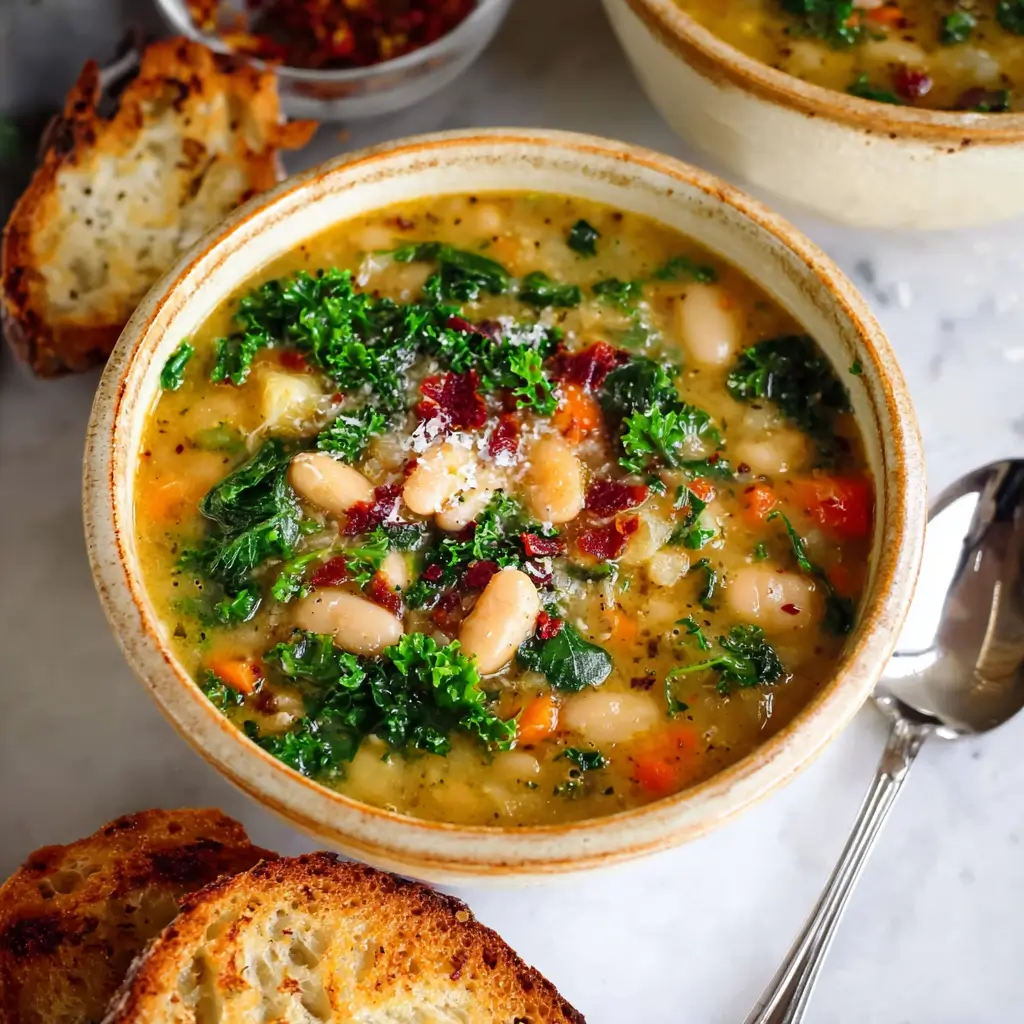
8. Ingredients Section
Crafting the perfect Hearty Tuscan White Bean Soup begins with a selection of fresh, high-quality ingredients. Here’s what you’ll need, along with useful conversions and tips for sourcing and substitutions.
Yields: 6-8 servings
Prep time: 25 minutes
Cook time: 45-60 minutes
- Olive Oil: 3 tablespoons (45ml) extra virgin olive oil, plus more for drizzling
- Sourcing: Invest in a good quality extra virgin olive oil for flavor.
- Substitution: While EVOO is traditional, any neutral cooking oil like avocado oil can be used for sautéing, but the finishing drizzle of EVOO is crucial.
- Aromatics (Soffritto):
- Yellow Onion: 1 large, finely diced (about 1.5 cups / 225g)
- Substitution: White onion or shallots can be used.
- Carrots: 2 medium, peeled and finely diced (about 1 cup / 130g)
- Substitution: Parsnips for a slightly different root vegetable sweetness.
- Celery Stalks: 2, finely diced (about 1 cup / 100g)
- Substitution: Fennel bulb can offer an interesting anise note.
- Garlic: 4-6 cloves, minced (about 1.5 tablespoons / 20g)
- Sourcing: Fresh garlic is best; avoid pre-minced for superior flavor.
- Substitution: 1/2 teaspoon garlic powder per clove, but fresh is highly recommended.
- Herbs:
- Fresh Rosemary: 2 sprigs (about 2 teaspoons / 4g leaves, minced)
- Substitution: 1/2 teaspoon dried rosemary.
- Fresh Sage Leaves: 4-5 large leaves, minced (about 1 tablespoon / 4g)
- Substitution: 1/2 teaspoon dried sage.
- Fresh Thyme (Optional): 1 sprig, leaves stripped (about 1 teaspoon / 2g)
- Substitution: 1/4 teaspoon dried thyme.
- White Beans:
- Canned Cannellini Beans: 4 (15-ounce / 425g) cans, rinsed and drained
- Sourcing: Look for organic, low-sodium options.
- Substitution: Great Northern beans or navy beans. If using dried beans, soak 1.5 cups (300g) overnight, then cook until tender before adding to the soup.
- Broth: 6 cups (1.4 liters) vegetable broth (or chicken broth for non-vegetarian)
- Sourcing: Low-sodium broth allows you to control the salt content.
- Substitution: Water can be used with a good quality bouillon cube or paste, but broth adds more depth.
- Canned Diced Tomatoes (Optional): 1 (14.5-ounce / 410g) can, undrained
- Substitution: Crushed tomatoes or tomato paste (2 tablespoons, added with garlic) for a richer tomato flavor.
- Seasoning:
- Salt: 1-2 teaspoons (5-10g), or to taste
- Black Pepper: 1/2-1 teaspoon (1-2g), freshly ground, or to taste
- Red Pepper Flakes (Optional): 1/4 teaspoon, for a touch of heat.
- Garnish:
- Fresh Parsley: 1/4 cup (10g), chopped, for serving
- Parmesan Cheese (Optional): Freshly grated, for serving
- Substitution: Nutritional yeast for a vegan/dairy-free cheesy flavor.
Measurement Conversions Table:
| Ingredient | Imperial (approx.) | Metric (approx.) |
|---|---|---|
| Olive Oil | 3 tbsp | 45 ml |
| Yellow Onion | 1 large (1.5 cups) | 225 g |
| Carrots | 2 medium (1 cup) | 130 g |
| Celery | 2 stalks (1 cup) | 100 g |
| Garlic | 4-6 cloves (1.5 tbsp) | 20 g |
| Fresh Rosemary | 2 sprigs (2 tsp leaves) | 4 g |
| Fresh Sage | 4-5 leaves (1 tbsp) | 4 g |
| Canned Cannellini Beans | 4 x 15-oz cans | 4 x 425 g cans |
| Vegetable Broth | 6 cups | 1.4 liters |
| Diced Tomatoes | 1 x 14.5-oz can | 1 x 410 g can |
| Salt | 1-2 tsp | 5-10 g |
| Black Pepper | 0.5-1 tsp | 1-2 g |
| Fresh Parsley | 0.25 cup | 10 g |
9. Step-by-Step Instructions
Follow these detailed instructions to create your own delicious Hearty Tuscan White Bean Soup. Take your time with each step, as building layers of flavor is key to this recipe’s success.
- Prepare the Soffritto:
- Place a large Dutch oven or heavy-bottomed pot over medium heat. Add 3 tablespoons of extra virgin olive oil.
- Once the oil is shimmering, add the finely diced onion, carrots, and celery. Sauté gently, stirring occasionally, for 8-10 minutes, or until the vegetables are very soft and translucent. Do not rush this step; the slow cooking of the soffritto is essential for building a deep flavor base.
- (Culinary Technique: Soffritto forms the aromatic foundation of many Italian dishes. Cooking it slowly ensures the vegetables release their natural sugars and flavors without browning too quickly.)
- Add Garlic and Herbs:
- Add the minced garlic, fresh rosemary sprigs, and minced fresh sage leaves to the pot. If using red pepper flakes, add them now as well.
- Cook for another 1-2 minutes, stirring constantly, until the garlic is fragrant. Be careful not to burn the garlic.
- (Cooking Cues: Garlic should be aromatic but not brown. The herbs will become fragrant as their oils release.)
- Incorporate Tomatoes and Beans:
- If using, stir in the can of diced tomatoes (undrained). Cook for 2-3 minutes, allowing the tomato juices to slightly reduce and concentrate.
- Add the rinsed and drained cannellini beans to the pot. Stir to combine with the vegetables and herbs.
- Add Broth and Simmer:
- Pour in the vegetable broth. Stir everything together.
- Season with 1 teaspoon of salt and 1/2 teaspoon of freshly ground black pepper. Remember you can always adjust later.
- Bring the soup to a gentle simmer over medium-high heat, then reduce the heat to low, cover the pot, and let it simmer for at least 30-40 minutes. This allows the flavors to meld beautifully.
- (Cooking Cues: A gentle simmer means small bubbles occasionally break the surface. If it’s boiling vigorously, reduce the heat.)
- Achieve Creamy Texture (Optional):
- For a thicker, creamier soup with a rustic texture, carefully remove about 1-2 cups of the soup (mostly beans and some liquid) from the pot.
- Using an immersion blender, blend the removed portion until smooth. Alternatively, transfer it to a regular blender (use caution when blending hot liquids, only fill halfway and vent the lid).
- Return the blended mixture to the pot and stir well. This will naturally thicken the soup without adding any cream.
- (Troubleshooting Tip: If the soup is too thick for your liking after blending, add a splash more broth or hot water until desired consistency is reached.)
- Final Seasoning and Garnish:
- Taste the soup and adjust seasonings as needed, adding more salt, pepper, or red pepper flakes if desired. You might also want to remove the rosemary sprigs at this point, as they’ve imparted their flavor.
- Ladle the hot soup into bowls.
- Garnish each serving with a generous drizzle of good quality extra virgin olive oil, a sprinkle of freshly chopped parsley, and a mound of freshly grated Parmesan cheese (if using).
- Serve immediately with crusty bread.
Enjoy your homemade Hearty Tuscan White Bean Soup!
10. Frequently Asked Questions (FAQ)
Here are some common questions about making and enjoying Hearty Tuscan White Bean Soup:
Q1: Can I use dried cannellini beans instead of canned?
A1: Absolutely! Using dried beans often yields a superior texture and flavor. Soak 1.5 cups (about 300g) dried cannellini beans overnight, then drain and rinse. Cook them separately in water or broth until tender (about 45-60 minutes) before adding them to the soup in step 3. You may need to reduce the amount of broth in the recipe slightly, as pre-cooked dried beans won’t absorb as much liquid.
Q2: How can I make this soup vegan?
A2: This recipe is naturally very vegan-friendly! Simply ensure you use vegetable broth instead of chicken broth, and omit the optional Parmesan cheese garnish at the end. For a cheesy flavor, you can sprinkle with nutritional yeast.
Q3: What’s the best way to thicken the soup without using flour or cream?
A3: The best method is to partially blend the soup. As described in step 5, remove 1-2 cups of the soup, blend it until smooth, and then stir it back into the pot. The starches from the beans will naturally thicken the soup to a rustic, creamy consistency.
Q4: Can I add meat to this soup?
A4: Yes, for a non-vegetarian version, Italian sausage is a fantastic addition. Brown about 1/2 lb (225g) of sweet or spicy Italian sausage in the pot before adding the olive oil for the soffritto. Break it up as it cooks, then drain most of the rendered fat before proceeding with step 1. You could also add shredded cooked chicken or turkey at the end.
Q5: What are cannellini beans and can I substitute them?
A5: Cannellini beans are a popular white kidney bean from Italy, known for their tender, creamy texture and mild, nutty flavor. They hold their shape well in soups. Great Northern beans or navy beans are excellent substitutes, offering a similar mild taste and creamy consistency.
Q6: My soup tastes a bit bland. What can I do?
A6: The most common reason for bland soup is under-seasoning. Taste and adjust! Add more salt, freshly ground black pepper, or a pinch of red pepper flakes. A splash of lemon juice or a dash of good quality red wine vinegar at the end can also brighten the flavors. Don’t forget the fresh herbs and a final drizzle of quality extra virgin olive oil – these make a huge difference.
Q7: How long does this soup last in the refrigerator?
A7: When stored in an airtight container, the Hearty Tuscan White Bean Soup will last for 3-4 days in the refrigerator. Its flavors often deepen and improve on the second day!
